Department of Physiology, Kangwon National University School of Medicine, Chuncheon, 24341, Republic of Korea.
Department of Physiology, School of Medicine, Pusan National University, Yangsan, 50612, Republic of Korea.
Sci Rep. 2017 Oct 23;7(1):13821. doi: 10.1038/s41598-017-14198-y.
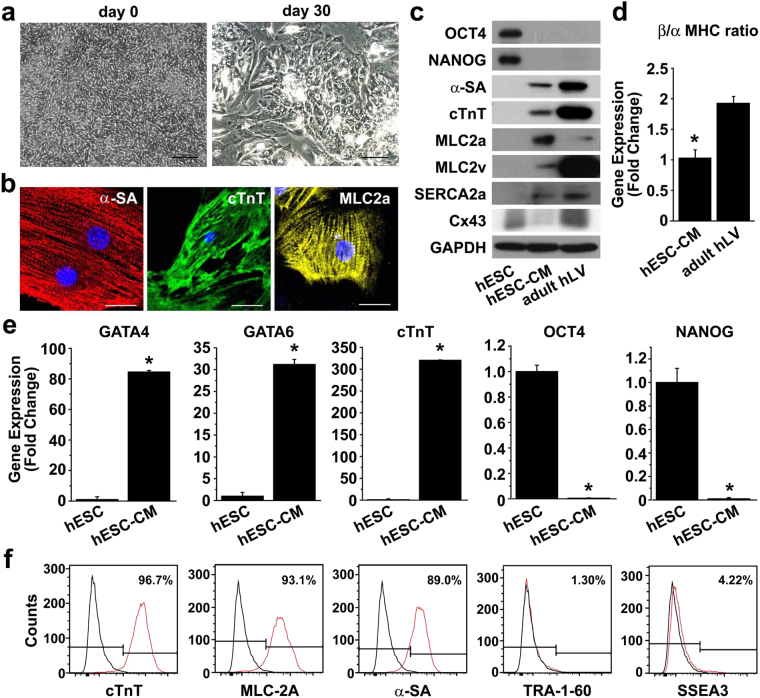
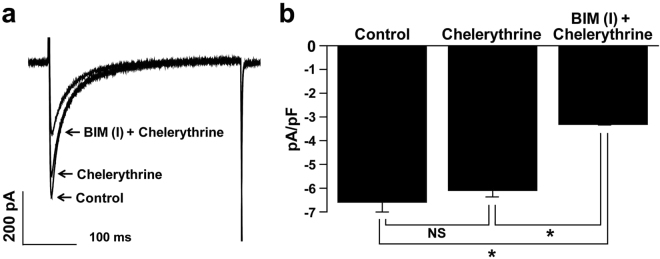
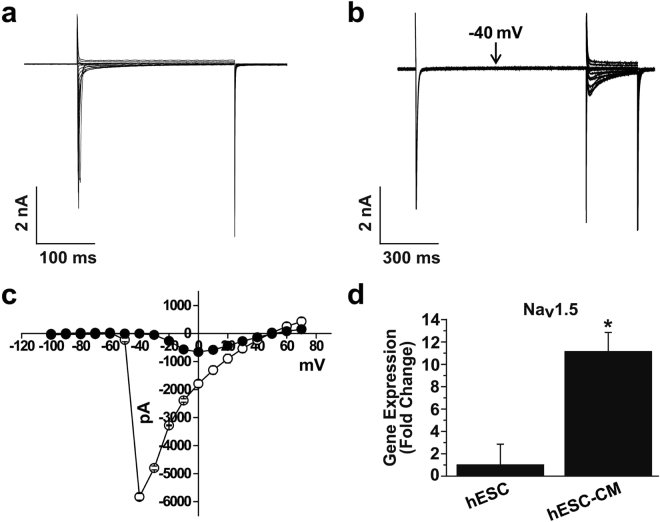
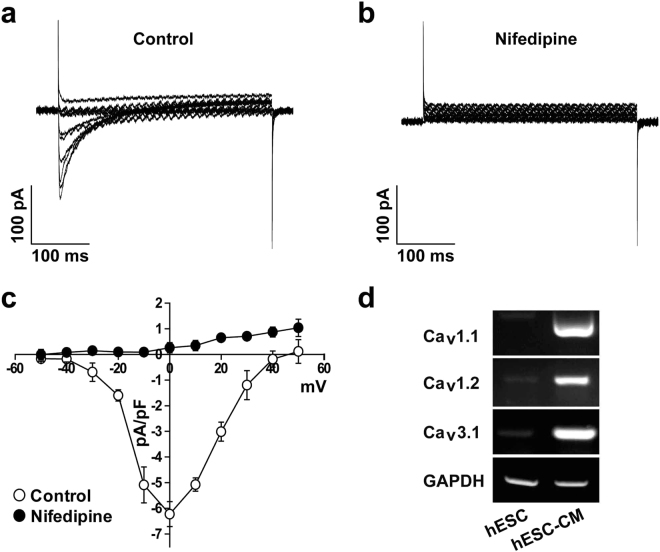
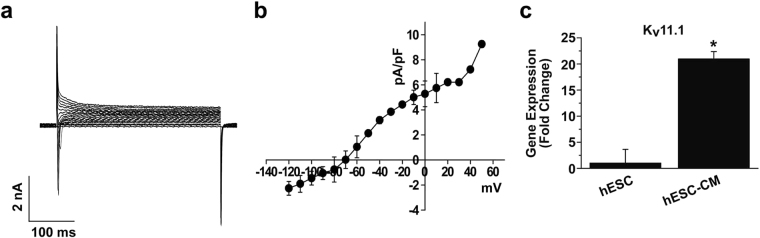
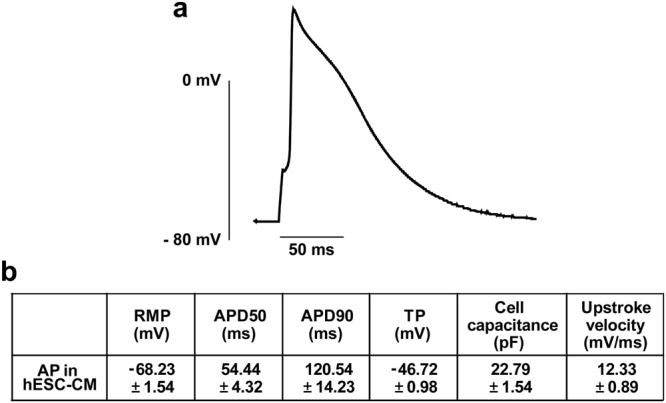
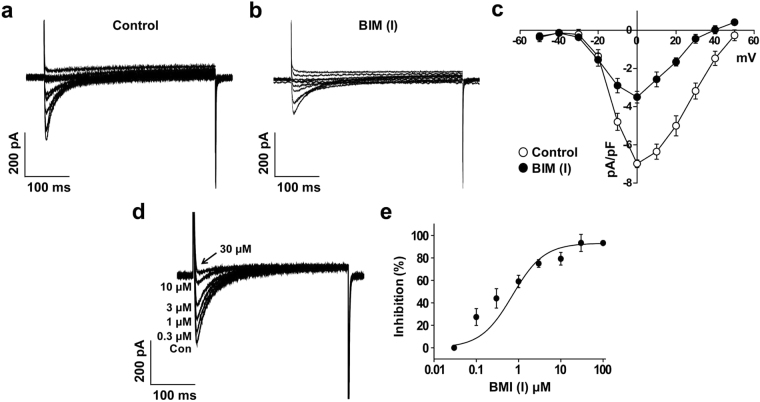
Cardiomyocytes differentiated from human pluripotent stem cells provide promising tools for screening of cardiotoxic drugs. For evaluation of human pluripotent stem cell-derived cardiomyocytes for cardiotoxicity test, in the present study, human embryonic stem cells (hESCs) were differentiated to cardiomyocytes, followed by metabolic selection to enrich the differentiated cardiomyocytes. The highly purified hESC-derived cardiomyocytes (hESC-CMs) expressed several cardiomyocyte-specific markers including cTnT, MLC2a, and α-SA, but not pluripotency markers, such as OCT4 and NANOG. Patch clamp technique and RT-PCR revealed the expression of cardiomyocyte-specific Na, Ca, and K channels and cardiac action potential in hESC-CMs. To explore the potential use of hESC-CMs as functional cardiomyocytes for drug discovery and cardiotoxicity screening, we examined the effects of bisindolylmaleimide (BIM) (I), which inhibits native cardiac Ca channels, on the Ca channel activity of hESC-CMs. We observed a similar response for the BIM (I)-induced modulation of Ca channels between hESC-CMs and native cardiomyocytes through L-type Ca channel current. These results suggest that hESC-CMs can be useful for evaluation of pharmaceutical efficacy and safety of novel drug candidate in cardiac research.
人多能干细胞分化而来的心肌细胞为药物心脏毒性的筛选提供了有前景的工具。为了评估人多能干细胞源性心肌细胞用于心脏毒性测试,本研究中,我们将人胚胎干细胞(hESCs)分化为心肌细胞,然后进行代谢选择以富集分化的心肌细胞。高度纯化的 hESC 源性心肌细胞(hESC-CMs)表达了几种心肌细胞特异性标志物,包括 cTnT、MLC2a 和 α-SA,但不表达多能性标志物,如 OCT4 和 NANOG。膜片钳技术和 RT-PCR 显示 hESC-CMs 表达了心肌细胞特异性的 Na、Ca 和 K 通道以及心脏动作电位。为了探索 hESC-CMs 作为功能性心肌细胞在药物发现和心脏毒性筛选中的潜在用途,我们研究了双吲哚马来酰亚胺(BIM)(I)对 hESC-CMs 钙通道活性的影响。我们观察到 hESC-CMs 和原代心肌细胞中 L 型钙通道电流对 BIM(I)诱导的钙通道调节的反应相似。这些结果表明 hESC-CMs 可用于评估心脏研究中新药候选物的药物疗效和安全性。