Nadeau Valerie, Potus Francois, Boucherat Olivier, Paradis Renee, Tremblay Eve, Iglarz Marc, Paulin Roxane, Bonnet Sebastien, Provencher Steeve
1 Pulmonary Hypertension Research Group ( http://www.hypertensionarteriellepulmonaire.ca ).
2 Institut universitaire de cardiologie et de pneumologie de Québec Research Center, Laval University, Quebec City, Canada.
Pulm Circ. 2018 Jan-Mar;8(1):2045893217741429. doi: 10.1177/2045893217741429. Epub 2017 Oct 24.
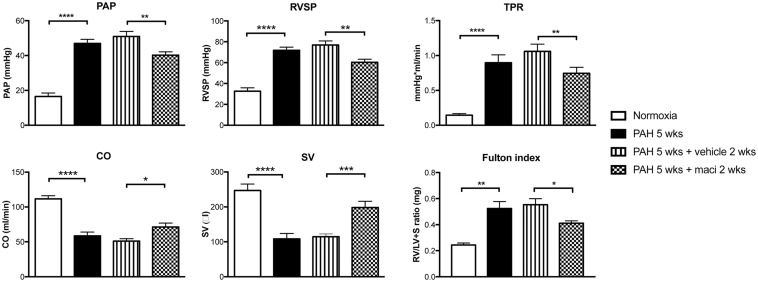
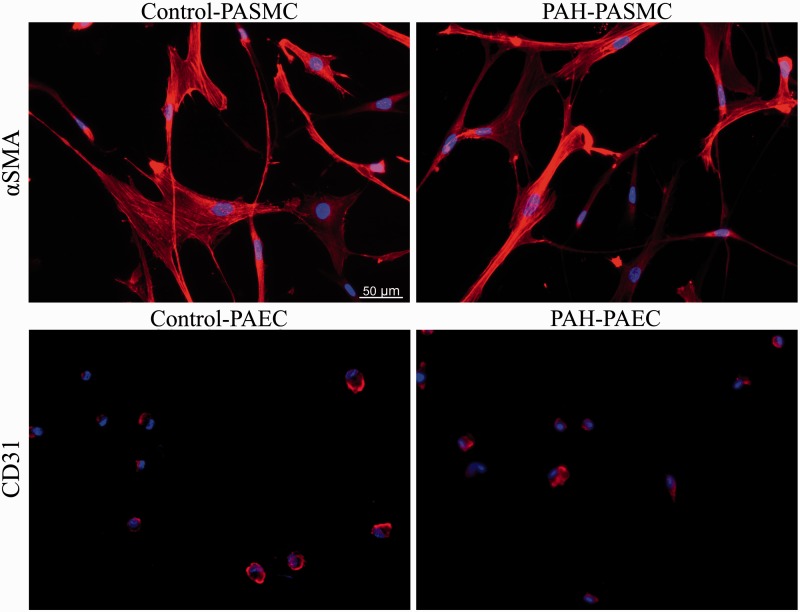
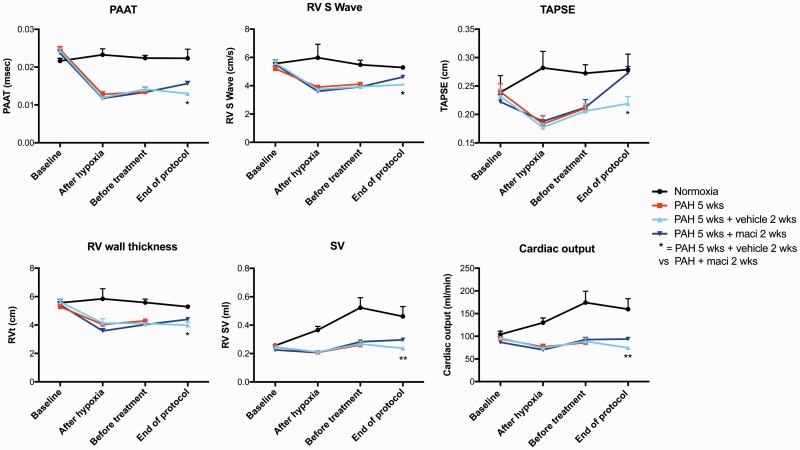
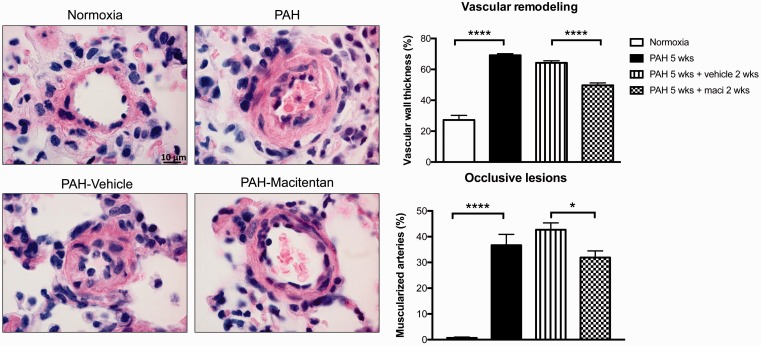
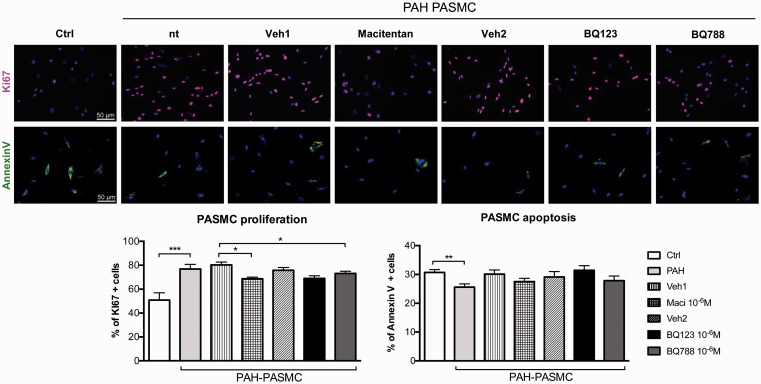
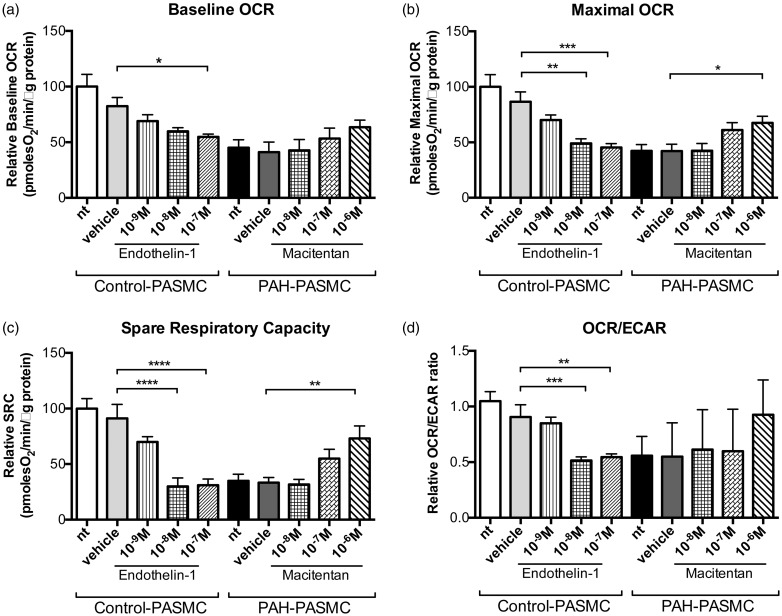
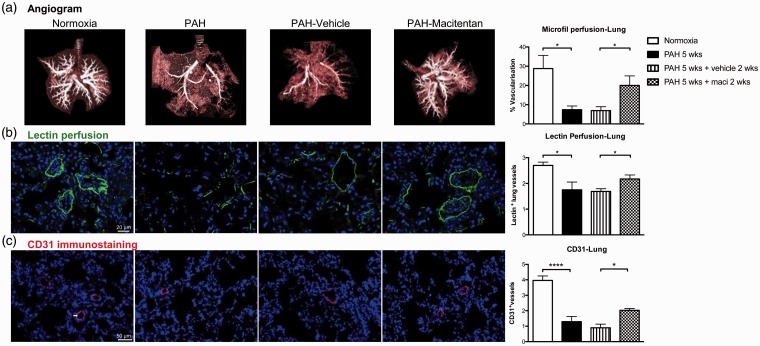
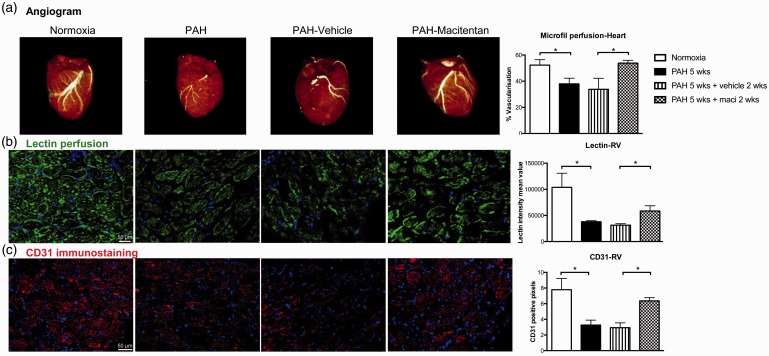
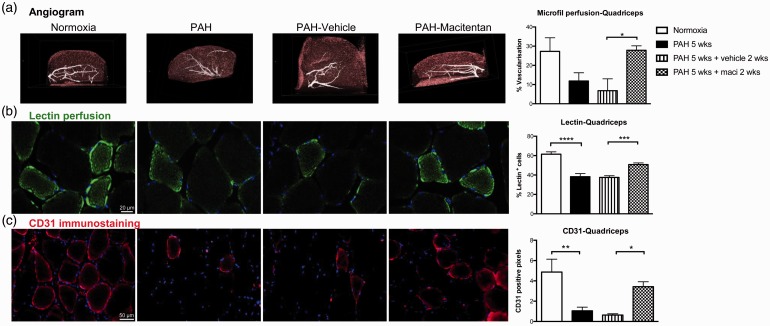
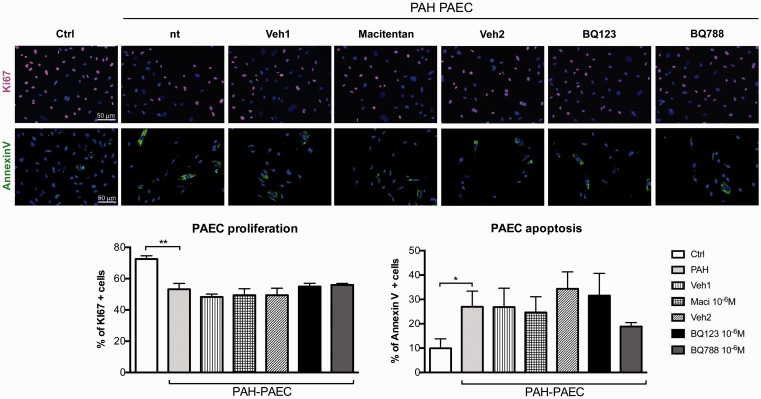
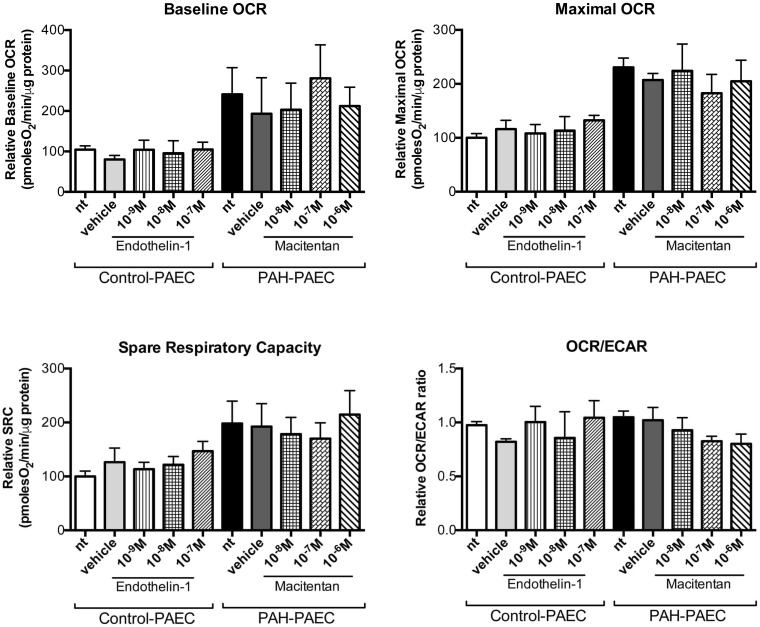
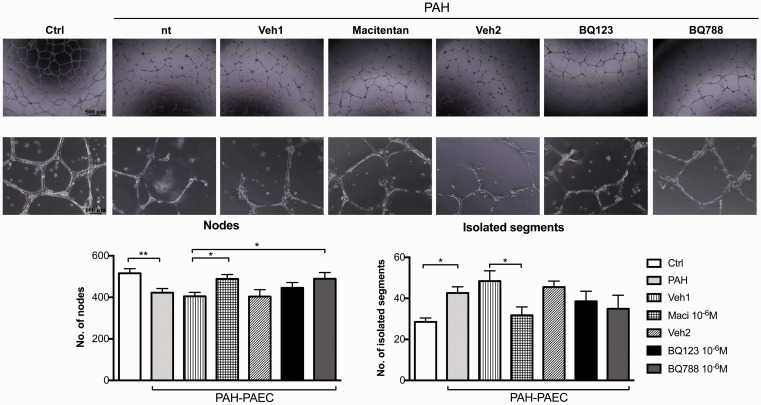
Dysregulated metabolism and rarefaction of the capillary network play a critical role in pulmonary arterial hypertension (PAH) etiology. They are associated with a decrease in perfusion of the lungs, skeletal muscles, and right ventricle (RV). Previous studies suggested that endothelin-1 (ET-1) modulates both metabolism and angiogenesis. We hypothesized that dual ET/ET receptors blockade improves PAH by improving cell metabolism and promoting angiogenesis. Five weeks after disease induction, Sugen/hypoxic rats presented severe PAH with pulmonary artery (PA) remodeling, RV hypertrophy and capillary rarefaction in the lungs, RV, and skeletal muscles (microCT angiogram, lectin perfusion, CD31 staining). Two-week treatment with dual ET/ET receptors antagonist macitentan (30 mg/kg/d) significantly improved pulmonary hemodynamics, PA vascular remodeling, and RV function and hypertrophy compared to vehicle-treated animals (all P = 0.05). Moreover, macitentan markedly increased lung, RV and quadriceps perfusion, and microvascular density (all P = 0.05). In vitro, these effects were associated with increases in oxidative phosphorylation (oxPhox) and markedly reduced cell proliferation of PAH-PA smooth muscle cells (PASMCs) treated with macitentan without affecting apoptosis. While macitentan did not affect oxPhox, proliferation, and apoptosis of PAH-PA endothelial cells (PAECs), it significantly improved their angiogenic capacity (tube formation assay). Exposure of control PASMC and PAEC to ET-1 fully mimicked the PAH cells phenotype, thus confirming that ET-1 is implicated in both metabolism and angiogenesis abnormalities in PAH. Dual ET/ET receptor blockade improved the metabolic changes involved in PAH-PASMCs' proliferation and the angiogenic capacity of PAH-PAEC leading to an increased capillary density in lungs, RV, and skeletal muscles.
代谢失调和毛细血管网络稀疏在肺动脉高压(PAH)病因中起关键作用。它们与肺、骨骼肌和右心室(RV)灌注减少有关。先前的研究表明内皮素-1(ET-1)调节代谢和血管生成。我们假设双重ET/ET受体阻断通过改善细胞代谢和促进血管生成来改善PAH。疾病诱导5周后,Sugen/低氧大鼠出现严重PAH,伴有肺动脉(PA)重塑、RV肥大以及肺、RV和骨骼肌中的毛细血管稀疏(显微CT血管造影、凝集素灌注、CD31染色)。与接受载体治疗的动物相比,用双重ET/ET受体拮抗剂马昔腾坦(30mg/kg/d)进行为期两周的治疗显著改善了肺血流动力学、PA血管重塑以及RV功能和肥大(所有P=0.05)。此外,马昔腾坦显著增加了肺、RV和股四头肌的灌注以及微血管密度(所有P=0.05)。在体外,这些作用与氧化磷酸化(oxPhox)增加以及用马昔腾坦处理的PAH-PA平滑肌细胞(PASMCs)的细胞增殖显著减少有关,而不影响细胞凋亡。虽然马昔腾坦不影响PAH-PA内皮细胞(PAECs)的oxPhox、增殖和凋亡,但它显著提高了它们的血管生成能力(管形成试验)。对照PASMC和PAEC暴露于ET-1完全模拟了PAH细胞表型,从而证实ET-1与PAH中的代谢和血管生成异常均有关。双重ET/ET受体阻断改善了参与PAH-PASMCs增殖的代谢变化以及PAH-PAEC的血管生成能力,导致肺、RV和骨骼肌中的毛细血管密度增加。