Rho Won-Yeop, Song Da Hyun, Lee Sang Hun, Jun Bong-Hyun
Department of Bioscience and Biotechnology, Konkuk University, Seoul 143-701, Korea.
Department of Chemistry, Seoul National University, Seoul 151-747, Korea.
Nanomaterials (Basel). 2017 Oct 24;7(10):345. doi: 10.3390/nano7100345.
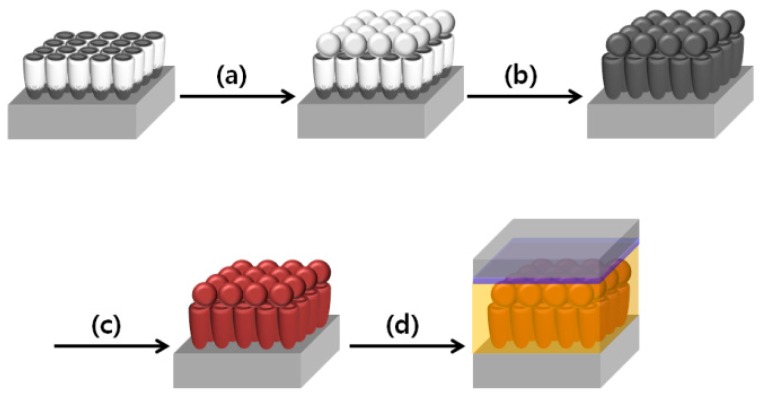
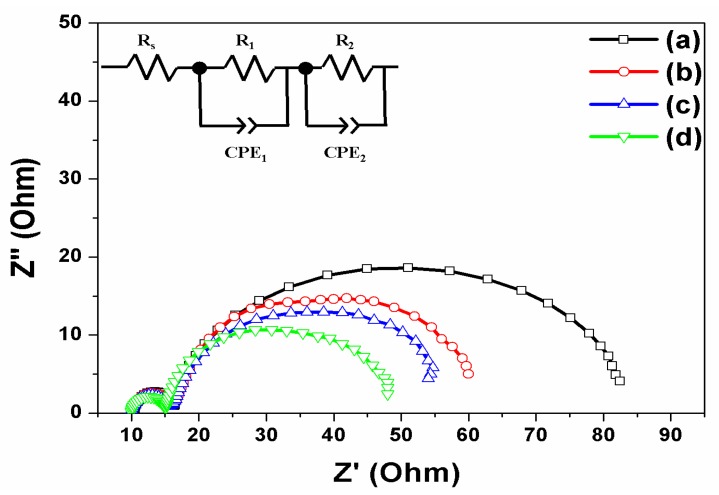
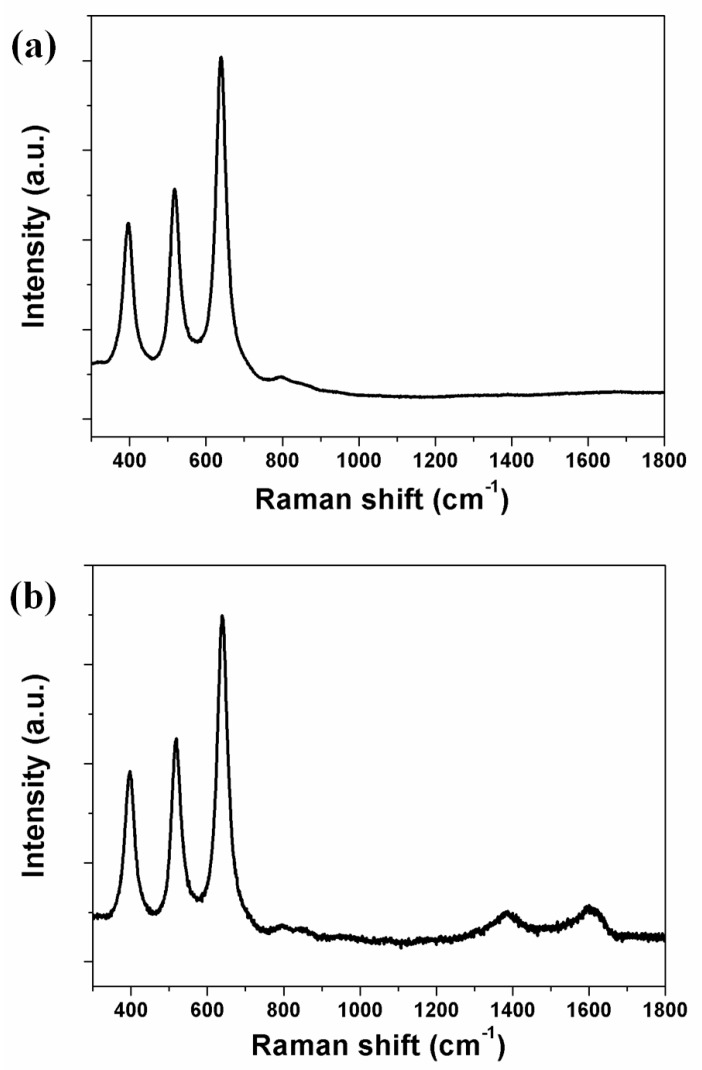
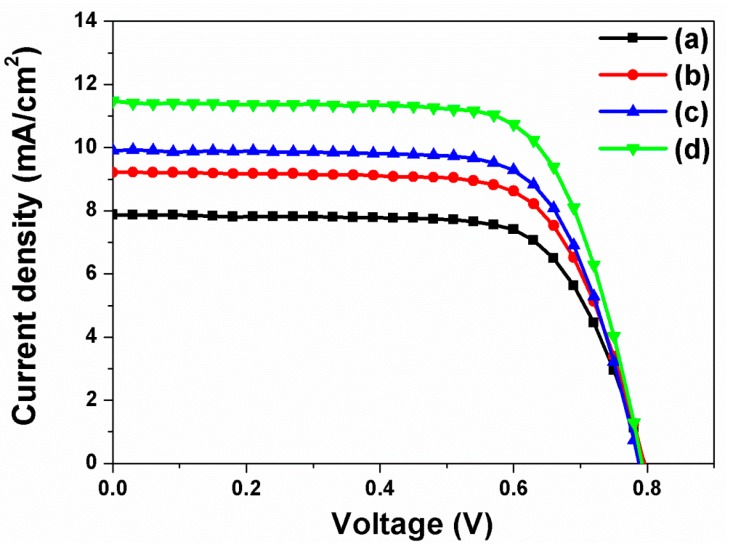
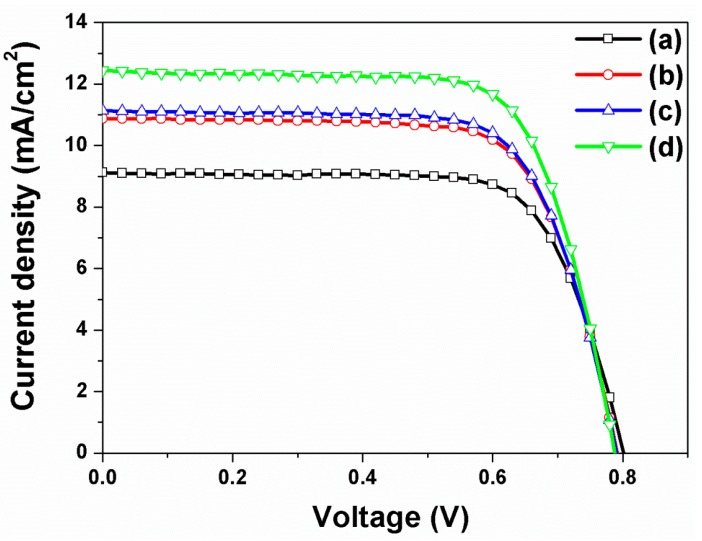
Dye-sensitized solar cells (DSSCs) were fabricated with closed- or open-ended freestanding TiO₂ nanotube arrays as photoelectrodes that were decorated with carbon materials and large TiO₂ nanoparticles (NPs) to enhance energy conversion efficiency. The energy conversion efficiency of DSSCs based on open-ended freestanding TiO₂ nanotube arrays increased from 4.47% to 5.39%, compared to the DSSCs based on closed-ended freestanding TiO₂ nanotube arrays. In DSSCs based on the open-ended freestanding TiO₂ nanotube arrays, the energy conversion efficiency with carbon materials increased from 5.39% to 6.19% due to better electron transport, and that with a scattering layer from 5.39% to 6.24% due to more light harvesting compared to the DSSCs without carbon materials or scattering layer. Moreover, the energy conversion efficiency of DSSCs based on the open-ended freestanding TiO₂ nanotube arrays with both carbon materials and scattering layer increased from 5.39% to 6.98%, which is an enhancement of 29.50%. In DSSCs based on the TiO₂ nanotube arrays, the carbon materials can improve electron transport by π-π conjugation, and the large TiO₂ NPs can enhance the capacity to light-harvest by scattering.
采用封闭或开口的独立式TiO₂纳米管阵列作为光电极制备了染料敏化太阳能电池(DSSC),这些光电极用碳材料和大尺寸TiO₂纳米颗粒(NP)进行修饰以提高能量转换效率。与基于封闭的独立式TiO₂纳米管阵列的DSSC相比,基于开口的独立式TiO₂纳米管阵列的DSSC的能量转换效率从4.47%提高到了5.39%。在基于开口的独立式TiO₂纳米管阵列的DSSC中,由于更好的电子传输,含碳材料的DSSC的能量转换效率从5.39%提高到了6.19%;与不含碳材料或散射层的DSSC相比,由于更多的光捕获,含散射层的DSSC的能量转换效率从5.39%提高到了6.24%。此外,基于同时含有碳材料和散射层的开口的独立式TiO₂纳米管阵列的DSSC的能量转换效率从5.39%提高到了6.98%,提高了29.50%。在基于TiO₂纳米管阵列的DSSC中,碳材料可通过π-π共轭改善电子传输,大尺寸TiO₂ NP可通过散射提高光捕获能力。