Research Institute for Microbial Diseases, Osaka University, Suita, Osaka 565-0871, Japan.
Graduate School of Pharmaceutical Sciences, Osaka University, Suita, Osaka 565-0871, Japan.
Int J Mol Sci. 2017 Oct 21;18(10):2208. doi: 10.3390/ijms18102208.
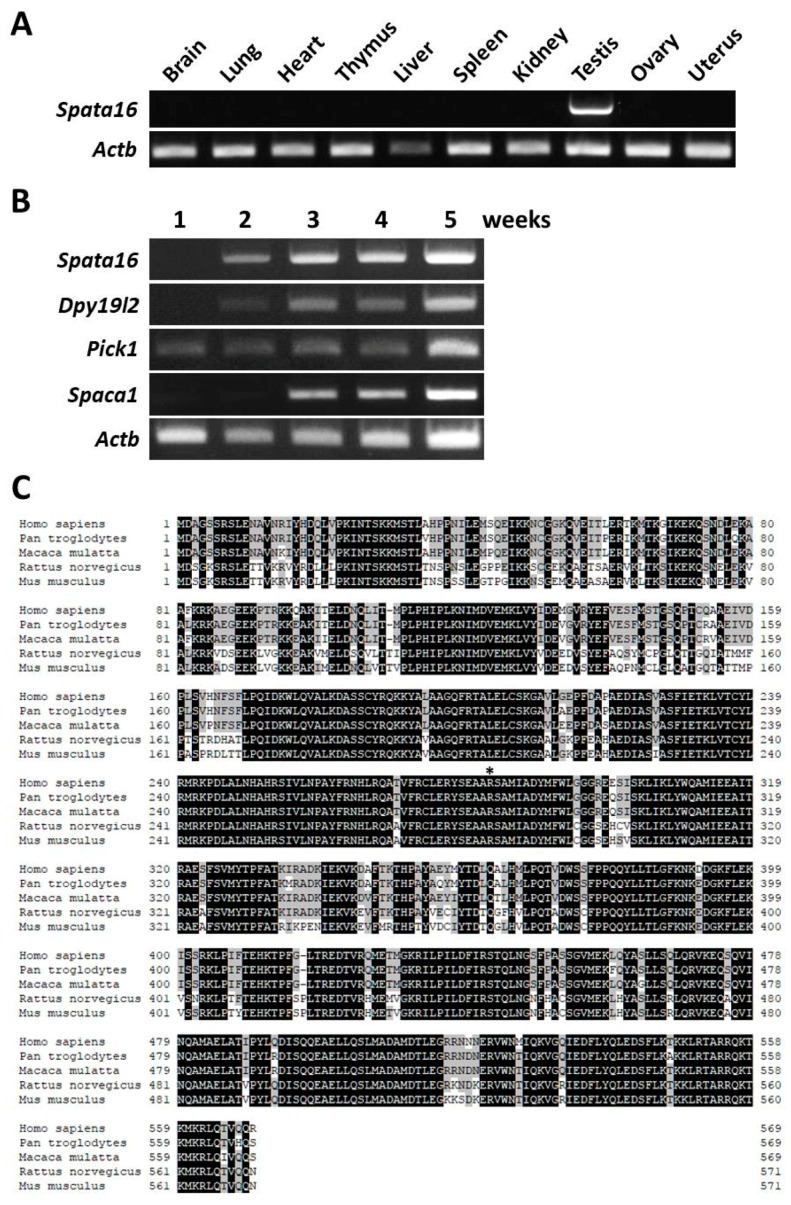
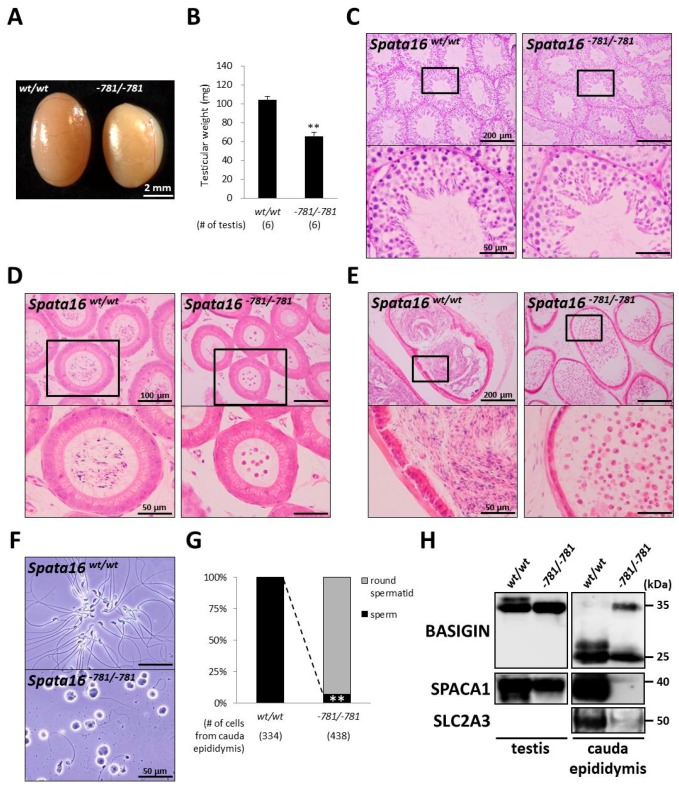
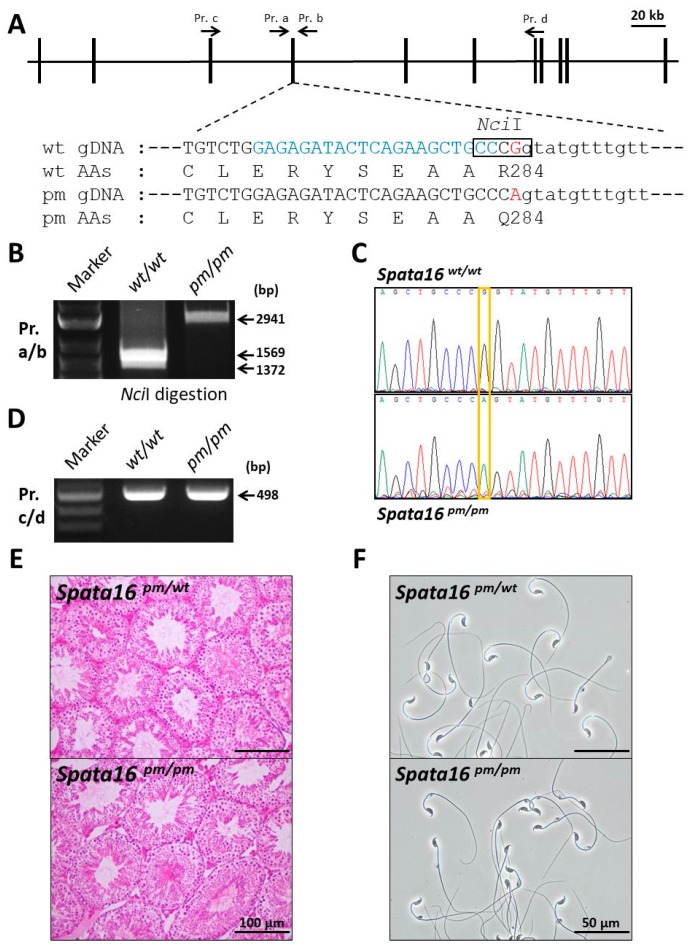
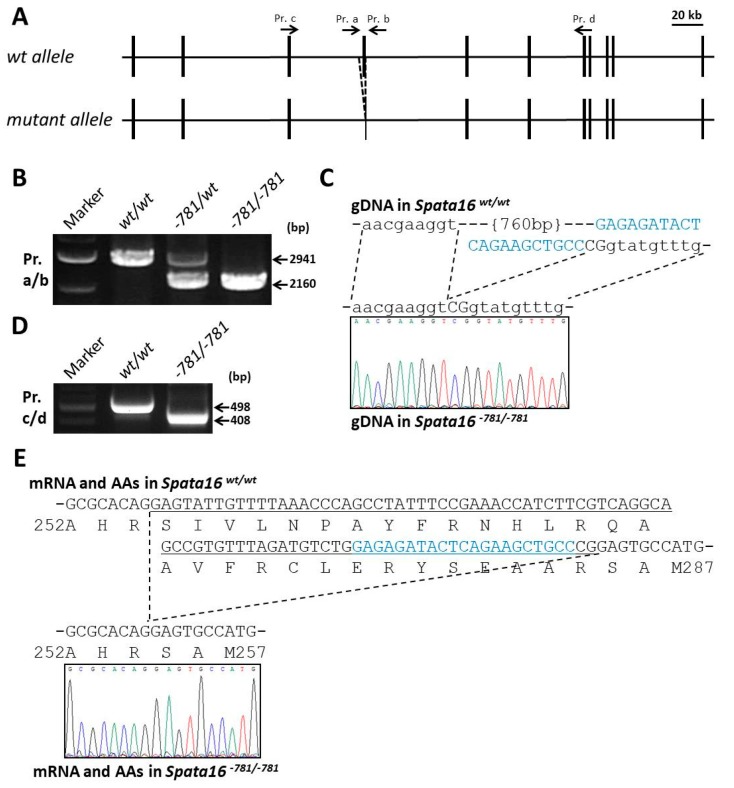
A recent genetic analysis of infertile globozoospermic patients identified causative mutations in three genes: a protein interacting with C kinase 1 (), dpy 19-like 2 (), and spermatogenesis associated 16 (). Although mouse models have clarified the physiological functions of and during spermatogenesis, remains to be determined. Globozoospermic patients carried a homozygous point mutation in at 848G→A/R283Q. We generated CRISPR/Cas9-mediated mutant mice with the same amino acid substitution in the fourth exon of to analyze the mutation site at R284Q, which corresponded with R283Q of mutated human SPATA16. We found that the point mutation in was not essential for male fertility; however, deletion of the fourth exon of resulted in infertile male mice due to spermiogenic arrest but not globozoospermia. This study demonstrates that is indispensable for male fertility in mice, as well as in humans, as revealed by CRISPR/Cas9-mediated mouse models.
蛋白相互作用激酶 1()、dpy19 样 2()和生精相关 16()。尽管小鼠模型已经阐明了和在精子发生过程中的生理功能,但的功能仍有待确定。圆头精子症患者在 848G→A/R283Q 处携带的是 基因的纯合点突变。我们利用 CRISPR/Cas9 介导的方法在 基因的第四外显子中产生了具有相同氨基酸取代的突变小鼠,以分析突变位点 R284Q,该突变与突变的人类 SPATA16 中的 R283Q 相对应。我们发现,中的点突变对于雄性生育力并非必需;然而,由于精子发生阻滞而不是圆头精子症,第四外显子的缺失导致了不育的雄性小鼠。这项研究表明,作为 CRISPR/Cas9 介导的小鼠模型的结果,在人类和小鼠中,都是雄性生育所必需的。