Embedded System Research Laboratory, Department of Electronics System Engineering, Malaysia-Japan International Institute of Technology, Kuala Lumpur, Malaysia.
Oriental Medicine Research Center, Kitasato University, Minato, Japan.
J Healthc Eng. 2017;2017:7460168. doi: 10.1155/2017/7460168. Epub 2017 Apr 20.
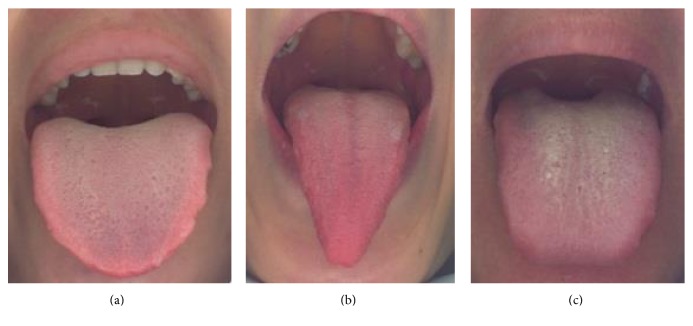
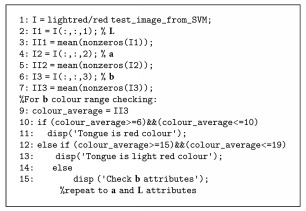
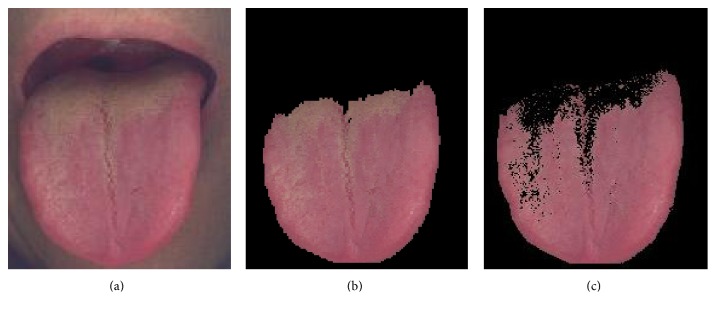
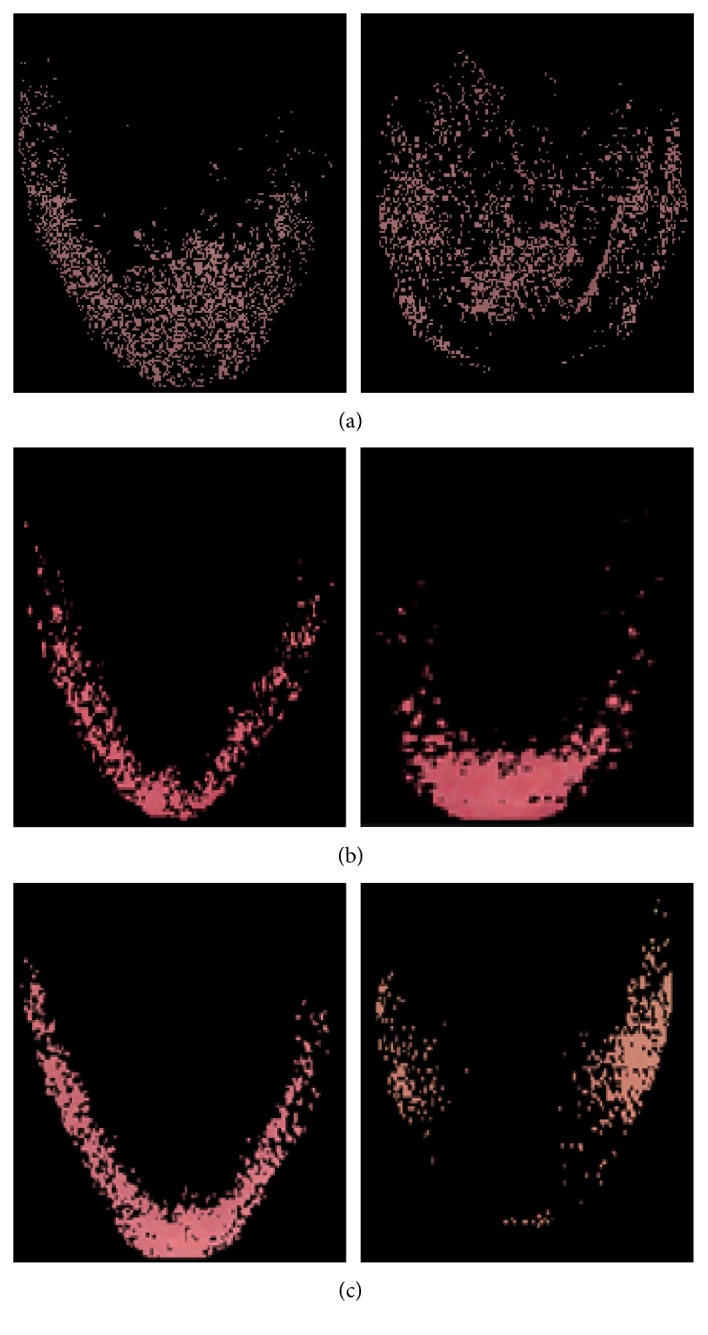
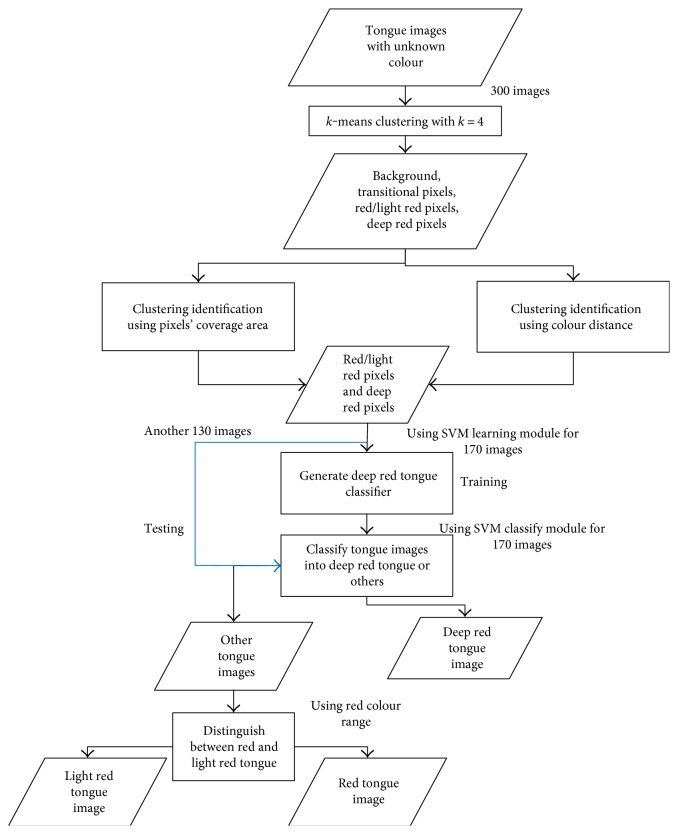
In tongue diagnosis, colour information of tongue body has kept valuable information regarding the state of disease and its correlation with the internal organs. Qualitatively, practitioners may have difficulty in their judgement due to the instable lighting condition and naked eye's ability to capture the exact colour distribution on the tongue especially the tongue with multicolour substance. To overcome this ambiguity, this paper presents a two-stage tongue's multicolour classification based on a support vector machine (SVM) whose support vectors are reduced by our proposed -means clustering identifiers and red colour range for precise tongue colour diagnosis. In the first stage, -means clustering is used to cluster a tongue image into four clusters of image background (black), deep red region, red/light red region, and transitional region. In the second-stage classification, red/light red tongue images are further classified into red tongue or light red tongue based on the red colour range derived in our work. Overall, true rate classification accuracy of the proposed two-stage classification to diagnose red, light red, and deep red tongue colours is 94%. The number of support vectors in SVM is improved by 41.2%, and the execution time for one image is recorded as 48 seconds.
在舌诊中,舌体的颜色信息保留了有关疾病状态及其与内脏器官相关性的有价值信息。由于照明条件不稳定以及肉眼难以捕捉舌头上的确切颜色分布(特别是有多种颜色物质的舌头),因此,从业者在判断时可能会遇到困难。为了克服这种模糊性,本文提出了一种基于支持向量机(SVM)的舌部多色分类方法,该方法的支持向量通过我们提出的均值聚类标识符和红色范围进行了减少,从而实现了精确的舌色诊断。在第一阶段,均值聚类用于将舌图像聚类为四个图像背景(黑色)、深红色区域、红色/浅红色区域和过渡区域的簇。在第二阶段的分类中,根据我们的工作中得出的红色范围,进一步将红色/浅红色舌图像分类为红色舌或浅红色舌。总体而言,所提出的两阶段分类方法对红色、浅红色和深红色舌色的正确分类准确率为 94%。SVM 的支持向量数量提高了 41.2%,并且一张图像的执行时间记录为 48 秒。