Pharmacology and Experimental Therapeutics Unit, School of Pharmacy, Institute for Drug Research, Faculty of Medicine, Hebrew University of Jerusalem, Jerusalem, Israel.
The Lautenberg Center for General and Tumor Immunology, The Department of Immunology and Cancer Research, Faculty of Medicine, IMRIC, Hebrew University of Jerusalem, Jerusalem, Israel.
Trends Immunol. 2018 Feb;39(2):112-122. doi: 10.1016/j.it.2017.10.001. Epub 2017 Oct 20.
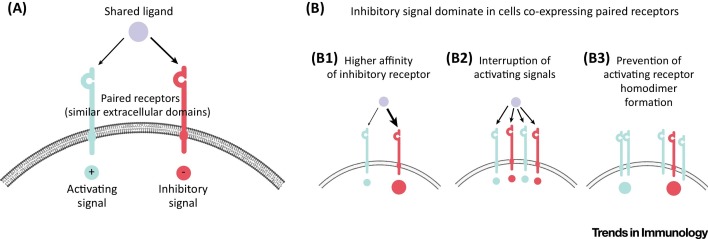
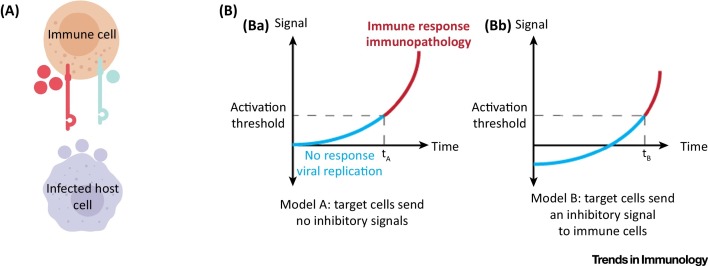
Coactivating and inhibitory receptors that share at least one ligand interact with a wide variety of ligands, indicating their importance in a range of situations. Here, we discuss principles of mainly human paired receptor function and ligand recognition, and possible therapeutic implications of targeting these receptors in cancer, autoimmune diseases, and allergy. We summarise and emphasise the idea that these receptors, which have evolved in part in response to pathogen pressure, fine-tune the immune response, preserve homeostasis, and that pathogens and tumours use the dominance of the inhibitory receptors over the coactivating receptors to avoid immune elimination. Finally, we discuss the options of using paired receptors and their ligand for immune cell education and therapy.
共激活和共抑制受体至少共享一种配体,与各种配体相互作用,表明它们在多种情况下都很重要。在这里,我们讨论了主要的人类配对受体功能和配体识别的原则,以及在癌症、自身免疫性疾病和过敏中靶向这些受体的可能治疗意义。我们总结并强调了这样一种观点,即这些受体在一定程度上是为了应对病原体的压力而进化的,它们可以微调免疫反应、维持体内平衡,病原体和肿瘤利用抑制性受体对共激活受体的优势来避免免疫清除。最后,我们讨论了使用配对受体及其配体进行免疫细胞教育和治疗的选择。