Sylos-Labini F, Magnani S, Cappellini G, La Scaleia V, Fabiano A, Picone S, Paolillo P, Di Paolo A, Lacquaniti F, Ivanenko Y
Center of Space BioMedicine, University of Rome Tor Vergata, Rome, Italy.
Neuromotor Physiology Laboratory, Fondazione Santa Lucia (IRCCS), Rome, Italy.
Front Physiol. 2017 Oct 10;8:784. doi: 10.3389/fphys.2017.00784. eCollection 2017.
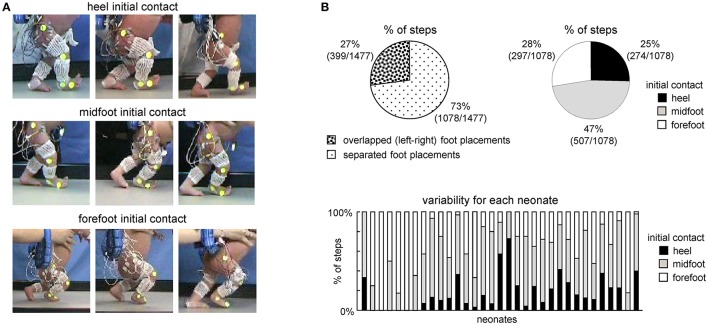
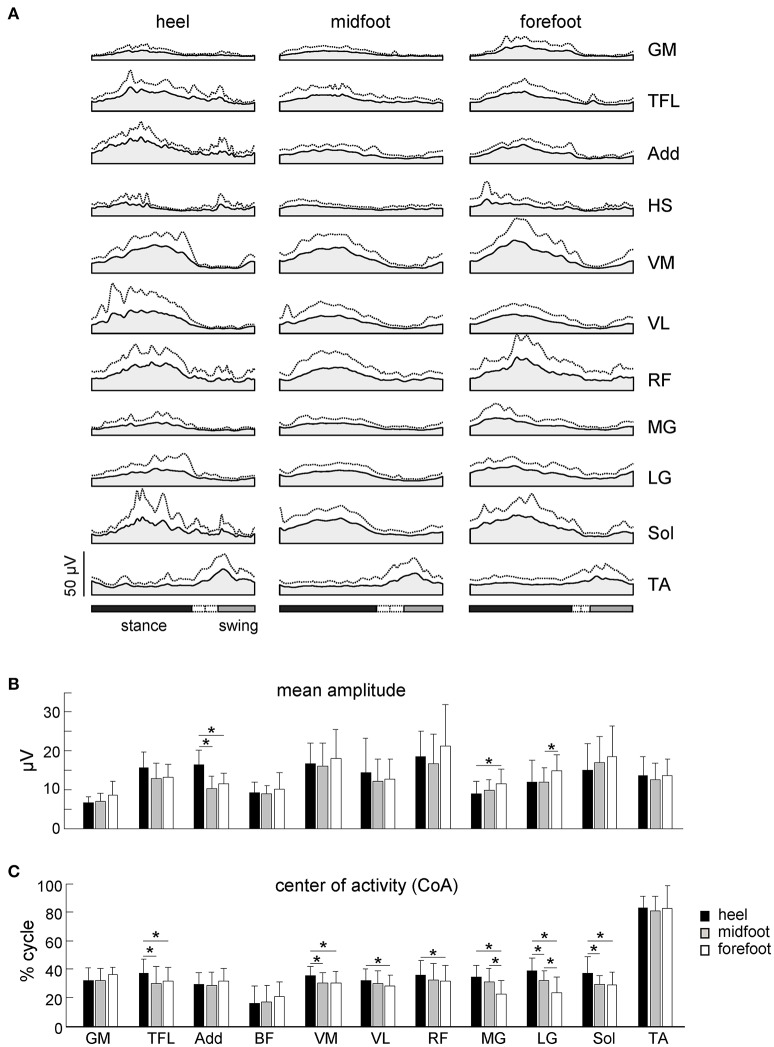
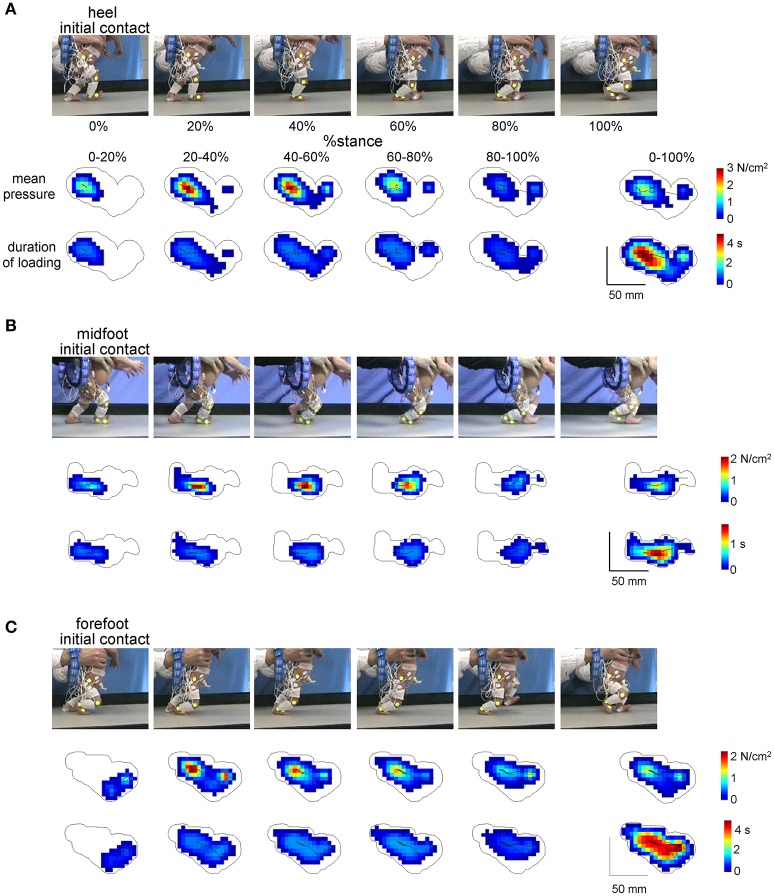
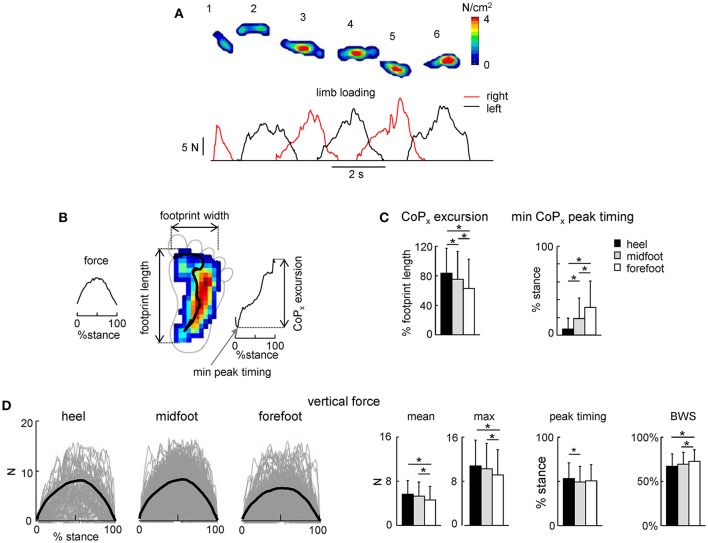
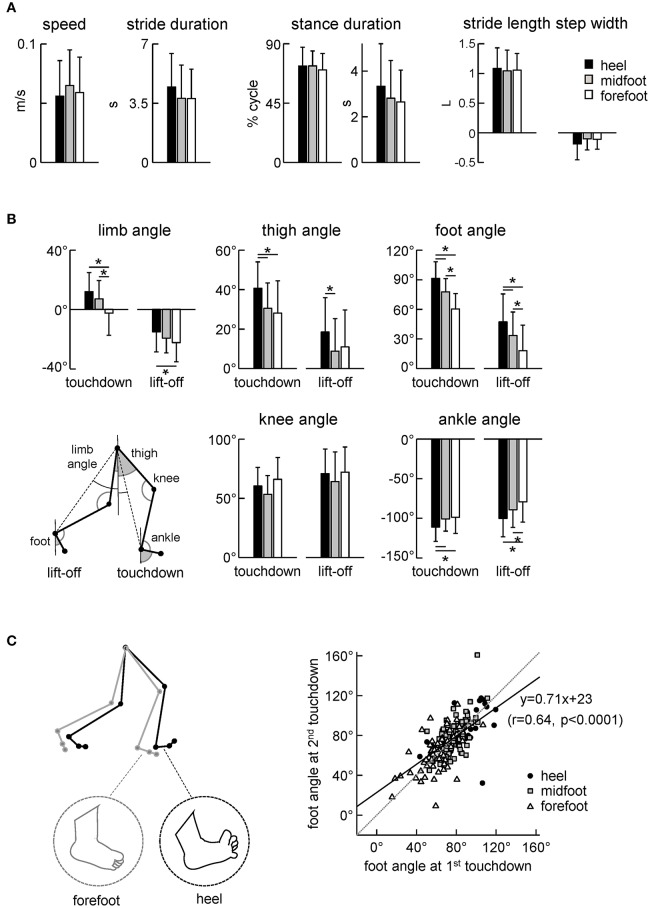
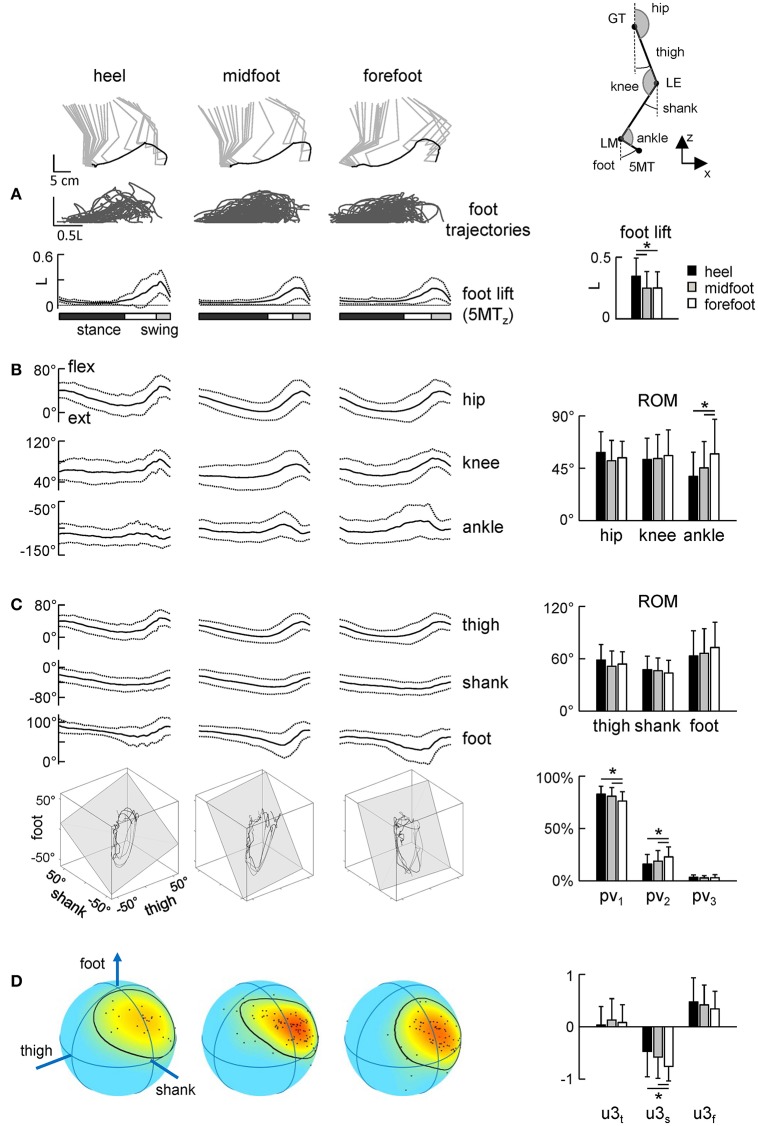
Stepping on ground can be evoked in human neonates, though it is rather irregular and stereotyped heel-to-toe roll-over pattern is lacking. Such investigations can provide insights into the role of contact- or load-related proprioceptive feedback during early development of locomotion. However, the detailed characteristics of foot placements and their association with motor patterns are still incompletely documented. We elicited stepping in 33 neonates supported on a table. Unilateral limb kinematics, bilateral plantar pressure distribution and EMG activity from up to 11 ipsilateral leg muscles were recorded. Foot placement characteristics in neonates showed a wide variation. In ~25% of steps, the swinging foot stepped onto the contralateral foot due to generally small step width. In the remaining steps with separate foot placements, the stance phase could start with forefoot (28%), midfoot (47%), or heel (25%) touchdowns. Despite forefoot or heel initial contacts, the kinematic and loading patterns markedly differed relatively to toe-walking or adult-like two-peaked vertical force profile. Furthermore, while the general stepping parameters (cycle duration, step length, range of motion of proximal joints) were similar, the initial foot contact was consistently associated with specific center-of-pressure excursion, range of motion in the ankle joint, and the center-of-activity of extensor muscles (being shifted by ~5% of cycle toward the end of stance in the "heel" relative to "forefoot" condition). In sum, we found a variety of footfall patterns in conjunction with associated changes in motor patterns. These findings suggest the potential contribution of load-related proprioceptive feedback and/or the expression of variations in the locomotor program already during early manifestations of stepping on ground in human babies.
人类新生儿能够被诱发踏步动作,尽管这种动作相当不规律,且缺乏典型的从脚跟到脚尖的滚动模式。此类研究能够深入了解在运动早期发展过程中,与接触或负荷相关的本体感觉反馈所起的作用。然而,足部着地的详细特征及其与运动模式的关联仍未得到充分记录。我们让33名被支撑在桌子上的新生儿进行踏步。记录了单侧肢体的运动学、双侧足底压力分布以及多达11块同侧腿部肌肉的肌电图活动。新生儿的足部着地特征呈现出很大的差异。在约25%的踏步中,由于步幅通常较小,摆动的脚会踩到对侧脚上。在其余双脚分开着地的踏步中,站立阶段可能以前脚掌(28%)、中脚掌(47%)或脚跟(25%)着地开始。尽管前脚掌或脚跟先着地,但运动学和负荷模式与踮脚行走或类似成人的双峰垂直力曲线相比明显不同。此外,虽然一般的踏步参数(周期时长、步长、近端关节的运动范围)相似,但初始足部接触始终与特定的压力中心偏移、踝关节的运动范围以及伸肌的活动中心相关(在“脚跟”相对于“前脚掌”的情况下,在站立阶段末期向周期的约5%处偏移)。总之,我们发现了多种脚步落地模式以及相关的运动模式变化。这些发现表明,在人类婴儿开始表现出地面踏步的早期阶段,与负荷相关的本体感觉反馈和/或运动程序变化的表达可能起到了作用。