Larsson Emma, Vivian-Smith Adam, Offringa Remko, Sundberg Eva
Institute of Biology Leiden, Plant Developmental Genetics, Leiden University, Leiden, Netherlands.
Department of Plant Biology, BioCentre and Linnean Centre for Plant Biology in Uppsala, Swedish University of Agricultural Sciences (SLU), Uppsala, Sweden.
Front Plant Sci. 2017 Oct 10;8:1735. doi: 10.3389/fpls.2017.01735. eCollection 2017.
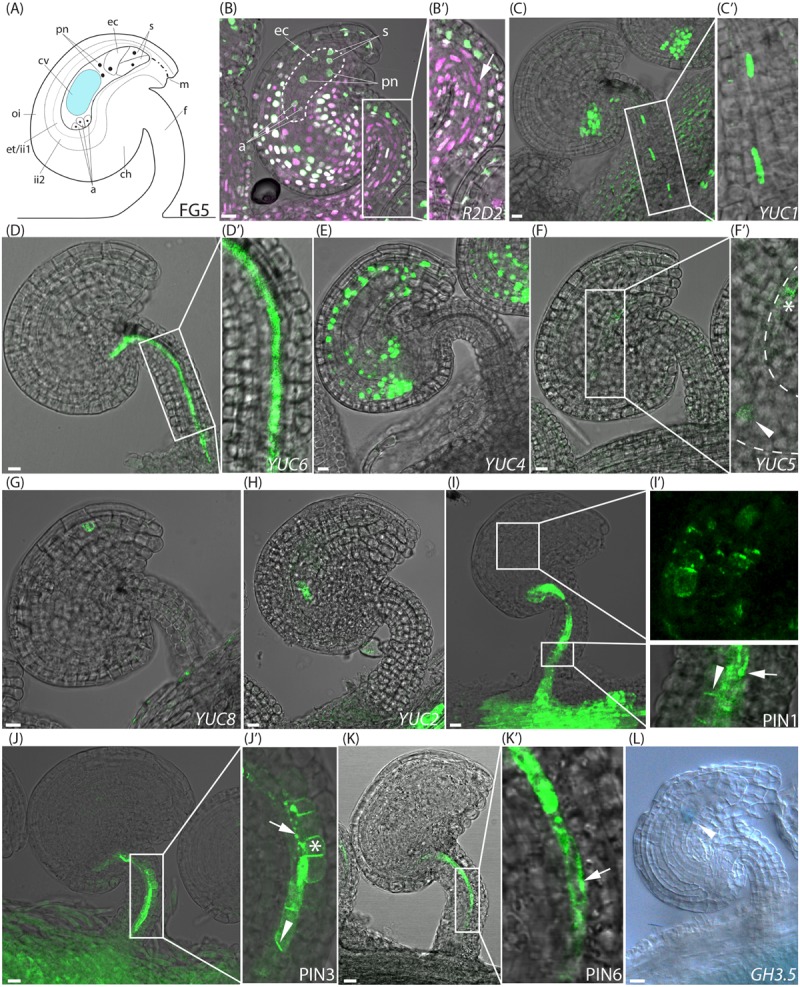
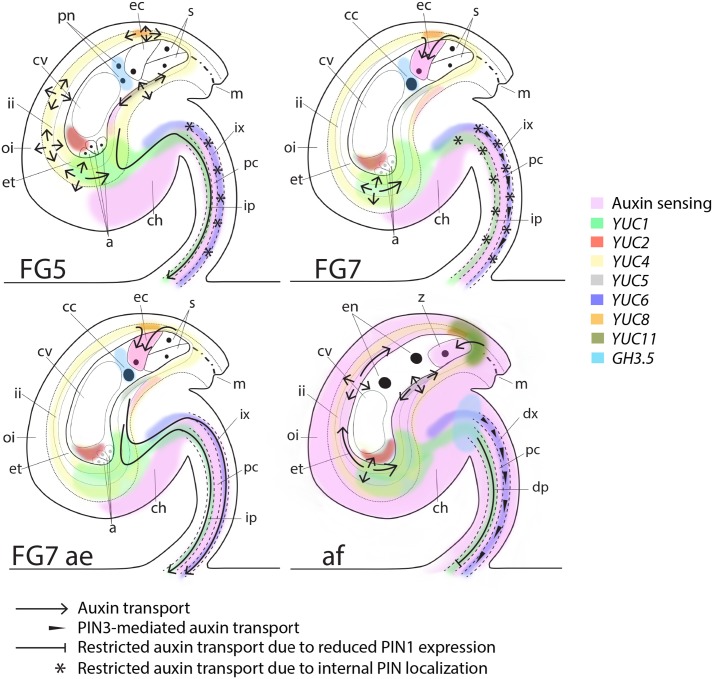
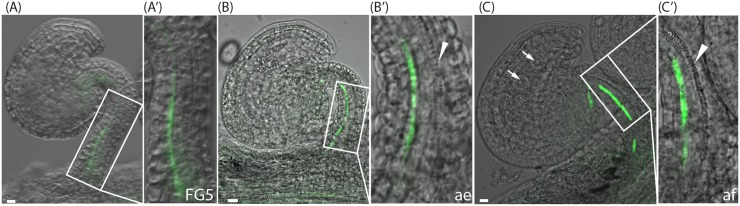
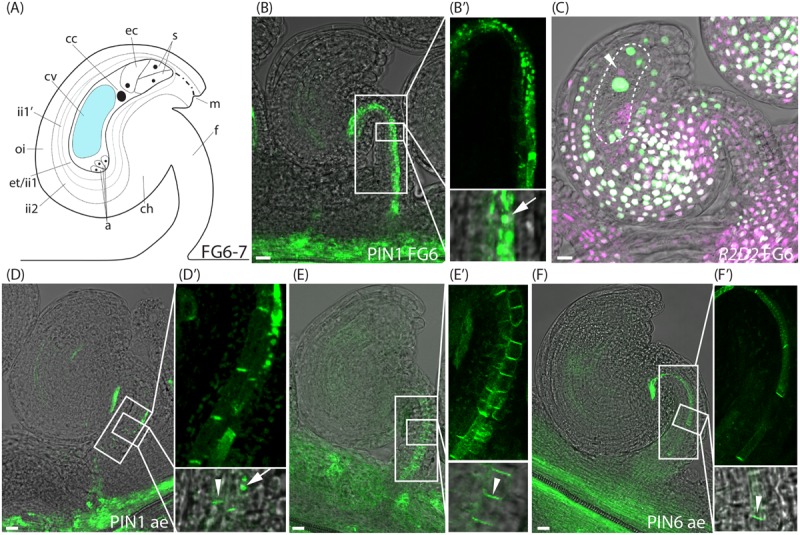
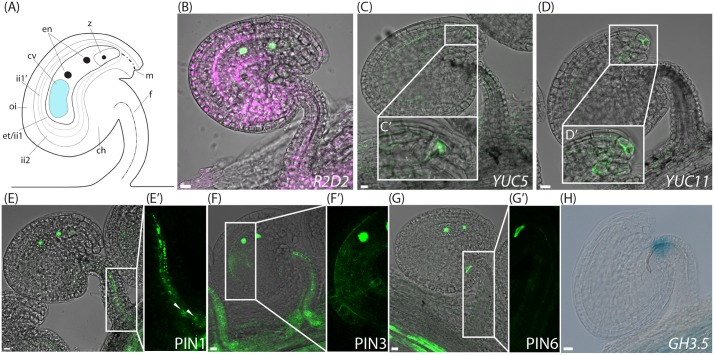
The plant hormone auxin is a vital component for plant reproduction as it regulates the development of both male and female reproductive organs, including ovules and gynoecia. Furthermore, auxin plays important roles in the development and growth of seeds and fruits. Auxin responses can be detected in ovules shortly after fertilization, and it has been suggested that this accumulation is a prerequisite for the developmental reprogramming of the ovules to seeds, and of the gynoecium to a fruit. However, the roles of auxin at the final stages of ovule development, and the sources of auxin leading to the observed responses in ovules after fertilization have remained elusive. Here we have characterized the auxin readout in Arabidopsis ovules, at the pre-anthesis, anthesis and in the immediate post-fertilization stages, using the auxin sensor. In addition we have mapped the expression of auxin biosynthesis and conjugation genes, as well as that of auxin transporting proteins, during the same developmental stages. These analyses reveal specific spatiotemporal patterns of the different auxin homeostasis regulators. Auxin biosynthesis genes and auxin transport proteins define a pre-patterning of vascular cell identity in the pre-anthesis funiculus. Furthermore, our data suggests that auxin efflux from the ovule is restricted in an anther-dependent manner, presumably to synchronize reproductive organ development and thereby optimizing the chances of successful fertilization. Finally, auxin biosynthesis together with reduced auxin conjugation and transport result in an enhanced auxin readout throughout the sporophytic tissues of the ovules soon after fertilization. Together, our results suggest a sophisticated set of regulatory cascades that allow successful fertilization and the subsequent transition of the female reproductive structures into seeds and fruits.
植物激素生长素是植物繁殖的重要组成部分,因为它调节雄性和雌性生殖器官的发育,包括胚珠和雌蕊。此外,生长素在种子和果实的发育与生长中发挥着重要作用。受精后不久就能在胚珠中检测到生长素反应,有人认为这种积累是胚珠发育重编程为种子以及雌蕊发育为果实的先决条件。然而,生长素在胚珠发育最后阶段的作用,以及导致受精后胚珠中观察到反应的生长素来源仍然不清楚。在这里,我们使用生长素传感器对拟南芥胚珠在花前、花期和受精后即刻阶段的生长素读数进行了表征。此外,我们还绘制了相同发育阶段生长素生物合成和共轭基因以及生长素转运蛋白的表达图谱。这些分析揭示了不同生长素稳态调节因子的特定时空模式。生长素生物合成基因和生长素转运蛋白在花前珠柄中定义了维管细胞身份的预模式。此外,我们的数据表明,胚珠中的生长素外流以花药依赖的方式受到限制,大概是为了同步生殖器官的发育,从而优化成功受精的机会。最后,生长素生物合成以及生长素共轭和转运的减少导致受精后不久胚珠的整个孢子体组织中生长素读数增强。总之,我们的结果表明存在一套复杂的调控级联,使成功受精以及随后雌性生殖结构向种子和果实的转变成为可能。