Tsiachristas Apostolos, Smith A David
Health Economics Research Centre, Nuffield Department of Population Health, University of Oxford, Oxford, UK.
Oxford Project to Investigate Memory and Ageing (OPTIMA), Department of Pharmacology, University of Oxford, Oxford, UK.
Alzheimers Dement (N Y). 2016 Aug 11;2(3):156-161. doi: 10.1016/j.trci.2016.07.002. eCollection 2016 Sep.
To respond to the threat of dementia to public health and the economy, we need to prioritize research resources on strategies that would be the most effective. In relation to the prevention of dementia, this article considers whether lowering plasma homocysteine by B-vitamin supplementation is one of the top priority and cost-effective treatments.
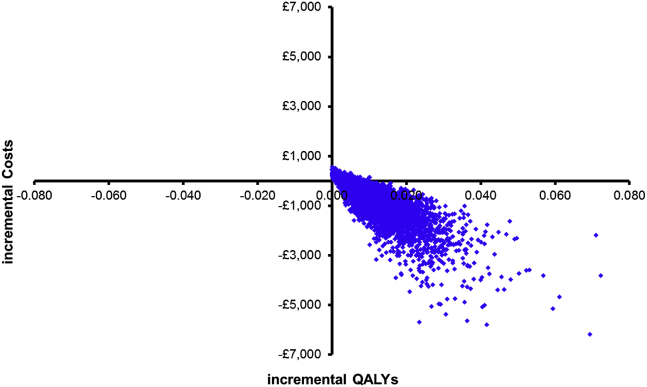
A decision model was constructed to calculate the lifetime costs and quality-adjusted life years (QALYs) of providing B-vitamin treatment to people in the United Kingdom over 60 years with high levels (>13 μmol/L) of plasma homocysteine, which was compared to the lifetime costs and outcomes of not providing them with the treatment.
Treatment with B-vitamins will save £60,021 per QALY gained and so is highly cost-effective.
We anticipate that this provocative finding will be debated by scientists, clinicians, and policy makers and eventually be tested in future clinical trials.
为应对痴呆症对公众健康和经济的威胁,我们需要将研究资源优先用于最有效的策略上。关于痴呆症的预防,本文探讨了通过补充B族维生素来降低血浆同型半胱氨酸水平是否属于最优先且具有成本效益的治疗方法之一。
构建了一个决策模型,以计算为英国60岁以上血浆同型半胱氨酸水平高(>13μmol/L)的人群提供B族维生素治疗的终身成本和质量调整生命年(QALY),并将其与不提供治疗的终身成本和结果进行比较。
每获得一个QALY,B族维生素治疗将节省60,021英镑,因此具有很高的成本效益。
我们预计这一引人深思的发现将引发科学家、临床医生和政策制定者的讨论,并最终在未来的临床试验中得到验证。