Department of Medical Oncology, Radboud University Medical Center, P.O. Box 9101, 6500HB, Nijmegen, The Netherlands.
Clinical Studies, Clinical and Translational Sarcoma/Gene Function, The Institute of Cancer Research, London, SW3 6JB, UK.
Target Oncol. 2017 Dec;12(6):815-826. doi: 10.1007/s11523-017-0528-z.
The receptor tyrosine kinase (RTK) anaplastic lymphoma kinase (ALK) has been implicated in the tumorigenesis of rhabdomyosarcoma (RMS). However, the exact role of ALK in RMS is debatable and remains to be elucidated.
To determine the in vitro and in vivo effects and mechanism of action of the second-generation ALK inhibitor ceritinib on RMS cell growth.
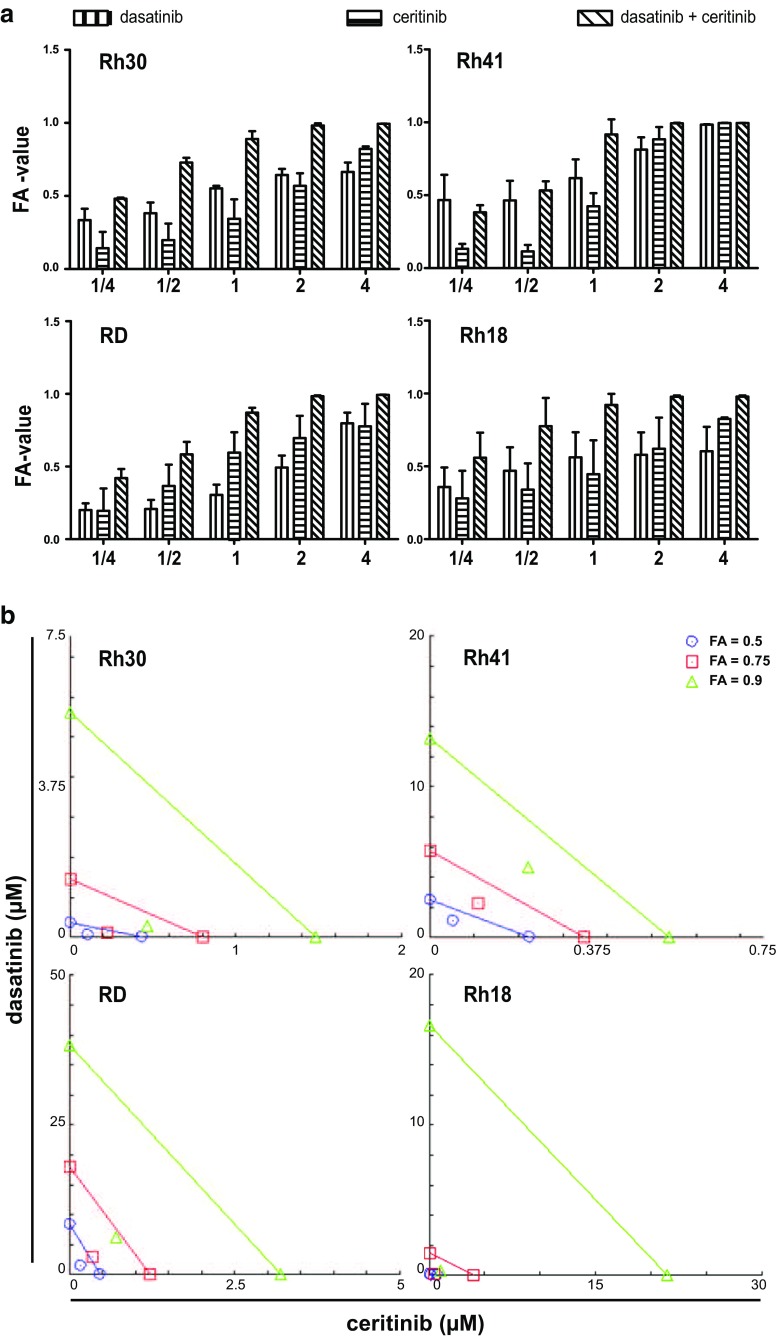
Effects of ceritinib on cell proliferation, wound healing, cell cycle, and RTK signaling were determined in alveolar and embryonal rhabdomyosarcoma (ARMS, ERMS). In addition, possible synergistic effects of combined treatment with ceritinib and the Abl/Src family kinase inhibitor dasatinib were determined.
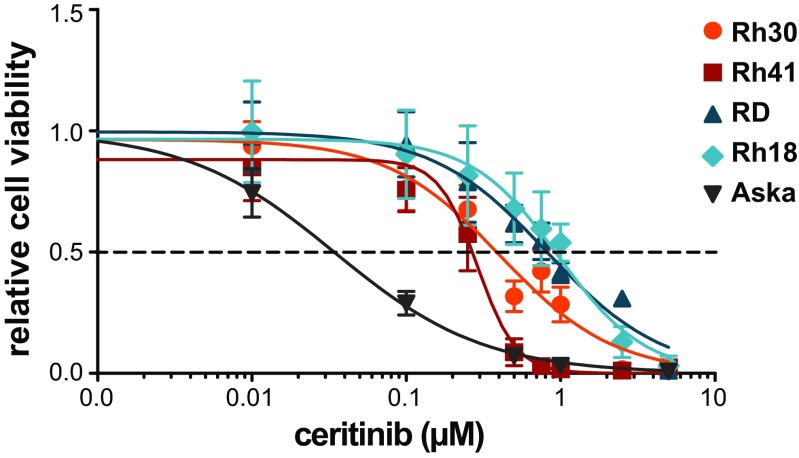
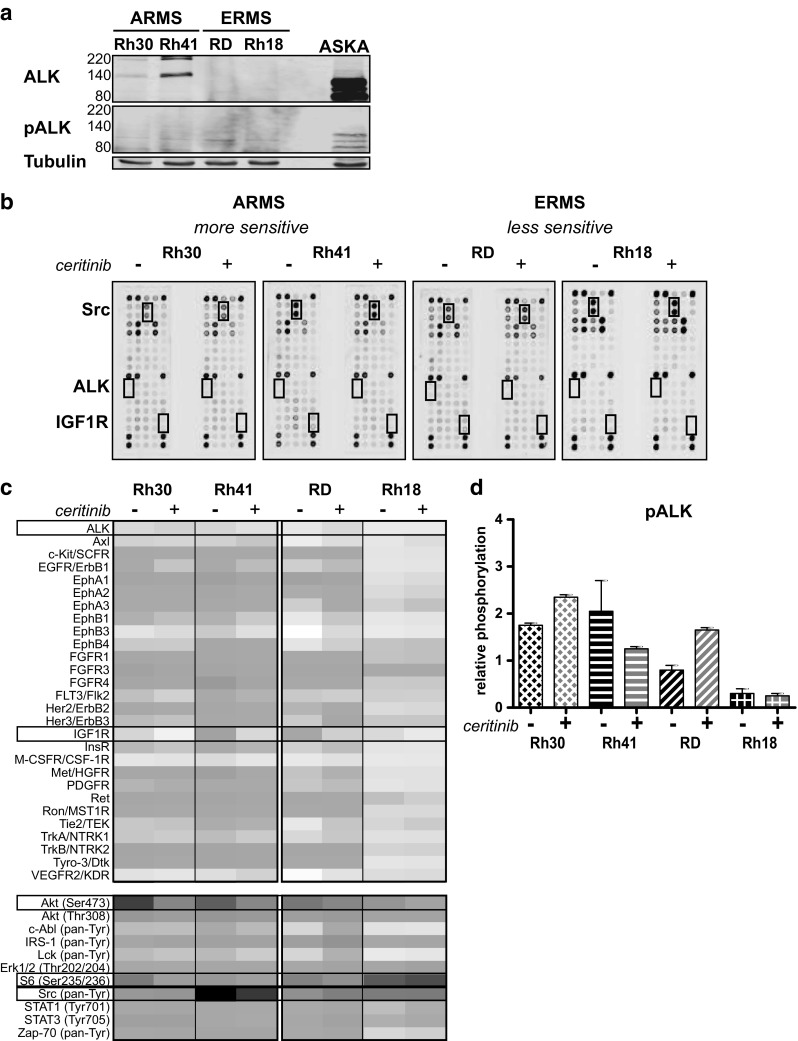
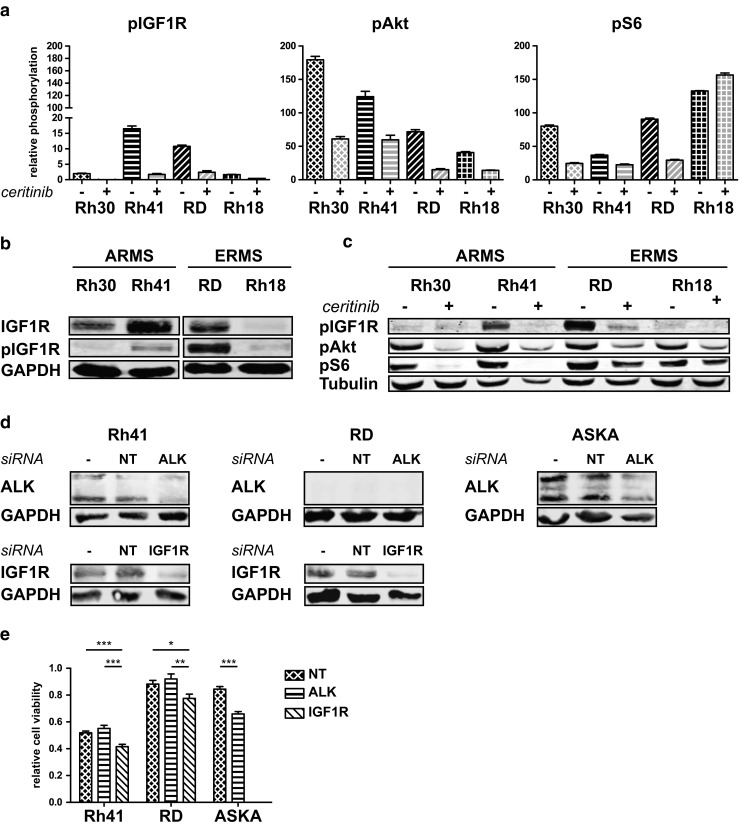
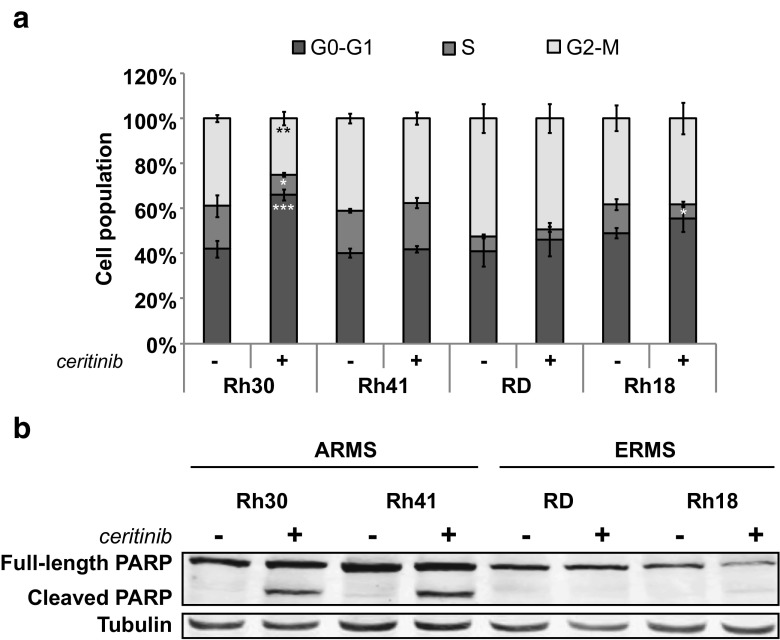
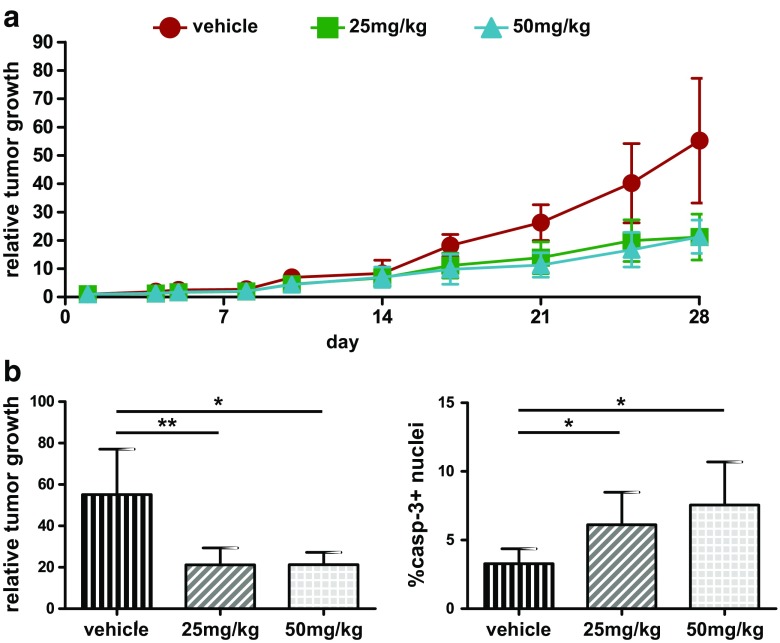
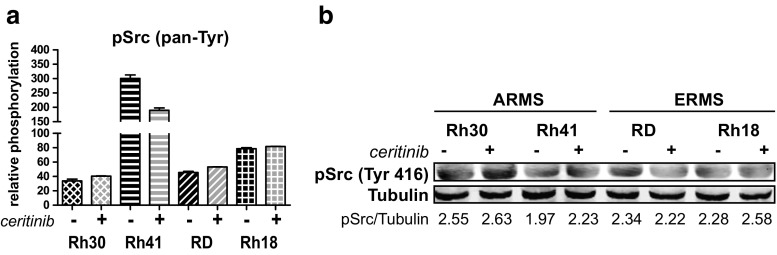
Ceritinib treatment led to decreased cell proliferation, cell cycle arrest, apoptosis, and decreased in vivo tumor growth for the ARMS subtype. ERMS cell lines were less affected and showed no cell cycle arrest or apoptosis. Both subtypes lacked intrinsic ALK phosphorylation, and ceritinib was shown to affect the IGF1R signaling pathway. High levels of phosphorylated Src (Tyr416) were present following ceritinib treatment, making combined treatment with a Src inhibitor a potential treatment option. Combined treatment of ceritinib and dasatinib showed synergistic effects in both ERMS and ARMS cell lines.
This study shows that monotherapy with an ALK inhibitor, such as ceritinib, in RMS, has no effect on ALK signaling. However, the synergistic effects of ceritinib and dasatinib are promising, most probably due to targeting of IGF1R and Src.
受体酪氨酸激酶(RTK)间变性淋巴瘤激酶(ALK)已被认为参与横纹肌肉瘤(RMS)的肿瘤发生。然而,ALK 在 RMS 中的确切作用仍存在争议,有待阐明。
确定第二代 ALK 抑制剂色瑞替尼对 RMS 细胞生长的体外和体内作用及其作用机制。
在肺泡和胚胎横纹肌肉瘤(ARMS、ERMS)中确定色瑞替尼对细胞增殖、伤口愈合、细胞周期和 RTK 信号的影响。此外,还确定了色瑞替尼与 Abl/Src 家族激酶抑制剂达沙替尼联合治疗的可能协同作用。
色瑞替尼治疗导致 ARMS 亚型细胞增殖减少、细胞周期停滞、细胞凋亡和体内肿瘤生长减少。ERMS 细胞系受影响较小,无细胞周期停滞或细胞凋亡。两种亚型均缺乏内在的 ALK 磷酸化,色瑞替尼被证明会影响 IGF1R 信号通路。色瑞替尼治疗后存在高水平磷酸化 Src(Tyr416),因此联合使用 Src 抑制剂可能是一种潜在的治疗选择。色瑞替尼和 dasatinib 的联合治疗在 ERMS 和 ARMS 细胞系中均显示出协同作用。
本研究表明,RMS 中的单药 ALK 抑制剂治疗,如色瑞替尼,对 ALK 信号没有影响。然而,色瑞替尼和 dasatinib 的协同作用很有前途,这很可能是由于针对 IGF1R 和 Src。