Shokrolahi F, Zandi M, Shokrollahi P, Atai M, Gafar-Zadeh E, Hanifeh M
Biomaterials Department, Iran Polymer and Petrochemical Institute, Pazhoohesh Blvd, Tehran-Karaj Hwy, 1497713115, Tehran, Iran.
Science Department, Iran Polymer and Petrochemical Institute, Pazhoohesh Blvd, Tehran-Karaj Hwy, 1497713115, Tehran, Iran.
Prog Biomater. 2017 Dec;6(4):147-156. doi: 10.1007/s40204-017-0074-x. Epub 2017 Oct 25.
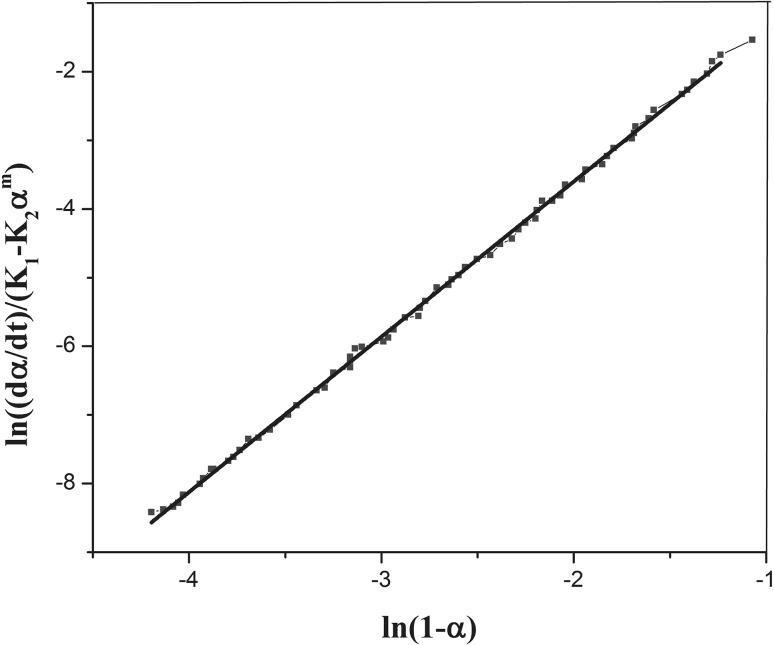
The physical, mechanical and biological properties of multicomponent acrylate-based hard lenses are directly influenced by degree of conversion achieved during copolymerization. In this research, polyhedral oligomeric silsesquioxane (POSS) acrylate is introduced into the polymer backbone in combination with hydroxyethyl methacrylate, dimethyl itaconate, methyl methacrylate, 3-(trimethoxysilyl) propyl methacrylate and triethylene glycol dimethacrylate in free-radical bulk polymerization. Kinetics of curing process was investigated by two techniques: differential scanning calorimetry and FTIR spectroscopy. Reaction kinetics in free-radical bulk polymerization of the system was studied by isothermal DSC performed at 65, 75, 85, and 95 °C using different quantities of initiator. Three compounds were prepared in different concentrations (0.2, 0.4 and 0.6 mol%) of 2,2'-azobisisobutyronitrile as initiator. Conversion rate was calculated as a function of time using data obtained from DSC measurements. The kinetic parameters of the reaction such as reaction constants, reaction orders and activation energies were obtained from the isothermal DSC data according to the autocatalytic model developed by Kamal and Sourour. The results showed that the experimental values were in good agreement with theoretically estimated values and our results may suggest that the polymerization reaction of this system is well described by Kamal's model. Cytotoxicity results, performed on extracts 28 days after PBS incubation, showed no toxicity of the materials extracted from the lenses indicating that they can be considered as safe materials in ocular lens applications. The viability and proliferation of L929 fibroblast cells in extracting media were followed by 3-[4,5-dimethylthiazol-2-yl]-2,5-diphenyltetrazolium bromide (MTT) and they may have a great potential as ideal supporting lens in people who suffer from keratoconus disease.
多组分丙烯酸酯基硬性隐形眼镜的物理、机械和生物学性能直接受共聚过程中实现的转化率影响。在本研究中,在自由基本体聚合中,将多面体低聚倍半硅氧烷(POSS)丙烯酸酯与甲基丙烯酸羟乙酯、衣康酸二甲酯、甲基丙烯酸甲酯、甲基丙烯酸3-(三甲氧基硅基)丙酯和三乙二醇二甲基丙烯酸酯一起引入聚合物主链。通过两种技术研究固化过程的动力学:差示扫描量热法和傅里叶变换红外光谱法。使用不同量的引发剂,通过在65、75、85和95℃下进行的等温DSC研究该体系自由基本体聚合中的反应动力学。以2,2'-偶氮二异丁腈为引发剂,制备了三种不同浓度(0.2、0.4和0.6mol%)的化合物。使用从DSC测量获得的数据,将转化率计算为时间的函数。根据Kamal和Sourour开发的自催化模型,从等温DSC数据获得反应的动力学参数,如反应常数、反应级数和活化能。结果表明,实验值与理论估计值吻合良好,我们的结果可能表明该体系的聚合反应可用Kamal模型很好地描述。在PBS孵育28天后对提取物进行的细胞毒性结果表明,从隐形眼镜中提取的材料无毒性,这表明它们在眼用隐形眼镜应用中可被视为安全材料。通过3-[4,5-二甲基噻唑-2-基]-2,5-二苯基四氮唑溴盐(MTT)跟踪L929成纤维细胞在提取培养基中的活力和增殖情况,它们在圆锥角膜疾病患者中作为理想的支撑隐形眼镜可能具有巨大潜力。