Department of Animal Sciences, Rutgers Endocrine Research Program, Rutgers, the State University of New Jersey, 67 Poultry Farm Lane, New Brunswick, NJ 08901 USA.
Department of Research Core Services, Lerner Research Institute, Cleveland Clinic, Cleveland, OH 44106 USA.
Clin Epigenetics. 2017 Oct 23;9:117. doi: 10.1186/s13148-017-0416-5. eCollection 2017.
Alcohol consumption during pregnancy is a significant public health problem and can result in a continuum of adverse outcomes to the fetus known as fetal alcohol spectrum disorders (FASD). Subjects with FASD show significant neurological deficits, ranging from microencephaly, neurobehavioral, and mental health problems to poor social adjustment and stress tolerance. Neurons are particularly sensitive to alcohol exposure. The neurotoxic action of alcohol, i.e., through ROS production, induces DNA damage and neuronal cell death by apoptosis. In addition, epigenetics, including DNA methylation, histone posttranslational modifications (PTMs), and non-coding RNA, play an important role in the neuropathology of FASD. However, little is known about the temporal dynamics and kinetics of histones and their PTMs in FASD.
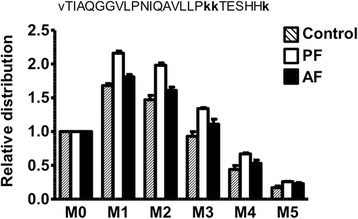
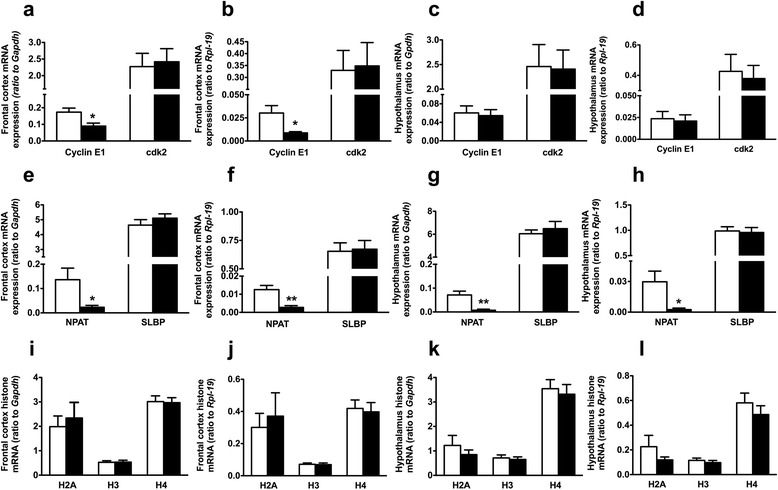
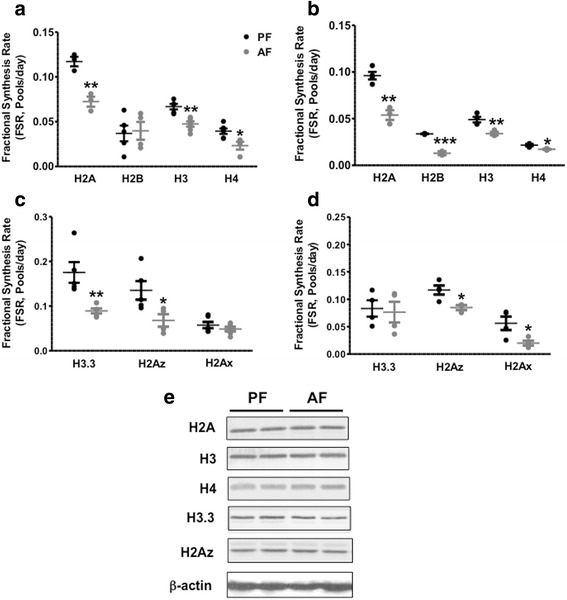
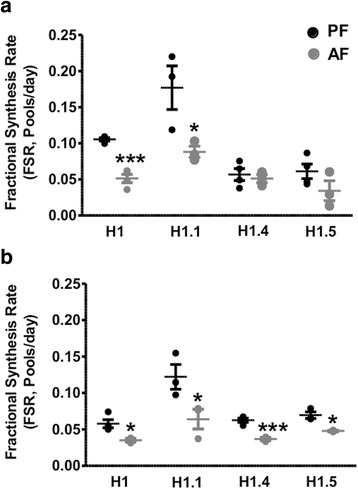
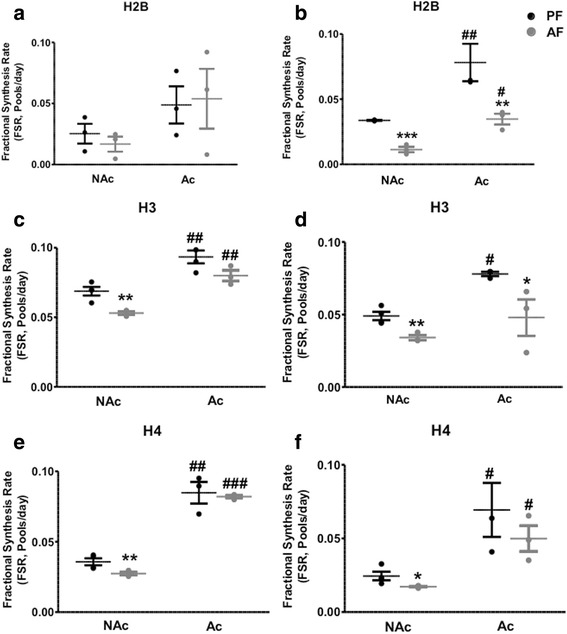
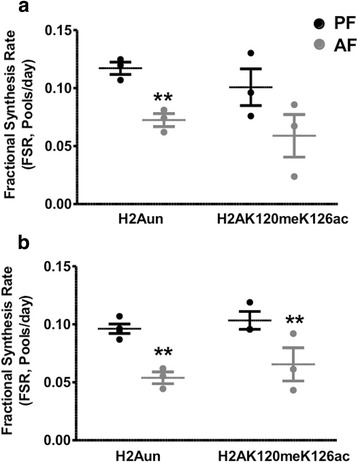
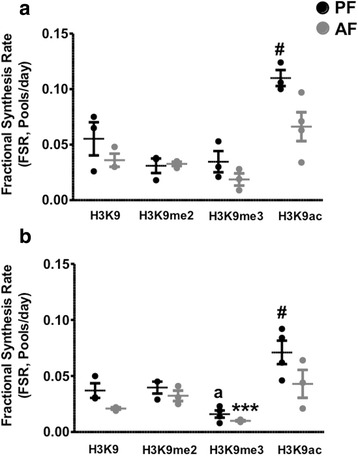
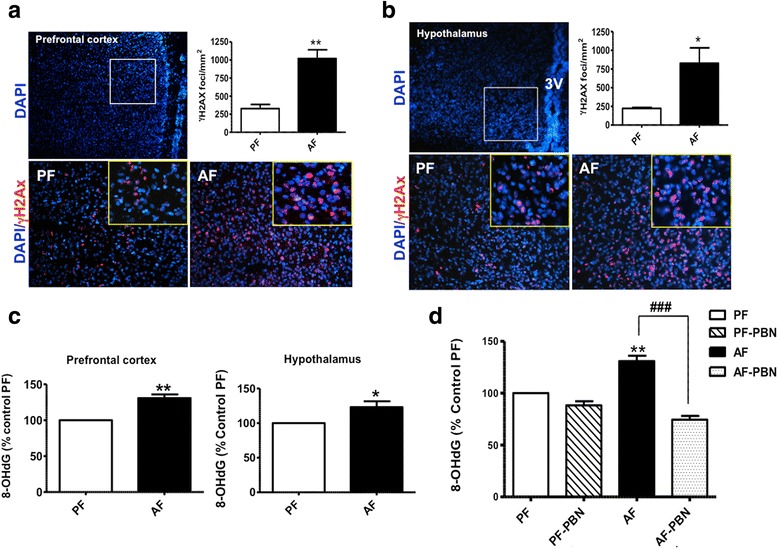
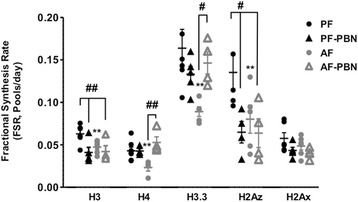
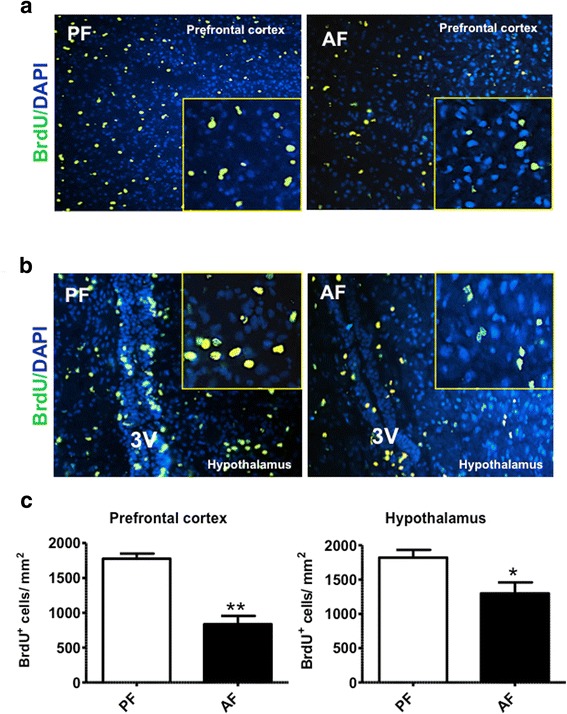
We examined the effects of postnatal alcohol exposure (PAE), an animal model of human third-trimester equivalent, on the kinetics of various histone proteins in two distinct brain regions, the frontal cortex, and the hypothalamus, using in vivo HO-labeling combined with mass spectrometry-based proteomics. We show that histones have long half-lives that are in the order of days. We also show that H3.3 and H2Az histone variants have faster turnovers than canonical histones and that acetylated histones, in general, have a faster turnover than unmodified and methylated histones. Our work is the first to show that PAE induces a differential reduction in turnover rates of histones in both brain regions studied. These alterations in histone turnover were associated with increased DNA damage and decreased cell proliferation in postnatal rat brain.
Alterations in histone turnover might interfere with histone deposition and chromatin stability, resulting in deregulated cell-specific gene expression and therefore contribute to the development of the neurological disorders associated with FASD. Using in vivo HO-labeling and mass spectrometry-based proteomics might help in the understanding of histone turnover following alcohol exposure and could be of great importance in enabling researchers to identify novel targets and/or biomarkers for the prevention and management of fetal alcohol spectrum disorders.
怀孕期间饮酒是一个严重的公共卫生问题,可导致胎儿出现一系列不良后果,即胎儿酒精谱系障碍(FASD)。患有 FASD 的受试者表现出明显的神经缺陷,从小头畸形、神经行为和心理健康问题到社交适应不良和应激耐受力差不等。神经元对酒精暴露特别敏感。酒精的神经毒性作用,即通过 ROS 产生,通过细胞凋亡诱导 DNA 损伤和神经元细胞死亡。此外,表观遗传学,包括 DNA 甲基化、组蛋白翻译后修饰(PTMs)和非编码 RNA,在 FASD 的神经病理学中发挥重要作用。然而,关于 FASD 中组蛋白及其 PTM 的时间动态和动力学知之甚少。
我们使用体内 HO 标记结合基于质谱的蛋白质组学研究了产后酒精暴露(PAE)对两种不同脑区(额叶皮层和下丘脑)中各种组蛋白动力学的影响,PAE 是一种人类妊娠晚期的动物模型。我们表明组蛋白具有数天的半衰期。我们还表明,H3.3 和 H2Az 组蛋白变体的周转率比经典组蛋白快,乙酰化组蛋白的周转率通常比未修饰和甲基化组蛋白快。我们的工作首次表明,PAE 会导致研究的两个脑区组蛋白周转率的差异降低。这些组蛋白周转率的改变与产后大鼠大脑中 DNA 损伤增加和细胞增殖减少有关。
组蛋白周转率的改变可能会干扰组蛋白沉积和染色质稳定性,导致细胞特异性基因表达失调,从而导致与 FASD 相关的神经发育障碍。使用体内 HO 标记和基于质谱的蛋白质组学可能有助于了解酒精暴露后组蛋白的周转率,并可能对研究人员识别预防和管理胎儿酒精谱系障碍的新靶点和/或生物标志物具有重要意义。