Department of Pharmaceutical Sciences and Translational Cancer Research Center, South Dakota State University College of Pharmacy and Allied Health Professions, Brookings, SD 57007, USA.
SD-BRIN Proteomic Facility, University of South Dakota School of Medicine, Vermillion, SD 57069, USA.
Int J Oncol. 2017 Dec;51(6):1661-1673. doi: 10.3892/ijo.2017.4167. Epub 2017 Oct 19.
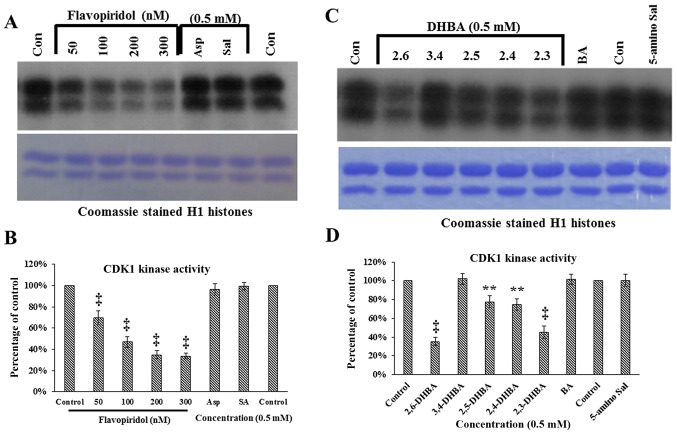
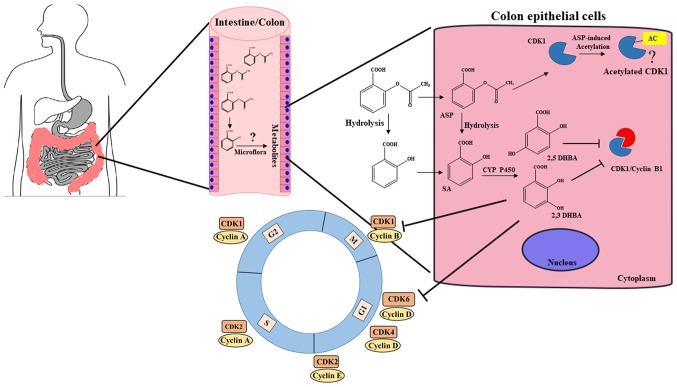
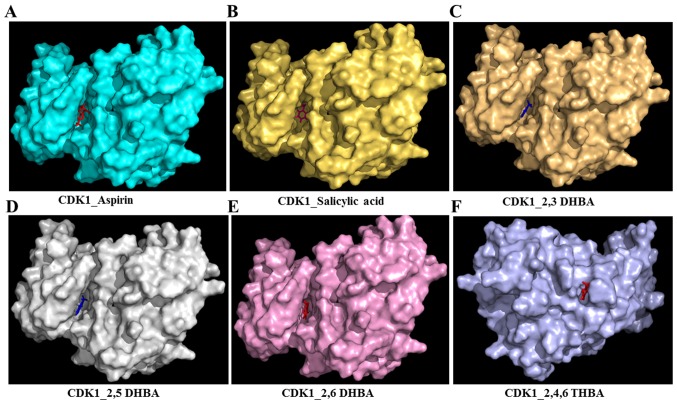
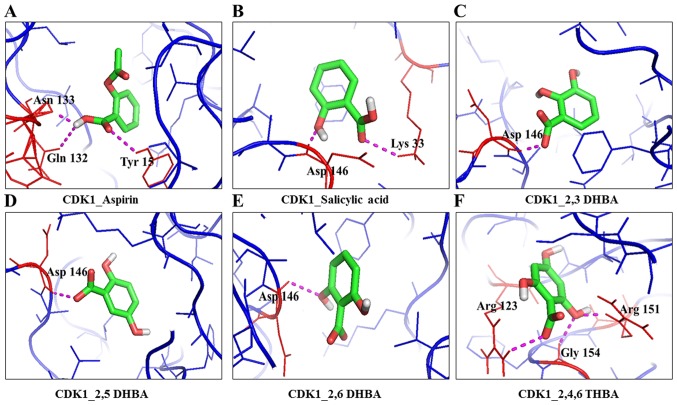
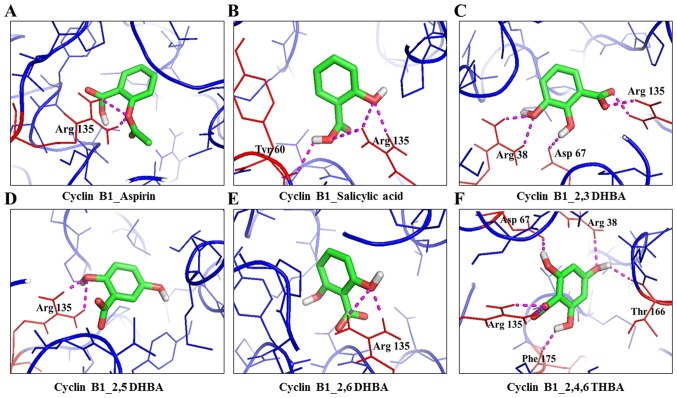
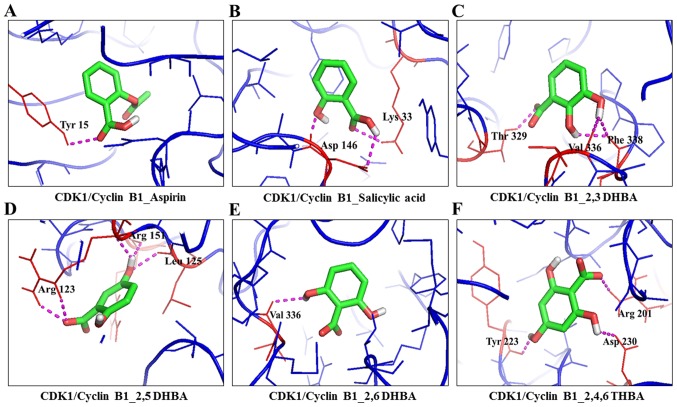
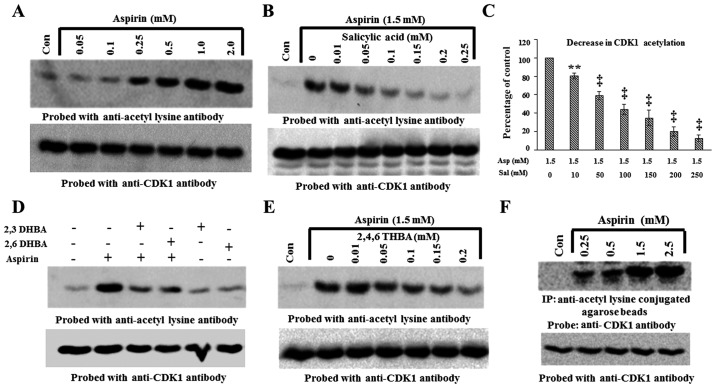
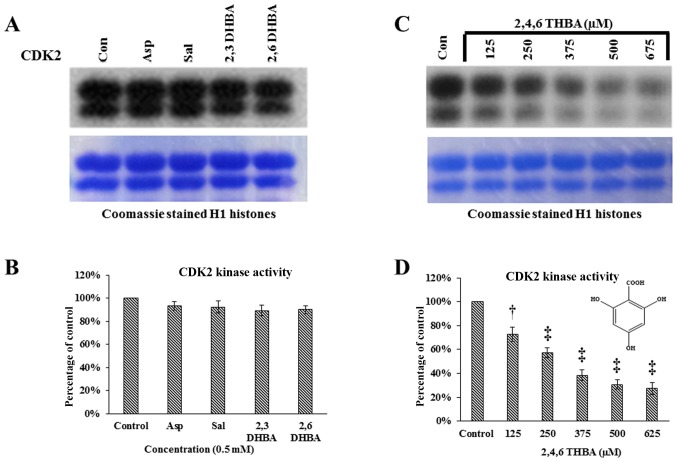
Aspirin's potential as a drug continues to be evaluated for the prevention of colorectal cancer (CRC). Although multiple targets for aspirin and its metabolite, salicylic acid, have been identified, no unifying mechanism has been proposed to clearly explain its chemopreventive effects. Our goal here was to investigate the ability of salicylic acid metabolites, known to be generated through cytochrome P450 (CYP450) enzymes, and its derivatives as cyclin dependent kinase (CDK) inhibitors to gain new insights into aspirin's chemopreventive actions. Using in vitro kinase assays, for the first time, we demonstrate that salicylic acid metabolites, 2,3-dihydroxybenzoic acid (2,3-DHBA) and 2,5-dihydroxybenzoic acid (2,5-DHBA), as well as derivatives 2,4-dihydroxybenzoic acid (2,4-DHBA), 2,6-dihydroxybenzoic acid (2,6-DHBA), inhibited CDK1 enzyme activity. 2,3-DHBA and 2,6-DHBA did not inhibit CDK2 and 4; however, both inhibited CDK-6 activity. Interestingly, another derivative, 2,4,6-trihydroxybenzoic acid (2,4,6-THBA) was highly effective in inhibiting CDK1, 2, 4 and 6 activity. Molecular docking studies showed that these compounds potentially interact with CDK1. Immunoblotting experiments showed that aspirin acetylated CDK1, and pre-incubation with salicylic acid and its derivatives prevented aspirin-mediated CDK1 acetylation, which supported the data obtained from molecular docking studies. We suggest that intracellularly generated salicylic acid metabolites through CYP450 enzymes within the colonic epithelial cells, or the salicylic acid metabolites generated by gut microflora may significantly contribute to the preferential chemopreventive effect of aspirin against CRC through inhibition of CDKs. This novel hypothesis and mechanism of action in aspirin's chemopreventive effects opens a new area for future research. In addition, structural modification to salicylic acid derivatives may prove useful in the development of novel CDK inhibitors in cancer prevention and treatment.
阿司匹林作为一种药物,其预防结直肠癌(CRC)的潜力仍在不断评估中。尽管已经确定了阿司匹林及其代谢物水杨酸的多个靶点,但尚未提出统一的机制来清楚地解释其化学预防作用。我们的目标是研究已知通过细胞色素 P450(CYP450)酶产生的水杨酸代谢物及其衍生物作为细胞周期蛋白依赖性激酶(CDK)抑制剂的能力,以深入了解阿司匹林的化学预防作用。我们首次使用体外激酶测定法,证明水杨酸代谢物 2,3-二羟基苯甲酸(2,3-DHBA)和 2,5-二羟基苯甲酸(2,5-DHBA)以及衍生物 2,4-二羟基苯甲酸(2,4-DHBA)、2,6-二羟基苯甲酸(2,6-DHBA)抑制 CDK1 酶活性。2,3-DHBA 和 2,6-DHBA 不抑制 CDK2 和 4,但均抑制 CDK-6 活性。有趣的是,另一种衍生物 2,4,6-三羟基苯甲酸(2,4,6-THBA)能有效抑制 CDK1、2、4 和 6 的活性。分子对接研究表明,这些化合物可能与 CDK1 相互作用。免疫印迹实验表明,阿司匹林乙酰化 CDK1,而用水杨酸及其衍生物预先孵育可防止阿司匹林介导的 CDK1 乙酰化,这支持了分子对接研究获得的数据。我们认为,细胞内通过结肠上皮细胞中的 CYP450 酶产生的水杨酸代谢物,或肠道微生物群产生的水杨酸代谢物,可能通过抑制 CDKs 显著促进阿司匹林对 CRC 的优先化学预防作用。这一新颖的假说和阿司匹林化学预防作用的作用机制为未来的研究开辟了一个新的领域。此外,对水杨酸衍生物的结构修饰可能有助于开发用于癌症预防和治疗的新型 CDK 抑制剂。