Department of Pharmaceutical Sciences and Translational Cancer Research Center, College of Pharmacy and Allied Health Professions, South Dakota State University, Brookings, SD 57007, USA.
Department of Entomology, University of Kentucky, Lexington, KY 40506, USA.
Int J Mol Sci. 2020 Nov 27;21(23):9018. doi: 10.3390/ijms21239018.
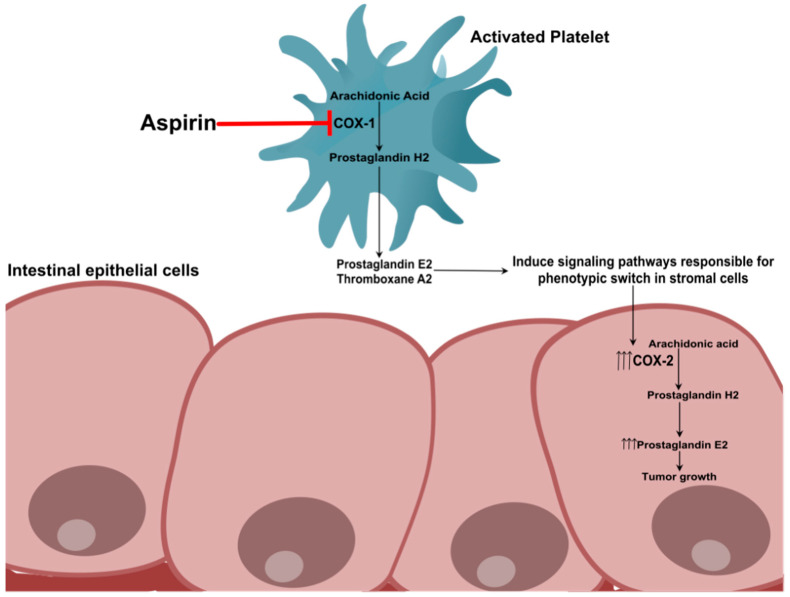
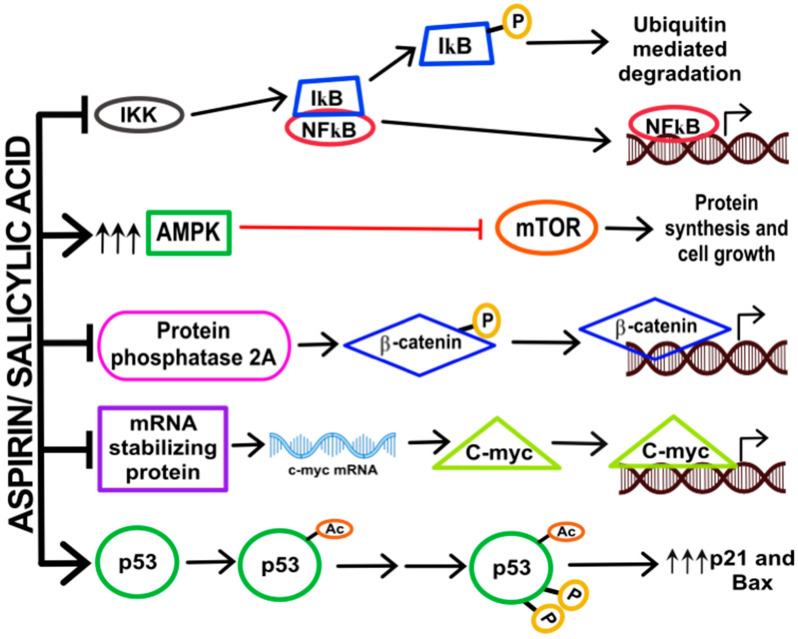
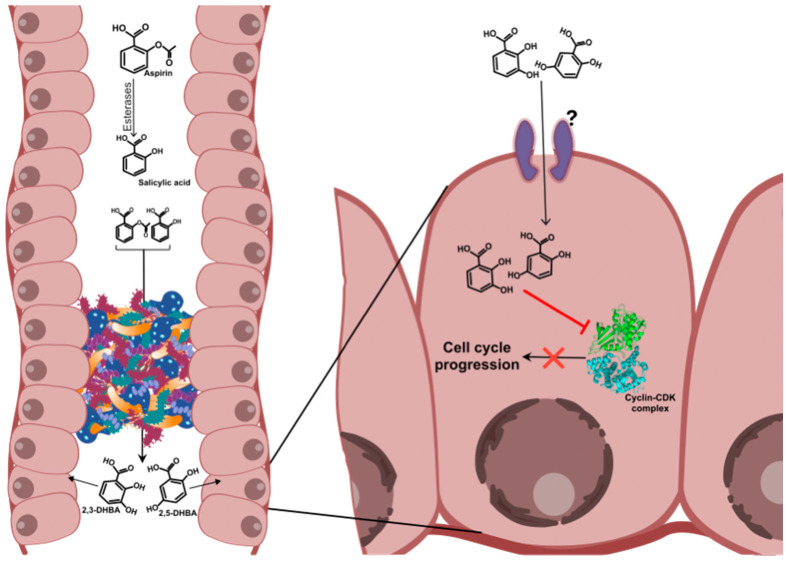
Aspirin, synthesized and marketed in 1897 by Bayer, is one of the most widely used drugs in the world. It has a well-recognized role in decreasing inflammation, pain and fever, and in the prevention of thrombotic cardiovascular diseases. Its anti-inflammatory and cardio-protective actions have been well studied and occur through inhibition of cyclooxygenases (COX). Interestingly, a vast amount of epidemiological, preclinical and clinical studies have revealed aspirin as a promising chemopreventive agent, particularly against colorectal cancers (CRC); however, the primary mechanism by which it decreases the occurrences of CRC has still not been established. Numerous mechanisms have been proposed for aspirin's chemopreventive properties among which the inhibition of COX enzymes has been widely discussed. Despite the wide attention COX-inhibition has received as the most probable mechanism of cancer prevention by aspirin, it is clear that aspirin targets many other proteins and pathways, suggesting that these extra-COX targets may also be equally important in preventing CRC. In this review, we discuss the COX-dependent and -independent pathways described in literature for aspirin's anti-cancer effects and highlight the strengths and limitations of the proposed mechanisms. Additionally, we emphasize the potential role of the metabolites of aspirin and salicylic acid (generated in the gut through microbial biotransformation) in contributing to aspirin's chemopreventive actions. We suggest that the preferential chemopreventive effect of aspirin against CRC may be related to direct exposure of aspirin/salicylic acid or its metabolites to the colorectal tissues. Future investigations should shed light on the role of aspirin, its metabolites and the role of the gut microbiota in cancer prevention against CRC.
阿司匹林由拜耳公司于 1897 年合成并上市,是世界上使用最广泛的药物之一。它在减少炎症、疼痛和发热以及预防血栓性心血管疾病方面具有公认的作用。其抗炎和心脏保护作用已经得到了充分的研究,其作用机制是通过抑制环氧化酶(COX)。有趣的是,大量的流行病学、临床前和临床研究表明,阿司匹林是一种很有前途的化学预防剂,特别是对结直肠癌(CRC);然而,它降低 CRC 发生率的主要机制尚未确定。人们提出了许多阿司匹林化学预防特性的机制,其中 COX 酶的抑制作用被广泛讨论。尽管 COX 抑制作为阿司匹林预防癌症的最可能机制受到了广泛关注,但很明显,阿司匹林还靶向许多其他蛋白质和途径,这表明这些 COX 以外的靶点在预防 CRC 中也同样重要。在这篇综述中,我们讨论了文献中描述的阿司匹林抗癌作用的 COX 依赖性和非依赖性途径,并强调了所提出机制的优缺点。此外,我们还强调了阿司匹林和水杨酸(通过微生物生物转化在肠道中生成)的代谢物在阿司匹林化学预防作用中的潜在作用。我们认为,阿司匹林对 CRC 的优先化学预防作用可能与阿司匹林/水杨酸或其代谢物直接暴露于结直肠组织有关。未来的研究应该阐明阿司匹林、其代谢物以及肠道微生物群在预防 CRC 癌症中的作用。