Coulter Department of Biomedical Engineering, Georgia Institute of Technology, Atlanta, 30332, GA, United States.
Petit Institute for Bioengineering and Biosciences, Georgia Institute of Technology, Atlanta, 30332, GA, USA.
Sci Rep. 2017 Oct 27;7(1):14185. doi: 10.1038/s41598-017-13793-3.
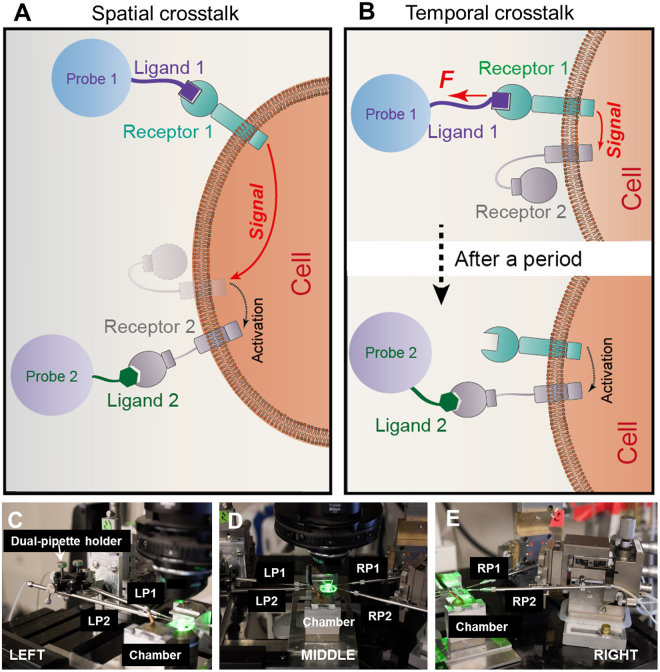
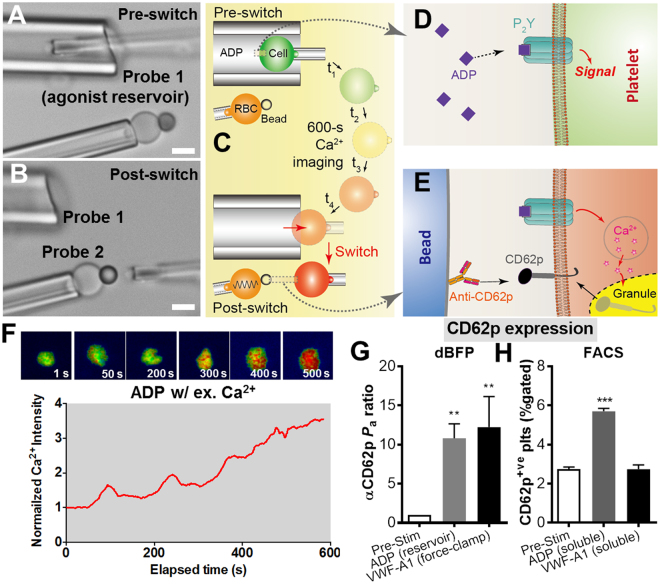
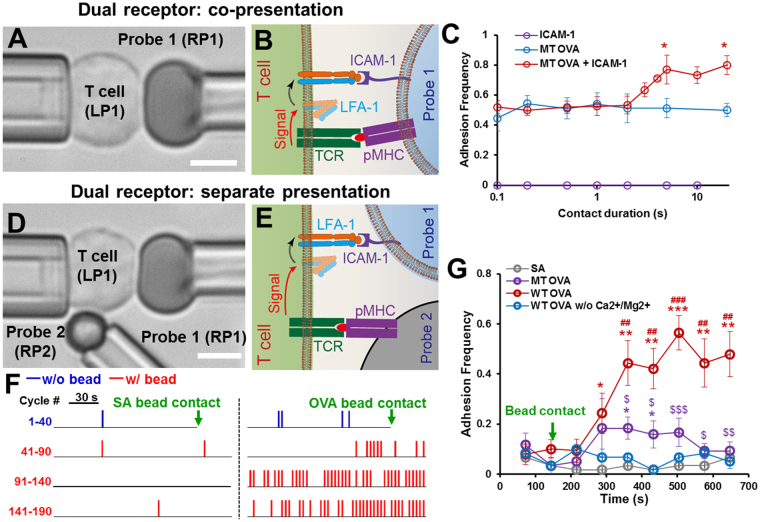
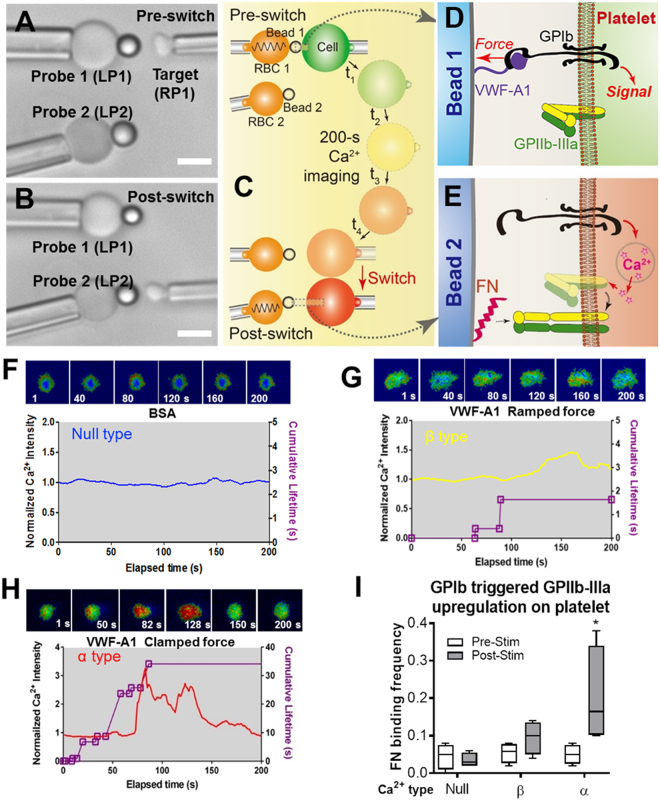
Conventional approaches for studying receptor-mediated cell signaling, such as the western blot and flow cytometry, are limited in three aspects: 1) The perturbing preparation procedures often alter the molecules from their native state on the cell; 2) Long processing time before the final readout makes it difficult to capture transient signaling events (<1 min); 3) The experimental environments are force-free, therefore unable to visualize mechanical signals in real time. In contrast to these methods in biochemistry and cell biology that are usually population-averaged and non-real-time, here we introduce a novel single-cell based nanotool termed dual biomembrane force probe (dBFP). The dBFP provides precise controls and quantitative readouts in both mechanical and chemical terms, which is particularly suited for juxtacrine signaling and mechanosensing studies. Specifically, the dBFP allows us to analyze dual receptor crosstalk by quantifying the spatiotemporal requirements and functional consequences of the up- and down-stream signaling events. In this work, the utility and power of the dBFP has been demonstrated in four important dual receptor systems that play key roles in immunological synapse formation, shear-dependent thrombus formation, and agonist-driven blood clotting.
传统的研究受体介导的细胞信号转导的方法,如 Western blot 和流式细胞术,在三个方面受到限制:1)干扰性的制备程序通常会改变细胞中原有的分子状态;2)在最终读数之前的长时间处理过程使得难以捕捉短暂的信号事件(<1 分钟);3)实验环境是无应力的,因此无法实时可视化机械信号。与生物化学和细胞生物学中通常是群体平均且非实时的这些方法相反,我们在这里引入了一种称为双生物膜力探针(dBFP)的新型单细胞纳米工具。dBFP 提供了在机械和化学方面的精确控制和定量读数,特别适合旁分泌信号和机械传感研究。具体来说,dBFP 允许我们通过量化上下游信号事件的时空要求和功能后果来分析双受体串扰。在这项工作中,dBFP 在四个重要的双受体系统中的应用和功能得到了证明,这些系统在免疫突触形成、剪切依赖性血栓形成和激动剂驱动的血液凝结中发挥着关键作用。