Smith Hong Q, Li Changhong, Stanley Charles A, Smith Thomas James
Department of Biochemistry and Molecular Biology, University of Texas Medical Branch at Galveston, Galveston, TX, USA.
Division of Endocrinology, The Children's Hospital of Philadelphia, Philadelphia, PA, USA.
Neurochem Res. 2019 Jan;44(1):117-132. doi: 10.1007/s11064-017-2428-0. Epub 2017 Oct 27.
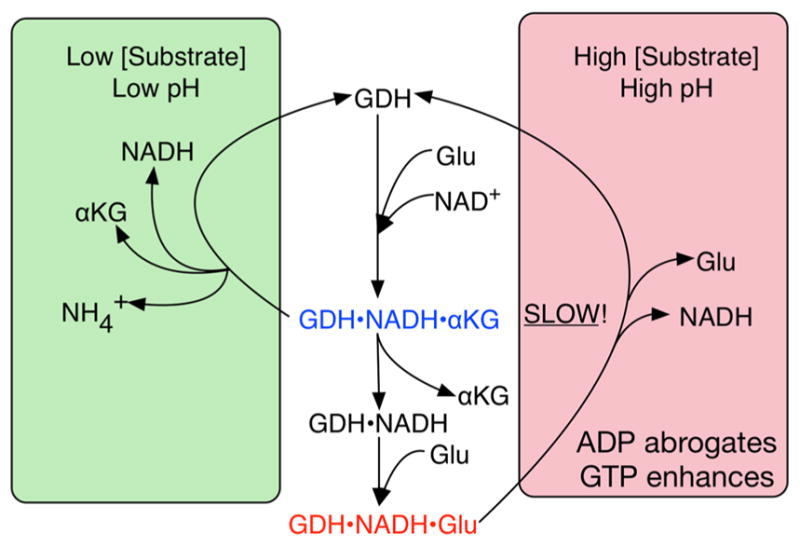
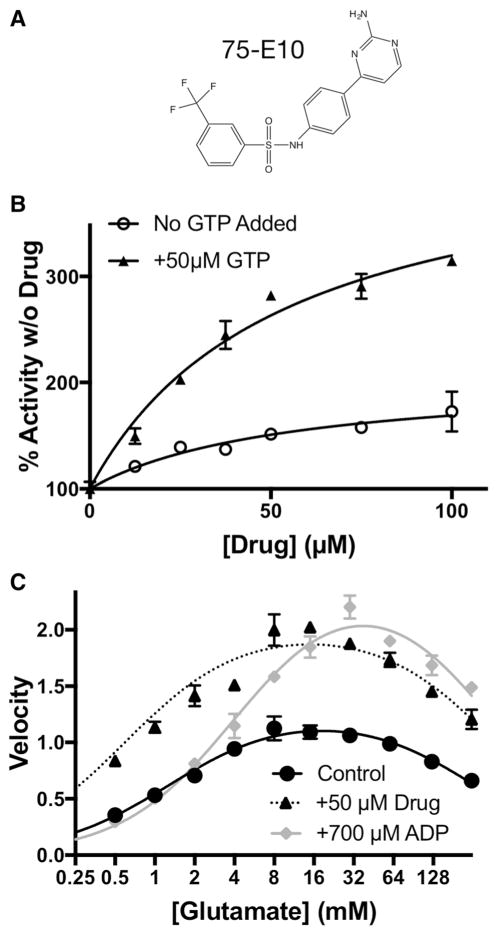
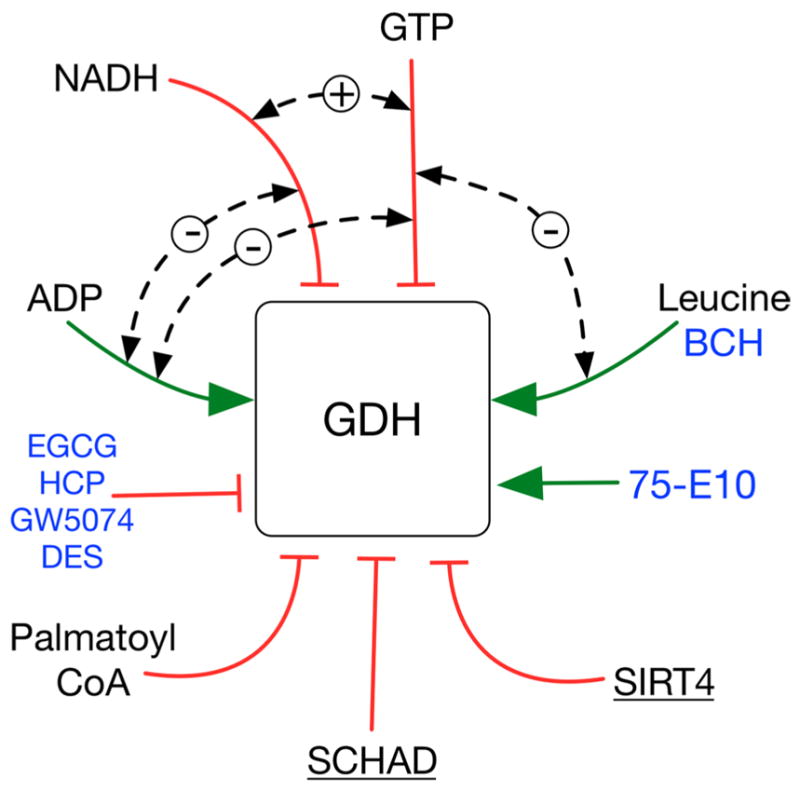
In-vitro, glutamate dehydrogenase (GDH) catalyzes the reversible oxidative deamination of glutamate to α-ketoglutarate (α-KG). GDH is found in all organisms, but in animals is allosterically regulated by a wide array of metabolites. For many years, it was not at all clear why animals required such complex control. Further, in both standard textbooks and some research publications, there has been some controversy as to the directionality of the reaction. Here we review recent work demonstrating that GDH operates mainly in the catabolic direction in-vivo and that the finely tuned network of allosteric regulators allows GDH to meet the varied needs in a wide range of tissues in animals. Finally, we review the progress in using pharmacological agents to activate or inhibit GDH that could impact a wide range of pathologies from insulin disorders to tumor growth.
在体外,谷氨酸脱氢酶(GDH)催化谷氨酸可逆地氧化脱氨生成α-酮戊二酸(α-KG)。GDH存在于所有生物体中,但在动物体内,它受到多种代谢物的变构调节。多年来,动物为何需要如此复杂的调控一直不清楚。此外,在标准教科书和一些研究出版物中,关于该反应的方向性存在一些争议。在此,我们回顾近期的研究工作,这些工作表明GDH在体内主要以分解代谢方向发挥作用,并且精细调节的变构调节因子网络使GDH能够满足动物多种组织中的不同需求。最后,我们回顾了使用药理剂激活或抑制GDH的进展,这可能会影响从胰岛素紊乱到肿瘤生长等广泛的病理状况。