Department of Biosystems Science and Engineering, ETH Zürich, Mattenstrasse 26, 4058, Basel, Switzerland.
Swiss Institute of Bioinformatics, Mattenstrasse 26, 4058, Basel, Switzerland.
BMC Biol. 2017 Oct 30;15(1):100. doi: 10.1186/s12915-017-0440-0.
Internal tagging of proteins by inserting small functional peptides into surface accessible permissive sites has proven to be an indispensable tool for basic and applied science. Permissive sites are typically identified by transposon mutagenesis on a case-by-case basis, limiting scalability and their exploitation as a system-wide protein engineering tool.
We developed an apporach for predicting permissive stretches (PSs) in proteins based on the identification of length-variable regions (regions containing indels) in homologous proteins.
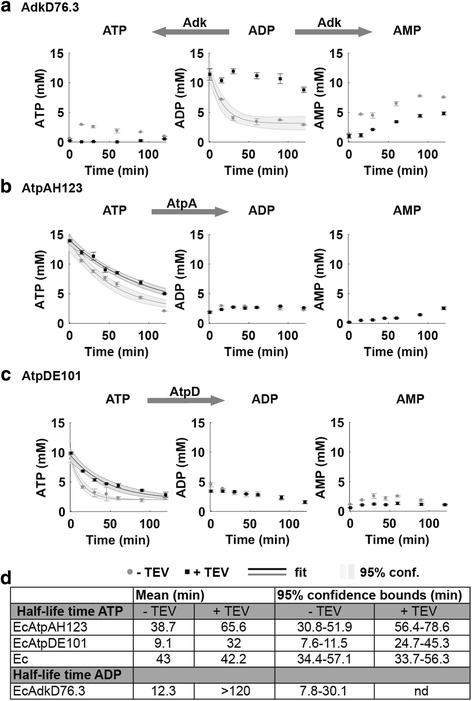
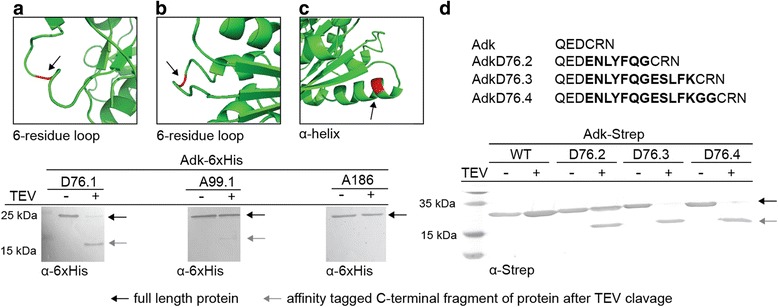
We verify that a protein's primary structure information alone is sufficient to identify PSs. Identified PSs are predicted to be predominantly surface accessible; hence, the position of inserted peptides is likely suitable for diverse applications. We demonstrate the viability of this approach by inserting a Tobacco etch virus protease recognition site (TEV-tag) into several PSs in a wide range of proteins, from small monomeric enzymes (adenylate kinase) to large multi-subunit molecular machines (ATP synthase) and verify their functionality after insertion. We apply this method to engineer conditional protein knockdowns directly in the Escherichia coli chromosome and generate a cell-free platform with enhanced nucleotide stability.
Functional internally tagged proteins can be rationally designed and directly chromosomally implemented. Critical for the successful design of protein knockdowns was the incorporation of surface accessibility and secondary structure predictions, as well as the design of an improved TEV-tag that enables efficient hydrolysis when inserted into the middle of a protein. This versatile and portable approach can likely be adapted for other applications, and broadly adopted. We provide guidelines for the design of internally tagged proteins in order to empower scientists with little or no protein engineering expertise to internally tag their target proteins.
通过将小的功能肽插入到表面可及的许可位点中,对蛋白质进行内部标记已被证明是基础科学和应用科学不可或缺的工具。许可位点通常是通过转座子诱变在逐个案例的基础上确定的,这限制了其可扩展性及其作为系统范围的蛋白质工程工具的应用。
我们开发了一种基于同源蛋白中长度可变区域(包含插入/缺失的区域)识别来预测蛋白质中许可延伸(PS)的方法。
我们验证了仅蛋白质的一级结构信息足以识别 PS。预测的 PS 主要位于表面可及的位置;因此,插入肽的位置可能适合各种应用。我们通过将烟草蚀纹病毒蛋白酶识别位点(TEV 标签)插入到各种蛋白质中的几个 PS 中来证明这种方法的可行性,这些蛋白质的范围从小单体酶(腺苷酸激酶)到大型多亚基分子机器(ATP 合酶),并验证插入后的功能。我们将这种方法应用于直接在大肠杆菌染色体上进行条件性蛋白质敲低的工程,并生成了具有增强核苷酸稳定性的无细胞平台。
功能上内部标记的蛋白质可以进行合理设计并直接在染色体上实现。蛋白质敲低设计成功的关键是结合表面可及性和二级结构预测,以及设计一种改进的 TEV 标签,使其在插入蛋白质中间时能够有效地水解。这种通用且可移植的方法可能适用于其他应用,并被广泛采用。我们提供了内部标记蛋白设计的指南,以使具有很少或没有蛋白质工程专业知识的科学家能够对其目标蛋白进行内部标记。