Department of Hepatobiliary Surgery, The Second Affiliated Hospital of Guangzhou Medical University, No 250 East Changgang Road, Guangzhou, 510260, China.
Department of Breast and Thyroid Surgery, The Sixth Affiliated Hospital of Sun Yat-sen University, Guangzhou, Guangdong, 510655, China.
J Hematol Oncol. 2017 Oct 30;10(1):170. doi: 10.1186/s13045-017-0528-6.
Cholangiocarcinoma (CCA) is characterized by early lymphatic, metastasis, and low survival rate. Epithelial-mesenchymal transition (EMT) is able to induce tumor metastasis. Although the TGF-β/miR-200 signals promote EMT in various types of cancer, the regulatory mechanism in CCA is still unclear.
Expression of miR-200b, TGF-β, and EMT markers were measured in tumor samples and cell lines by qRT-PCR and western blot. CCK8 assay was performed to measure the cell viability. Transwell assay was used to evaluate migration and invasion. The target genes of miR-200b and transcription factor of TGF-β were analyzed using dual-luciferase reporter system.
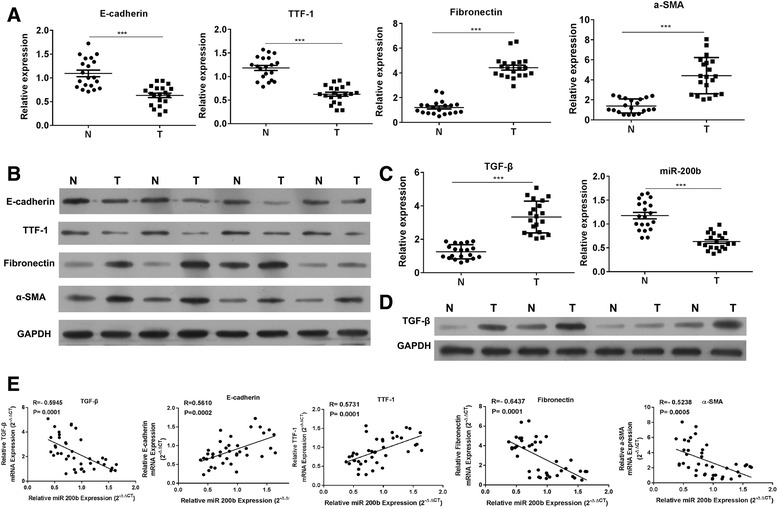
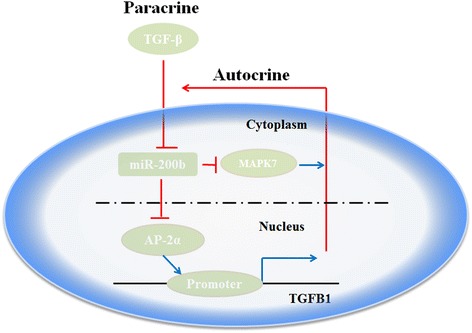
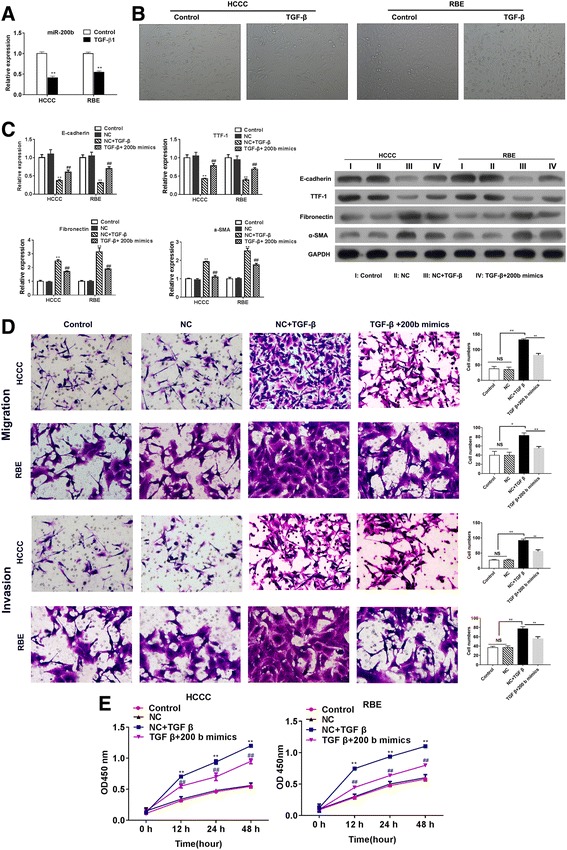
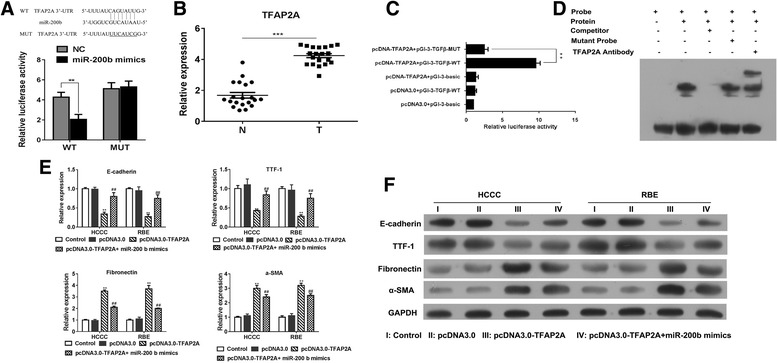
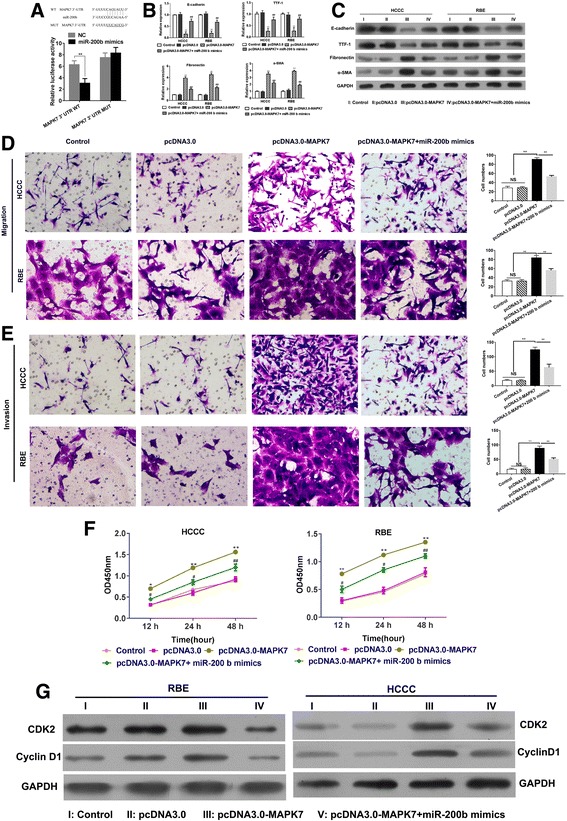
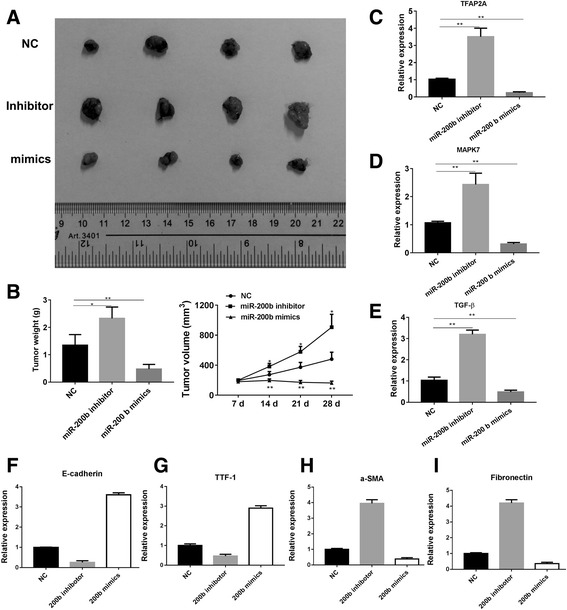
We have demonstrated that CCA exhibited remarkable EMT phenotype and miR-200b was reduced in CCA patients (n = 20) and negatively correlated to TGF-β. Moreover, two CCA cells, HCCC, and RBE, with epithelial appearances treated with TGF-β, showed fibroblastic-like cell morphology with downregulated miR-200b expression. Forced expression of miR-200b abrogated TGF-β-induced EMT initiation, with decreased cell proliferation, migration, and invasion in vitro. Also, TFAP2A (encode AP-2α) and MAPK7 were found to be targeted by miR-200b to downregulate EMT and AP-2α inhibited miR-200b by directly promoting transcription of TGFB1. Overexpression of MAPK7 significantly reversed miR-200b-induced inhibition of EMT, migration, and proliferation by increasing the expression of TGF-β, cyclin D1, and Cdk2. Further, the administration of miR-200b induced a remarkably tumor regression in vivo and reduced the effect of TGF-β-related EMT in AP-2α and MAPK7-dependent manner.
Our study highlights that miR-200b-based gene therapy is effective in the treatment of CCA.
胆管癌(CCA)的特点是早期淋巴转移和低生存率。上皮-间充质转化(EMT)能够诱导肿瘤转移。尽管 TGF-β/miR-200 信号在各种类型的癌症中促进 EMT,但 CCA 中的调节机制仍不清楚。
通过 qRT-PCR 和 Western blot 检测肿瘤样本和细胞系中 miR-200b、TGF-β 和 EMT 标志物的表达。CCK8 测定法用于测量细胞活力。Transwell 测定法用于评估迁移和侵袭。使用双荧光素酶报告系统分析 miR-200b 的靶基因和 TGF-β 的转录因子。
我们已经证明 CCA 表现出明显的 EMT 表型,并且在 CCA 患者(n=20)中 miR-200b 减少,并且与 TGF-β 呈负相关。此外,两种具有上皮样外观的 CCA 细胞 HCCC 和 RBE,用 TGF-β 处理后,表现出成纤维样细胞形态,miR-200b 表达下调。强制表达 miR-200b 可阻断 TGF-β 诱导的 EMT 起始,体外细胞增殖、迁移和侵袭减少。此外,发现 TFAP2A(编码 AP-2α)和 MAPK7 是 miR-200b 的靶基因,可下调 EMT,AP-2α 通过直接促进 TGFB1 的转录来抑制 miR-200b。MAPK7 的过表达可通过增加 TGF-β、cyclin D1 和 Cdk2 的表达显著逆转 miR-200b 诱导的 EMT、迁移和增殖抑制。此外,miR-200b 的给药在体内显著促进肿瘤消退,并以依赖于 AP-2α 和 MAPK7 的方式降低 TGF-β 相关 EMT 的作用。
我们的研究强调了基于 miR-200b 的基因治疗在 CCA 治疗中的有效性。