Human Oncology and Pathogenesis Program, Memorial Sloan Kettering Cancer Center, New York, NY, 10065, USA.
Department of Pediatrics, Institute of Clinical Sciences, University of Gothenburg, 41685, Gothenburg, Sweden.
Nat Commun. 2017 Oct 30;8(1):1197. doi: 10.1038/s41467-017-01178-z.
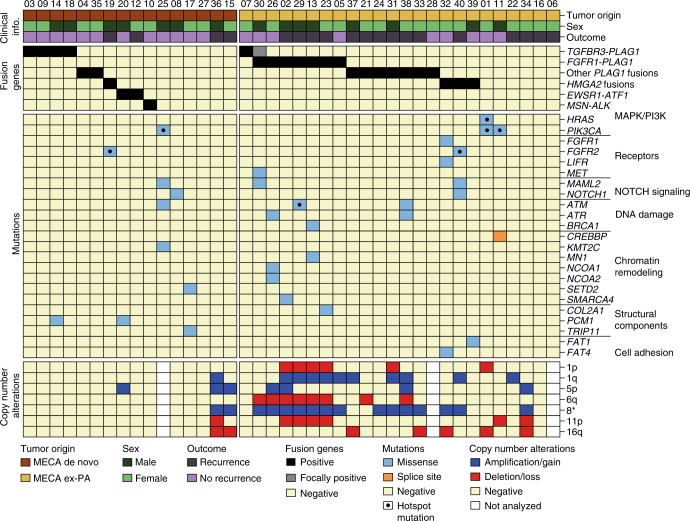
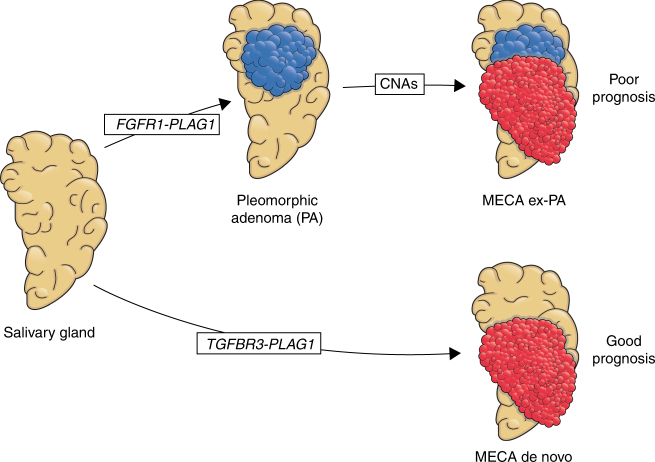
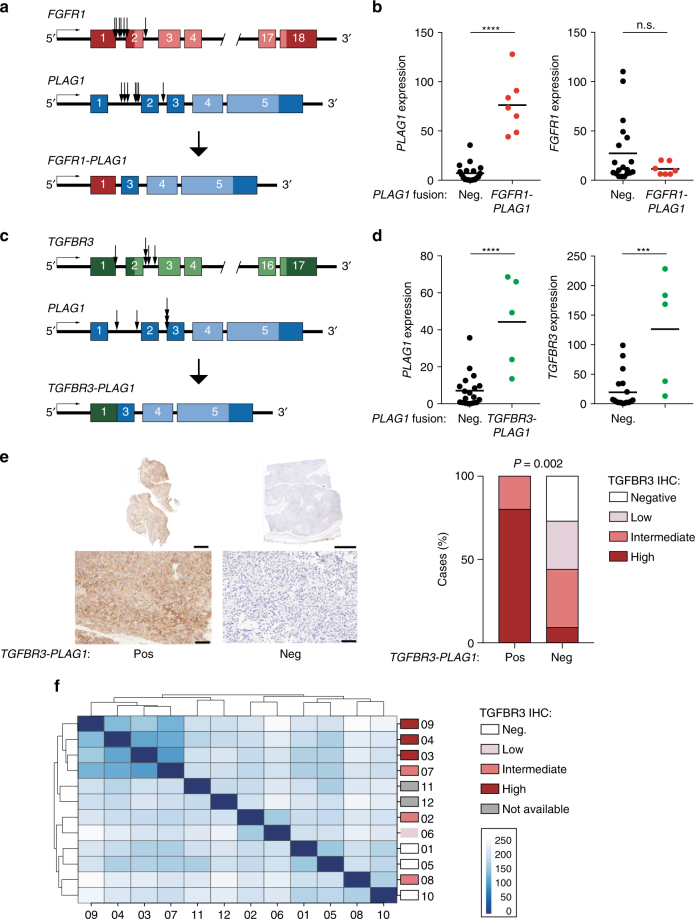
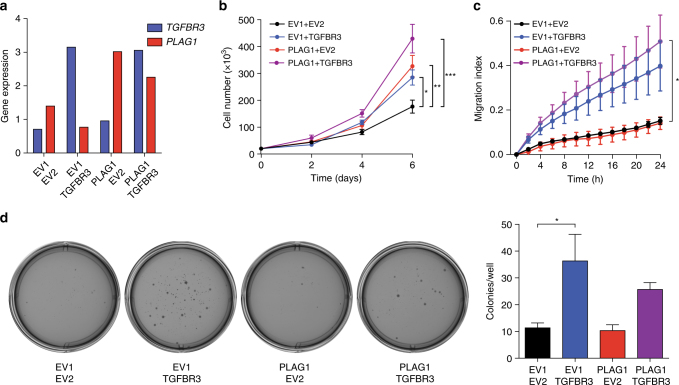
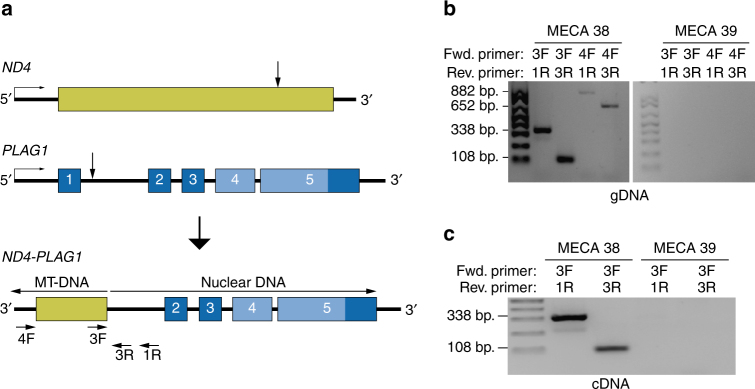
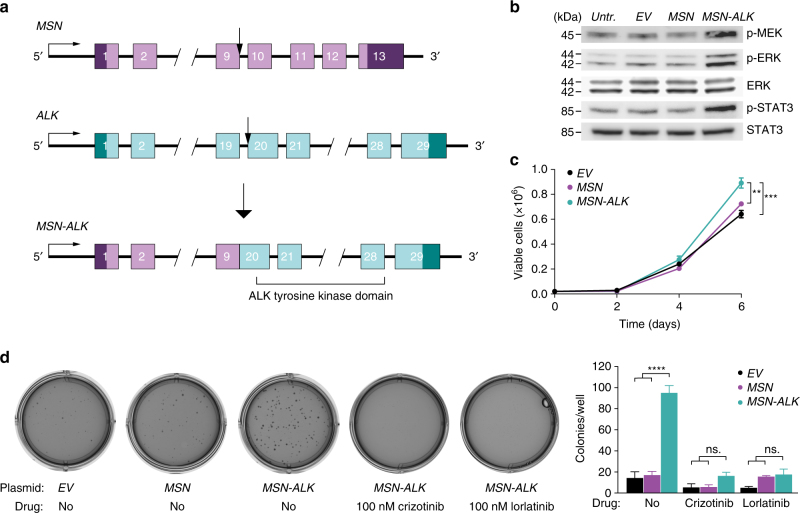
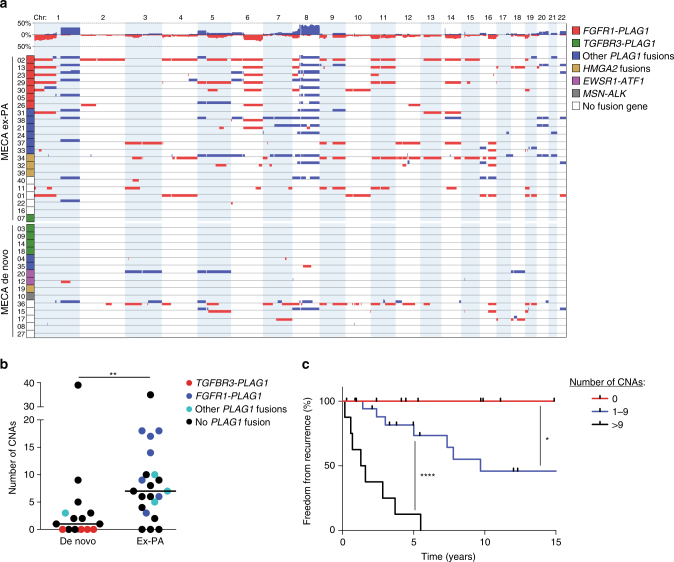
Myoepithelial carcinoma (MECA) is an aggressive salivary gland cancer with largely unknown genetic features. Here we comprehensively analyze molecular alterations in 40 MECAs using integrated genomic analyses. We identify a low mutational load, and high prevalence (70%) of oncogenic gene fusions. Most fusions involve the PLAG1 oncogene, which is associated with PLAG1 overexpression. We find FGFR1-PLAG1 in seven (18%) cases, and the novel TGFBR3-PLAG1 fusion in six (15%) cases. TGFBR3-PLAG1 promotes a tumorigenic phenotype in vitro, and is absent in 723 other salivary gland tumors. Other novel PLAG1 fusions include ND4-PLAG1; a fusion between mitochondrial and nuclear DNA. We also identify higher number of copy number alterations as a risk factor for recurrence, independent of tumor stage at diagnosis. Our findings indicate that MECA is a fusion-driven disease, nominate TGFBR3-PLAG1 as a hallmark of MECA, and provide a framework for future diagnostic and therapeutic research in this lethal cancer.
肌上皮癌(MECA)是一种侵袭性的唾液腺癌,其遗传特征在很大程度上尚不清楚。在这里,我们使用综合基因组分析全面分析了 40 例 MECA 中的分子改变。我们发现突变负荷低,致癌基因融合的发生率高(70%)。大多数融合涉及 PLAG1 癌基因,该基因与 PLAG1 过表达有关。我们在 7 例(18%)病例中发现了 FGFR1-PLAG1,在 6 例(15%)病例中发现了新的 TGFBR3-PLAG1 融合。TGFBR3-PLAG1 在体外促进致瘤表型,而在 723 种其他唾液腺肿瘤中不存在。其他新的 PLAG1 融合包括 ND4-PLAG1;线粒体和核 DNA 之间的融合。我们还发现,与诊断时的肿瘤分期无关,更多的拷贝数改变是复发的危险因素。我们的研究结果表明,MECA 是一种融合驱动的疾病,将 TGFBR3-PLAG1 作为 MECA 的标志,并为这种致命癌症的未来诊断和治疗研究提供了框架。