Hong Chae Moon, Ahn Byeong-Cheol
Department of Nuclear Medicine, Kyungpook National University School of Medicine and Hospital, Daegu, South Korea.
Front Endocrinol (Lausanne). 2017 Oct 12;8:260. doi: 10.3389/fendo.2017.00260. eCollection 2017.
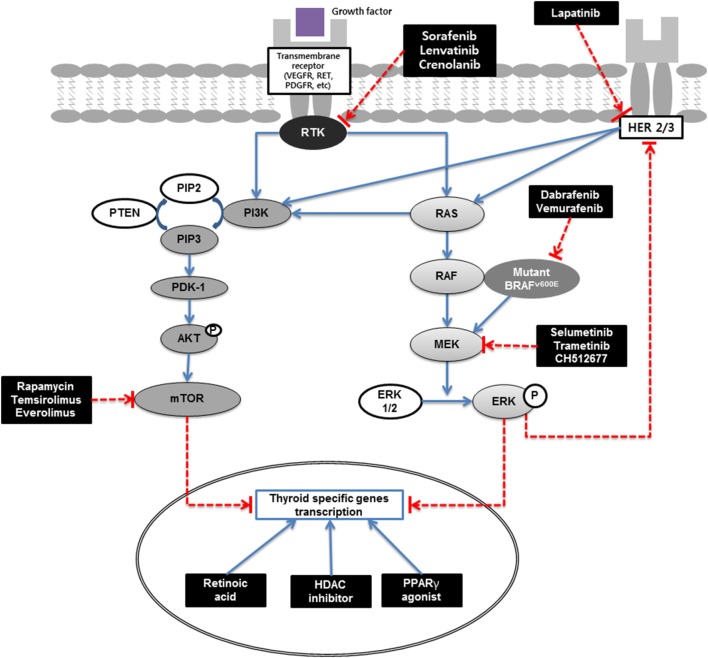
Although most differentiated thyroid cancers show excellent prognosis, treating radioiodine refractory differentiated thyroid cancer (RR-DTC) is challenging. Various therapies, including chemotherapy, radiotherapy, and targeted therapy, have been applied for RR-DTC but show limited effectiveness. Redifferentiation followed by radioiodine therapy is a promising alternative therapy for RR-DTC. Retinoic acids, histone deacetylase inhibitors, and peroxisome proliferator-activated receptor-gamma agonists are classically used as redifferentiation agents, and recent targeted molecules are also used for this purpose. Appropriate selection of redifferentiation agents for each patient, using current knowledge about genetic and biological characteristics of thyroid cancer, might increase the efficacy of redifferentiation treatment. In this review, we will discuss the mechanisms of these redifferentiation agents, results of recent clinical trials, and promising preclinical results.
尽管大多数分化型甲状腺癌预后良好,但治疗放射性碘难治性分化型甲状腺癌(RR-DTC)具有挑战性。包括化疗、放疗和靶向治疗在内的各种疗法已应用于RR-DTC,但效果有限。再分化后进行放射性碘治疗是一种有前景的RR-DTC替代疗法。维甲酸、组蛋白去乙酰化酶抑制剂和过氧化物酶体增殖物激活受体γ激动剂传统上用作再分化剂,最近的靶向分子也用于此目的。利用目前关于甲状腺癌遗传和生物学特征的知识,为每位患者适当选择再分化剂,可能会提高再分化治疗的疗效。在本综述中,我们将讨论这些再分化剂的作用机制、近期临床试验结果以及有前景的临床前结果。