Zhao Guanjie, Wu Minfei, Wang Xiaofeng, Du Zhenwu, Zhang Guizhen
Research Center of The Second Hospital, Jilin University, Changchun, Jilin 130041, P.R. China.
Department of Nephropathy, China-Japan Union Hospital of Jilin University, Changchun, Jilin 130033, P.R.China.
Oncol Lett. 2017 Oct;14(4):4772-4778. doi: 10.3892/ol.2017.6748. Epub 2017 Aug 11.
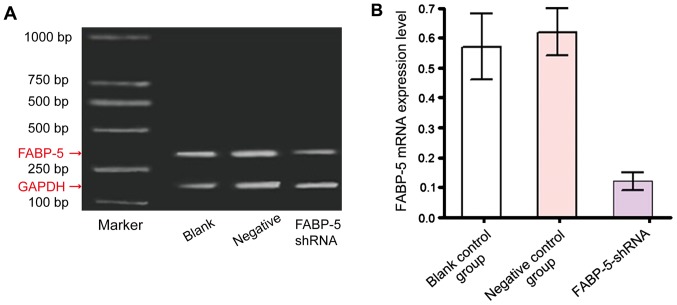
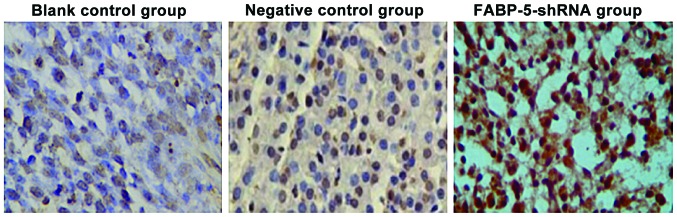
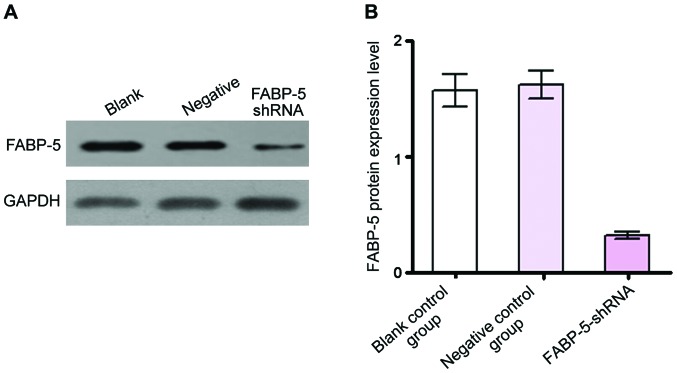
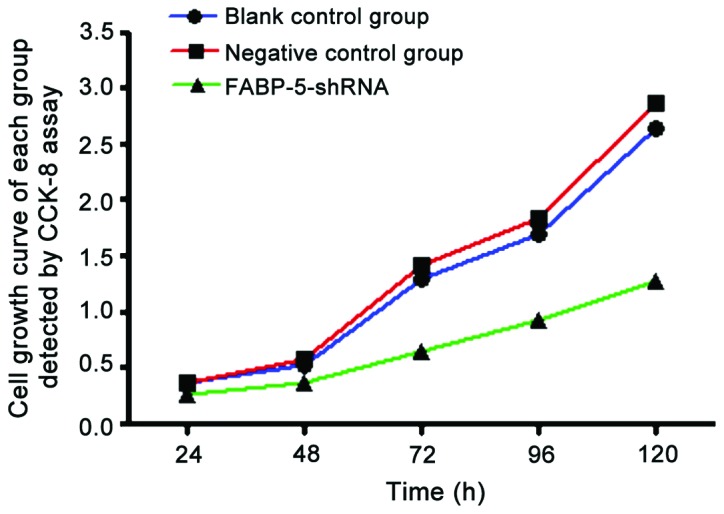
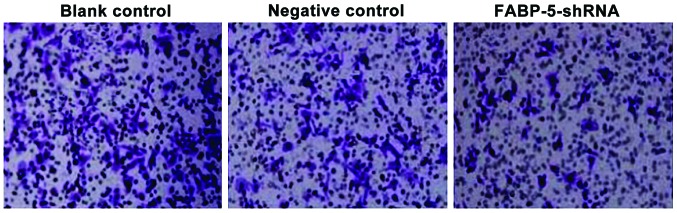
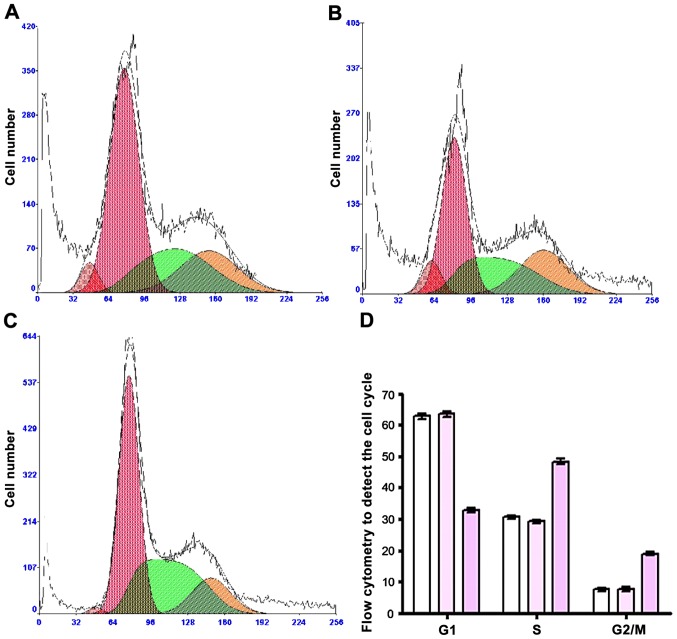
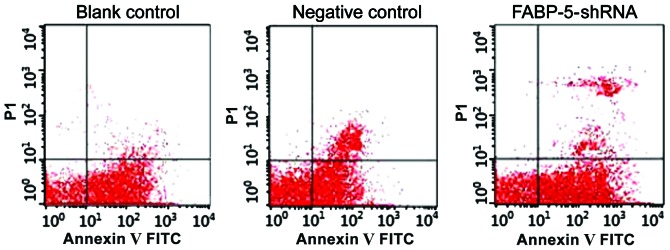
The aim of the present study was to examine the effect of fatty acid binding protein-5 () gene on the proliferation, apoptosis and invasion of human gastric cancer SGC-7901 cells. The viability, apoptosis and cell invasion of SGC-7901 cells before and after FABP5 knockdown were taken as the study objects, design and synthesis of siRNA interference sequence were conducted according to FABP-5 mRNA coding sequences, and SGC-7901 cells were transiently transfected. The human gastric cancer SGC-7901 cells were divided into three groups: FABP-5 siRNA group, negative control group and blank control group. mRNA and protein expression levels were detected by RT-PCR and western blot analysis. The CCK-8 assay was used to detect cell proliferation, flow cytometry (FCM) was used to detect changes in cell cycle and apoptosis in each group, TUNEL staining was used to detect apoptosis in each group, and the cell invasion chamber assay was used to detect cell invasiveness in each group. Each test was repeated three times. The results of the RT-PCR and western blot analysis showed that, expression of FABP-5 mRNA and protein in the FABP-5 siRNA group was significantly decreased compared with the negative and blank control groups. The cell growth rate in the FABP-5 siRNA group was significantly retarded, cell cycle was arrested in G0/G1 phase, the number of cells in S phase was reduced, and compared with the negative and blank control groups, the apoptotic rate in the FABP-5 siRNA group was significantly increased (P<0.01), while proliferation and invasiveness were significantly decreased (P<0.05). In conclusion, specific silencing may reduce the invasiveness of gastric cancer cells, inhibit cell proliferation, and arrest cell cycle in G0/G1 phase, resulting in a significant increase in apoptosis.
本研究旨在探讨脂肪酸结合蛋白5(FABP5)基因对人胃癌SGC-7901细胞增殖、凋亡及侵袭的影响。以FABP5基因敲低前后SGC-7901细胞的活力、凋亡及细胞侵袭情况为研究对象,根据FABP-5 mRNA编码序列设计并合成siRNA干扰序列,对SGC-7901细胞进行瞬时转染。将人胃癌SGC-7901细胞分为三组:FABP-5 siRNA组、阴性对照组和空白对照组。采用RT-PCR和蛋白质印迹分析检测mRNA和蛋白表达水平。采用CCK-8法检测细胞增殖,流式细胞术(FCM)检测各组细胞周期及凋亡变化,TUNEL染色检测各组细胞凋亡情况,细胞侵袭小室实验检测各组细胞侵袭能力。各项检测均重复3次。RT-PCR和蛋白质印迹分析结果显示,FABP-5 siRNA组FABP-5 mRNA和蛋白表达与阴性对照组和空白对照组相比显著降低。FABP-5 siRNA组细胞生长速率显著减慢,细胞周期阻滞于G0/G1期,S期细胞数量减少,与阴性对照组和空白对照组相比,FABP-5 siRNA组凋亡率显著升高(P<0.01),而增殖和侵袭能力显著降低(P<0.05)。综上所述,特异性沉默FABP5可能降低胃癌细胞的侵袭能力,抑制细胞增殖,并使细胞周期阻滞于G0/G1期,导致凋亡显著增加。