State Key Laboratory Breeding Base of Dao-di Herbs, National Resource Center for Chinese Materia Medica, China Academy of Chinese Medical Sciences, No. 16 Nanxiao Rd., Beijing, 100700, China.
School of Traditional Chinese Medicine, Capital Medical University, No. 10 Xitoutiao, Beijing, 100069, China.
Plant J. 2018 Jan;93(1):50-65. doi: 10.1111/tpj.13756. Epub 2017 Dec 2.
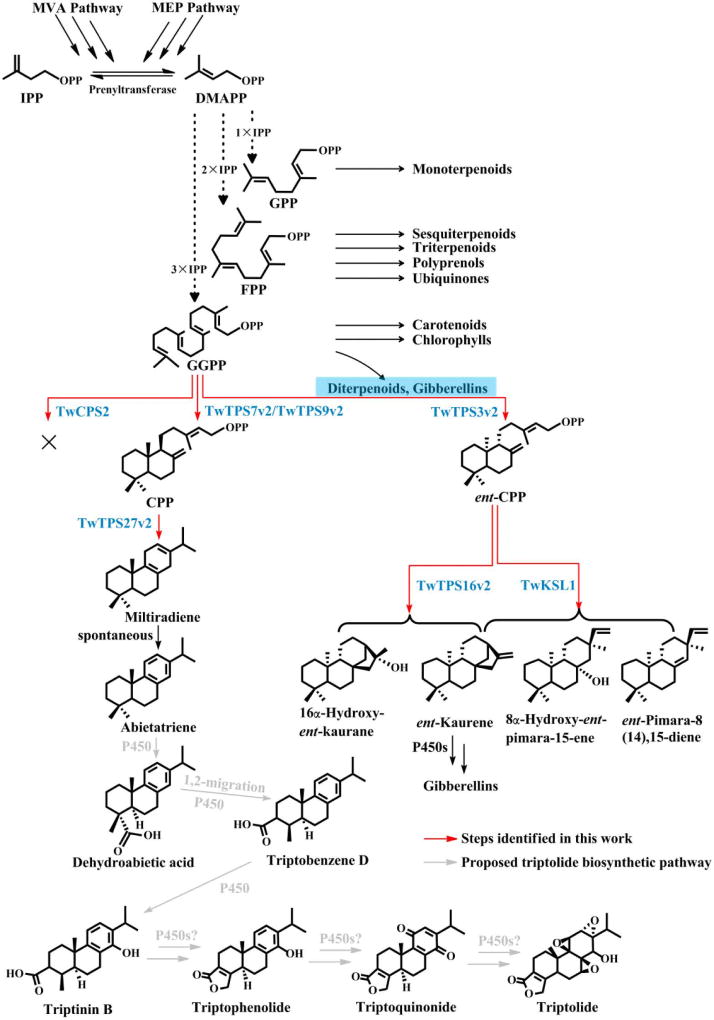
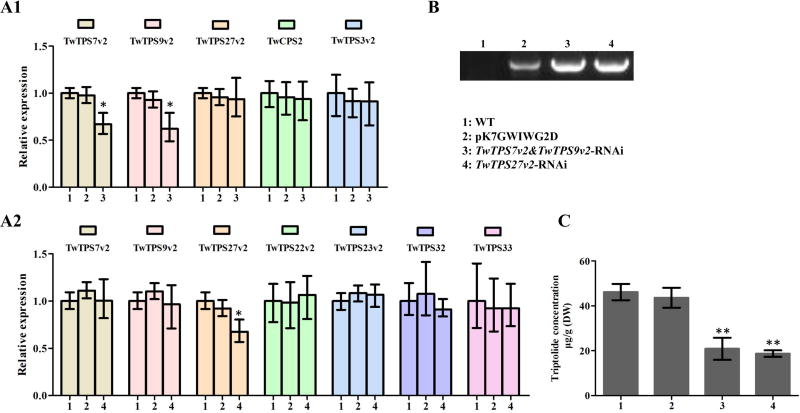
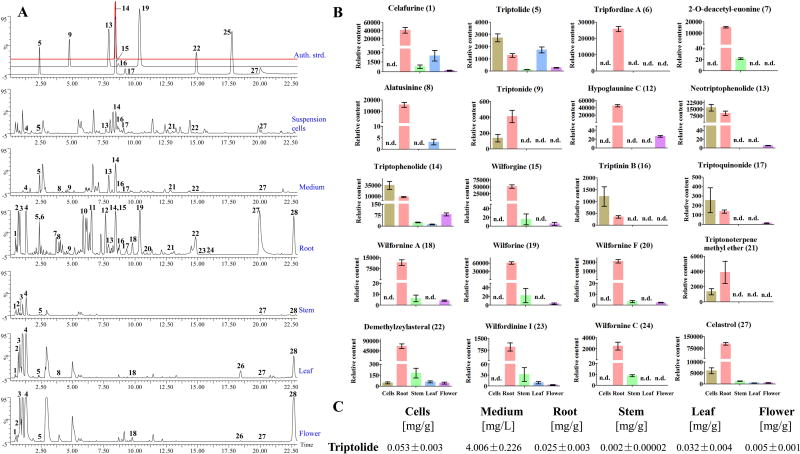
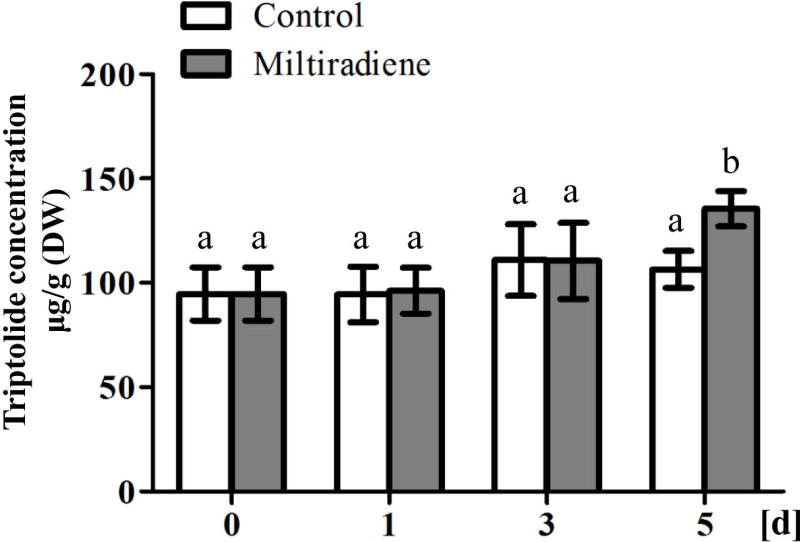
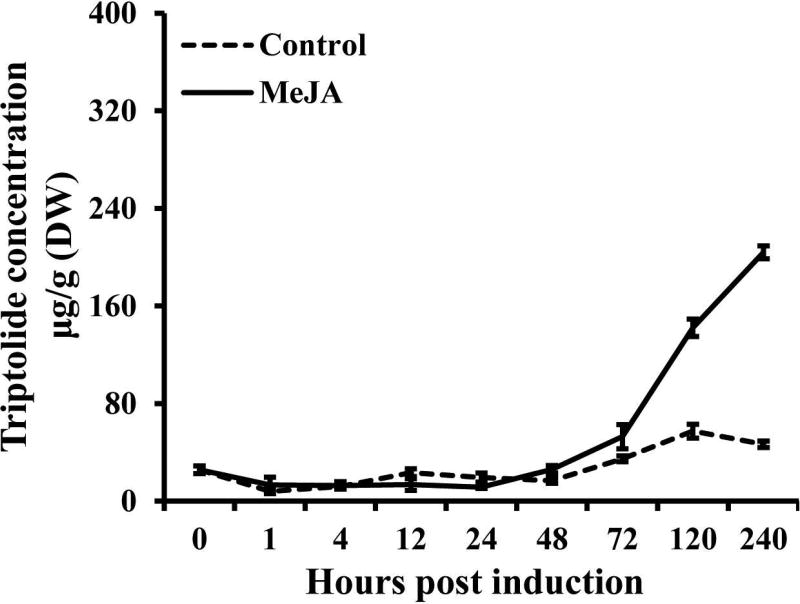
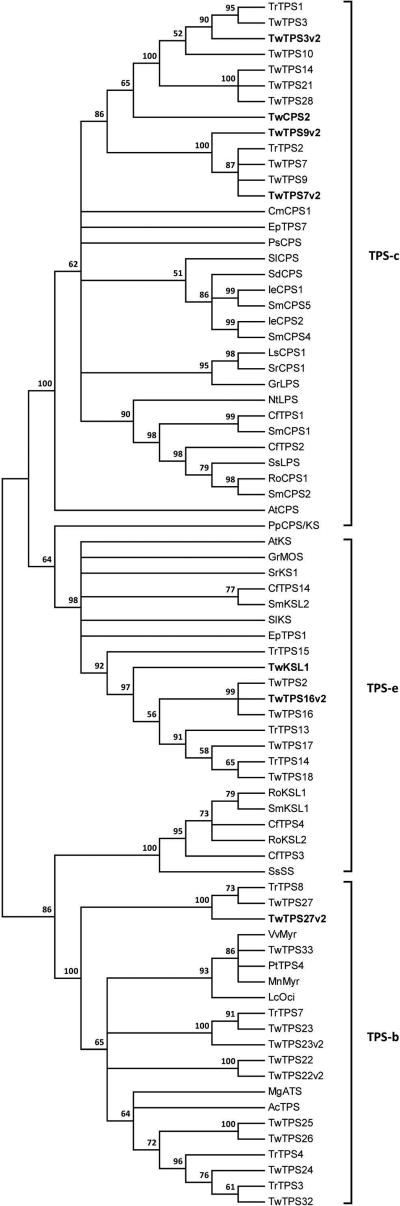
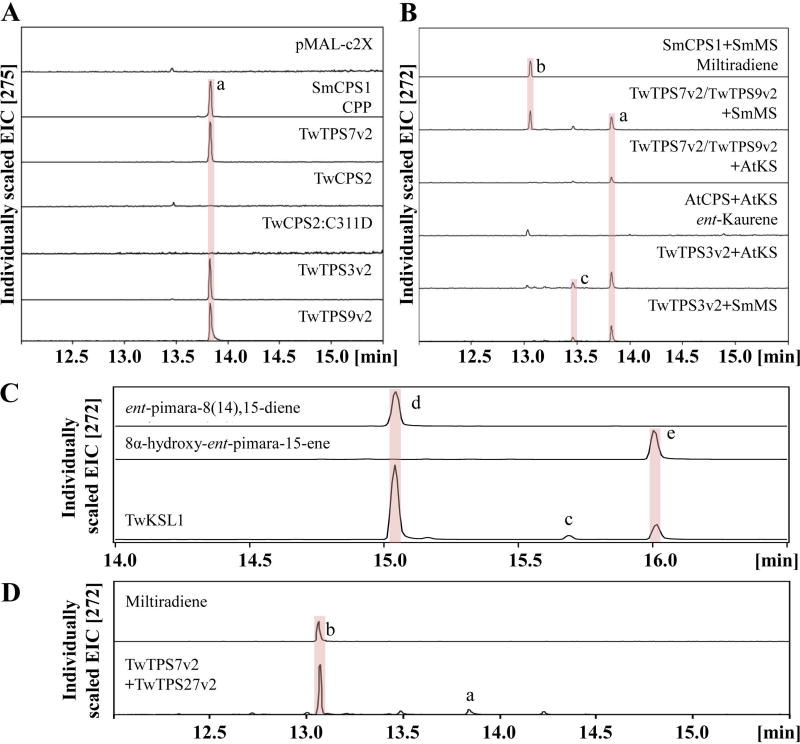
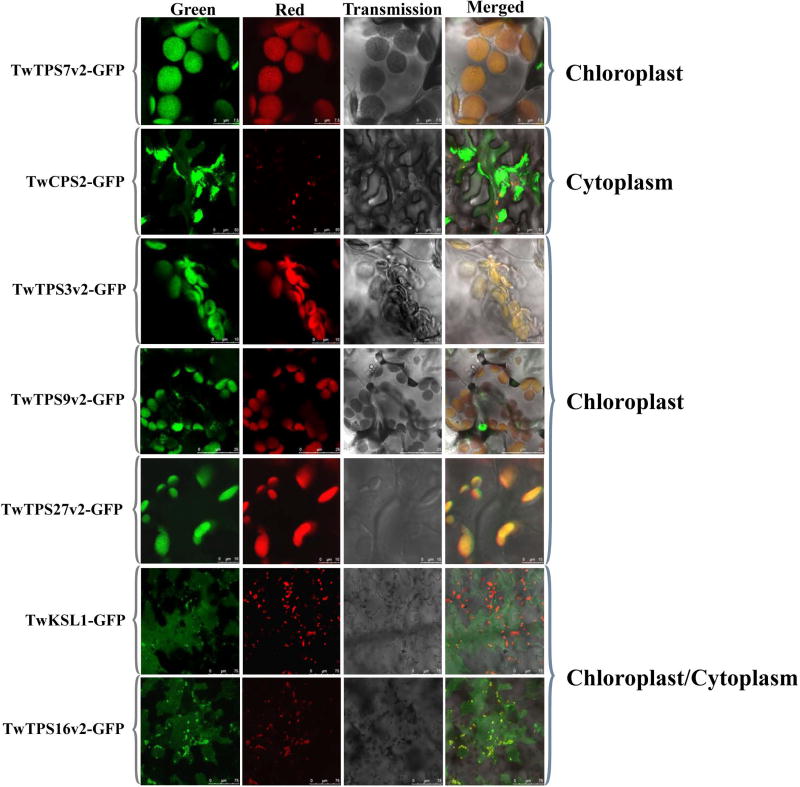
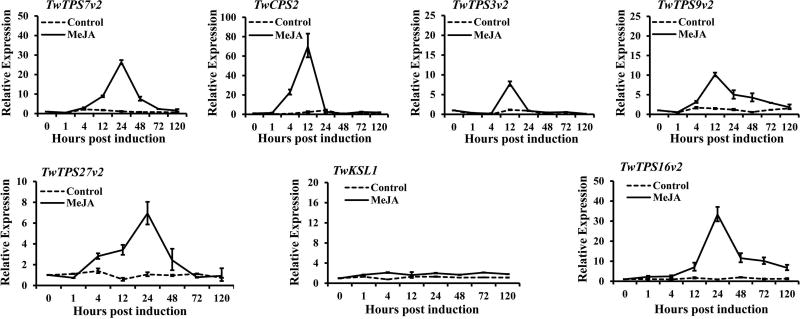
Tripterygium wilfordii, which has long been used as a medicinal plant, exhibits impressive and effective anti-inflammatory, immunosuppressive and anti-tumor activities. The main active ingredients are diterpenoids and triterpenoids, such as triptolide and celastrol, respectively. A major challenge to harnessing these natural products is that they are found in very low amounts in planta. Access has been further limited by the lack of knowledge regarding their underlying biosynthetic pathways, particularly for the abeo-abietane tri-epoxide lactone triptolide. Here suspension cell cultures of T. wilfordii were found to produce triptolide in an inducible fashion, with feeding studies indicating that miltiradiene is the relevant abietane olefin precursor. Subsequently, transcriptome data were used to identify eight putative (di)terpene synthases that were then characterized for their potential involvement in triptolide biosynthesis. This included not only biochemical studies which revealed the expected presence of class II diterpene cyclases that produce the intermediate copalyl diphosphate (CPP), along with the more surprising finding of an atypical class I (di)terpene synthase that acts on CPP to produce the abietane olefin miltiradiene, but also their subcellular localization and, critically, genetic analysis. In particular, RNA interference targeting either both of the CPP synthases, TwTPS7v2 and TwTPS9v2, or the subsequently acting miltiradiene synthase, TwTPS27v2, led to decreased production of triptolide. Importantly, these results then both confirm that miltiradiene is the relevant precursor and the relevance of the identified diterpene synthases, enabling future studies of the biosynthesis of this important bioactive natural product.
雷公藤,作为一种传统药用植物,具有显著而有效的抗炎、免疫抑制和抗肿瘤活性。其主要活性成分包括二萜和三萜类化合物,如雷公藤红素和表鬼臼毒素。利用这些天然产物的主要挑战是它们在植物中的含量非常低。由于缺乏对其潜在生物合成途径的了解,特别是对于 abeo-abietane 三环氧内酯雷公藤红素,进一步限制了对它们的获取。本研究发现雷公藤悬浮细胞培养物以可诱导的方式产生雷公藤红素,喂食研究表明,千里光烯是相关的 abietane 烯烃前体。随后,利用转录组数据鉴定了 8 种可能的(二)萜烯合酶,然后对其参与雷公藤红素生物合成的潜力进行了表征。这不仅包括生化研究,揭示了预期存在的产生中间产物考柏烯二磷酸(CPP)的 II 类二萜环化酶,以及更令人惊讶的发现一种非典型的 I 类(二)萜烯合酶,它作用于 CPP 产生 abietane 烯烃千里光烯,还包括它们的亚细胞定位,以及关键的遗传分析。特别是,针对 CPP 合酶 TwTPS7v2 和 TwTPS9v2 或随后作用的千里光烯合酶 TwTPS27v2 的 RNA 干扰,导致雷公藤红素产量降低。重要的是,这些结果证实了千里光烯是相关前体以及鉴定的二萜合酶的相关性,为进一步研究这种重要生物活性天然产物的生物合成提供了依据。