Zeng Jian, Chen Min, Zheng Minfang, Hu Wangjiang, Qiu Yusheng
College of Ocean and Earth Sciences, Xiamen University, Xiamen, 361005, China.
Geochem Trans. 2017 Sep 20;18(1):5. doi: 10.1186/s12932-017-0043-2.
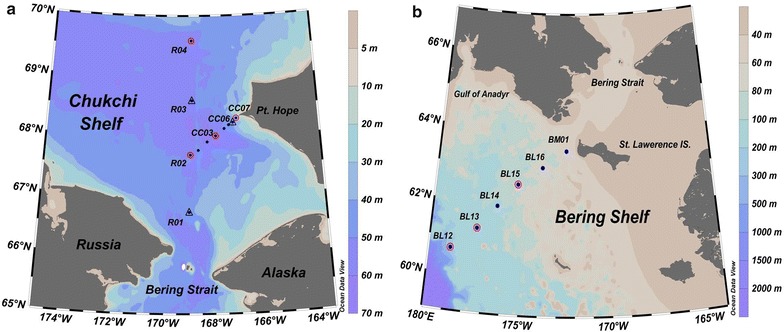
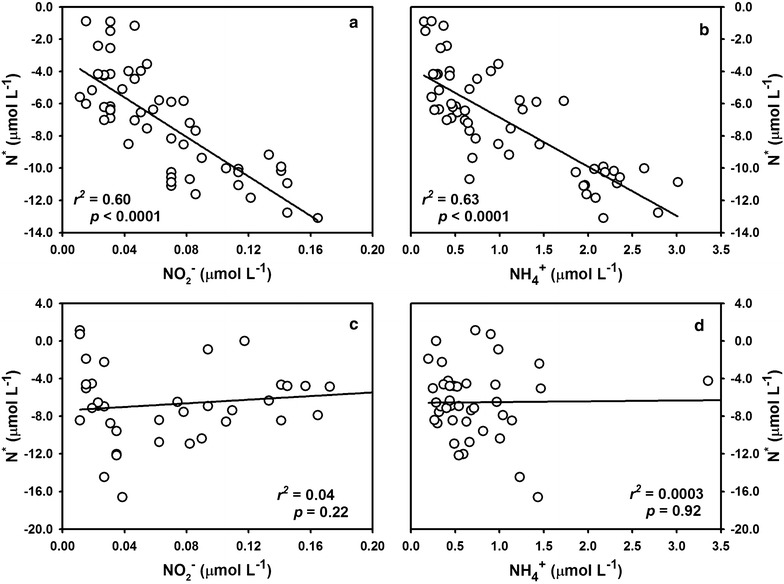
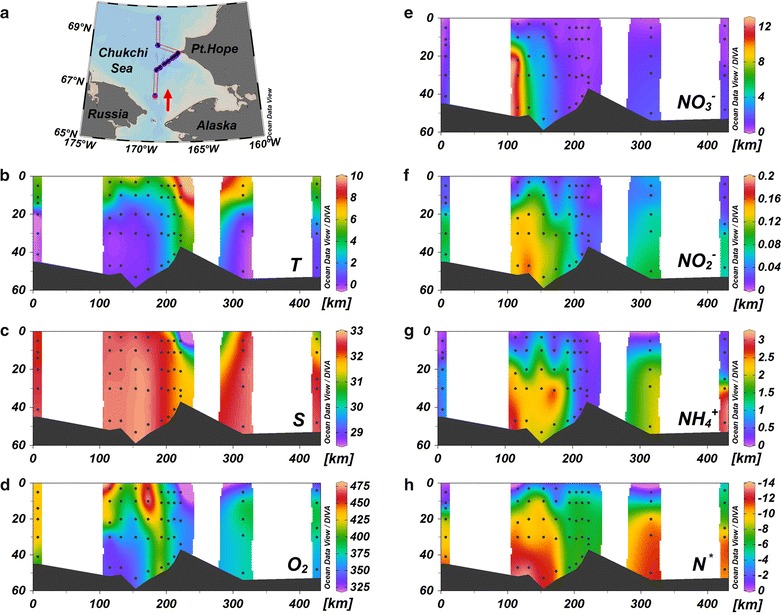
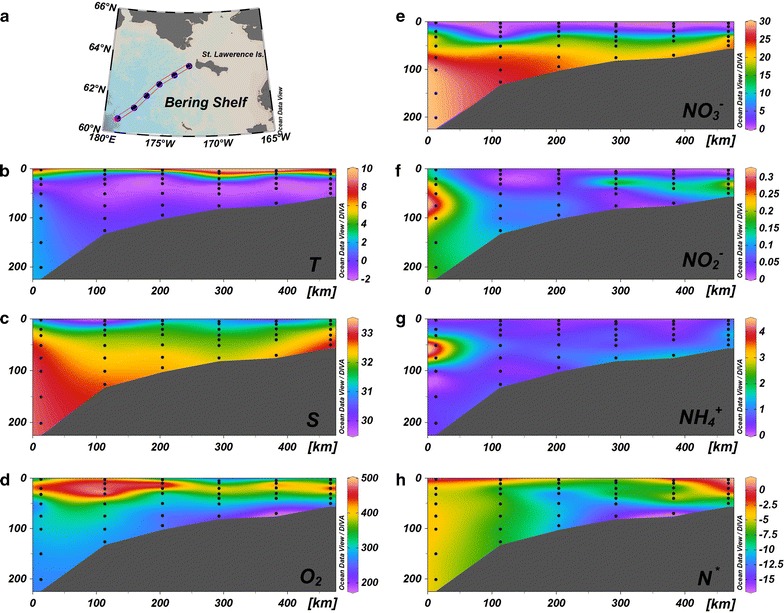
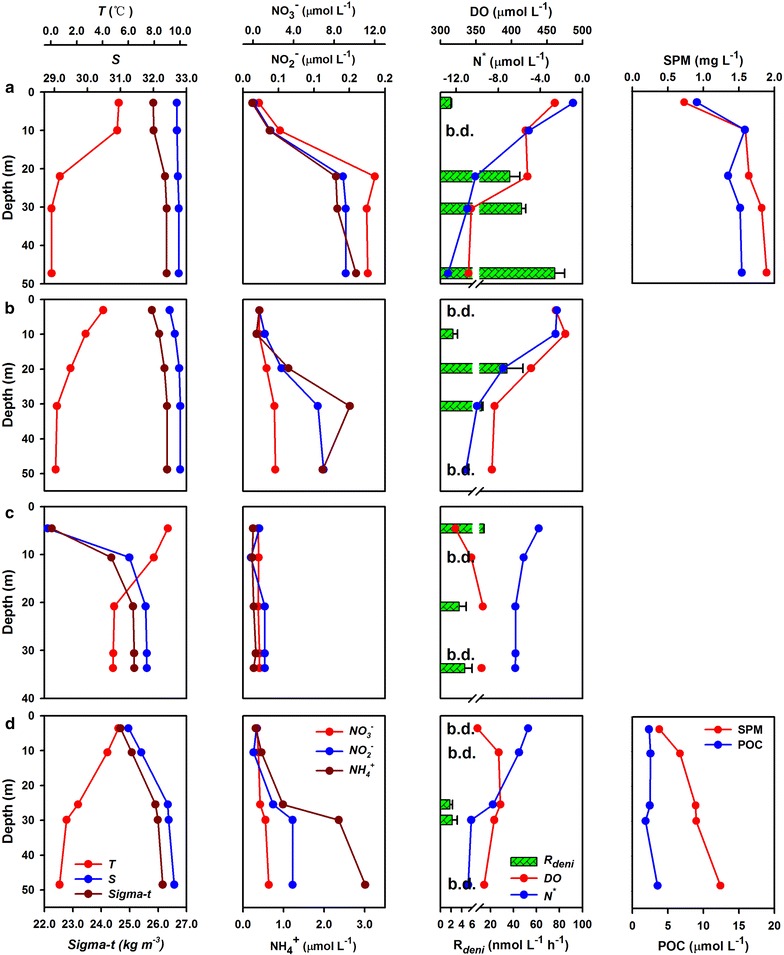
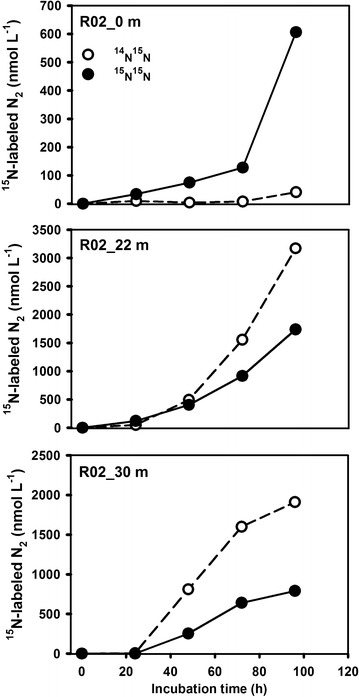
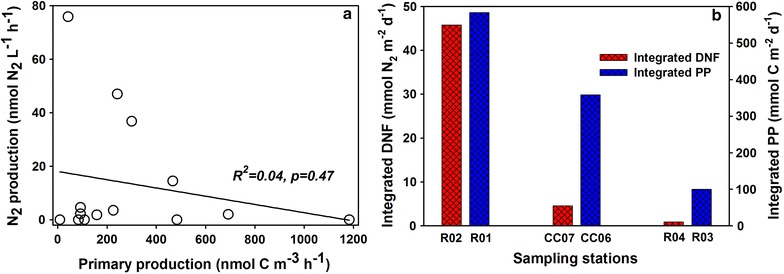
The western Arctic Shelf has long been considered as an important sink of nitrogen because high primary productivity of the shelf water fuels active denitrification within the sediments, which has been recognized to account for all the nitrogen (N) removal of the Pacific water inflow. However, potentially high denitrifying activity was discovered within the oxygenated Chukchi Shelf water during our summer expedition. Based on N-isotope pairing incubations, we estimated denitrification rates ranging from 1.8 ± 0.4 to 75.9 ± 8.7 nmol N L h. We find that the spatial pattern of denitrifying activity follows well with primary productivity, which supplies plentiful fresh organic matter, and there was a strong correlation between integrated denitrification and integrated primary productivity. Considering the active hydrodynamics over the Chukchi Shelf during summer, resuspension of benthic sediment coupled with particle-associated bacteria induces an active denitrification process in the oxic water column. We further extrapolate to the whole Chukchi Shelf and estimate an N removal flux from this cold Arctic shelf water to be 12.2 Tg-N year, which compensates for the difference between sediment cores incubation (~ 3 Tg-N year) and geochemical estimation based on N deficit relative to phosphorous (~ 16 Tg-N year). We infer that dynamic sediment resuspension combined with high biological productivity stimulates intensive denitrification in the water column, potentially creating a nitrogen sink over the shallow Arctic shelves that have previously been unrecognized.
长期以来,北极西部大陆架一直被视为重要的氮汇,因为陆架水体的高初级生产力促进了沉积物中的活跃反硝化作用,据认为这消除了流入的太平洋水体中的所有氮。然而,在我们夏季考察期间,在楚科奇陆架含氧水体中发现了潜在的高反硝化活性。基于氮同位素配对培养,我们估计反硝化速率在1.8±0.4至75.9±8.7 nmol N L h之间。我们发现,反硝化活性的空间格局与提供大量新鲜有机物的初级生产力密切相关,综合反硝化作用与综合初级生产力之间存在很强的相关性。考虑到夏季楚科奇陆架上活跃的水动力,底栖沉积物的再悬浮与颗粒相关细菌共同作用,在含氧水柱中引发了活跃的反硝化过程。我们进一步推算整个楚科奇陆架,估计从这片寒冷的北极陆架水体中去除的氮通量为12.2 Tg-N/年,这弥补了沉积物岩心培养(约3 Tg-N/年)与基于相对于磷的氮亏缺的地球化学估算(约16 Tg-N/年)之间的差异。我们推断,动态的沉积物再悬浮与高生物生产力相结合,刺激了水柱中的强烈反硝化作用,可能在以前未被认识的浅北极陆架上形成一个氮汇。