Sundman Anneli, Byrne James M, Bauer Iris, Menguy Nicolas, Kappler Andreas
Geomicrobiology, Center for Applied Geosciences, University of Tuebingen, Sigwartstrasse 10, 72076, Tuebingen, Germany.
Institut de Minéralogie, de Physique des Matériaux et de Cosmochimie, Sorbonne Universités, Université Pierre et Marie Curie, UMR 7590, CNRS, MNHN, IRD, 75252, Paris Cedex 05, France.
Geochem Trans. 2017 Oct 19;18(1):6. doi: 10.1186/s12932-017-0044-1.
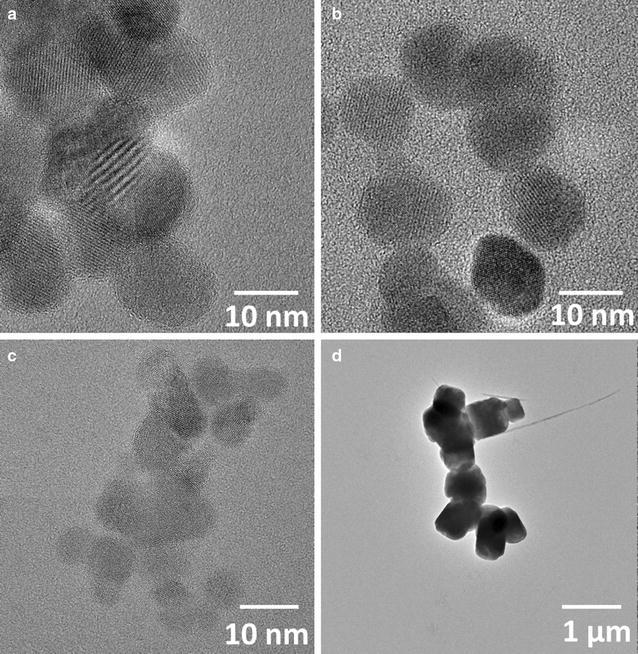
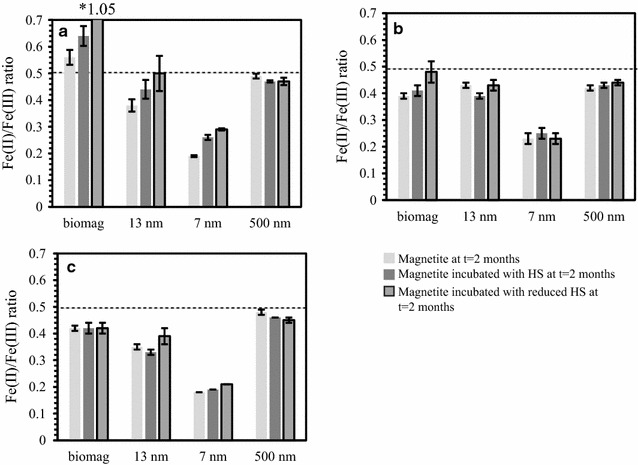
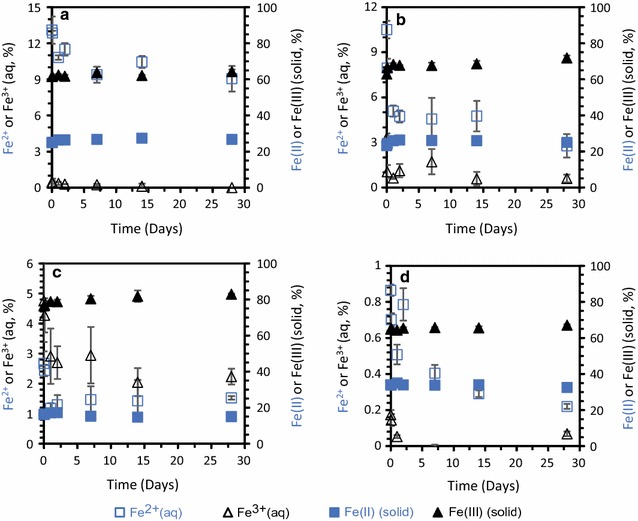
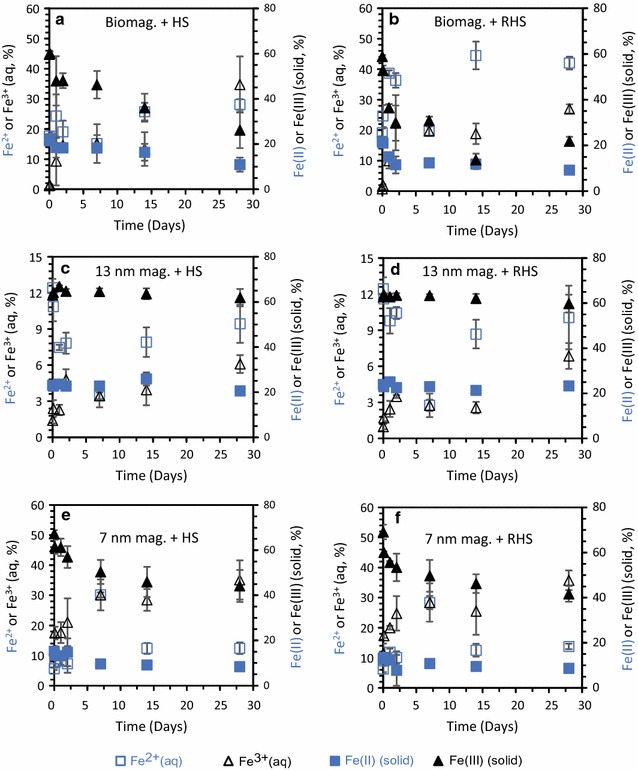
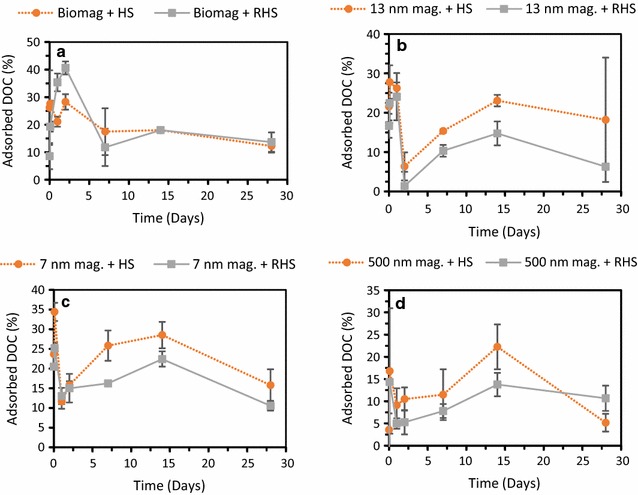
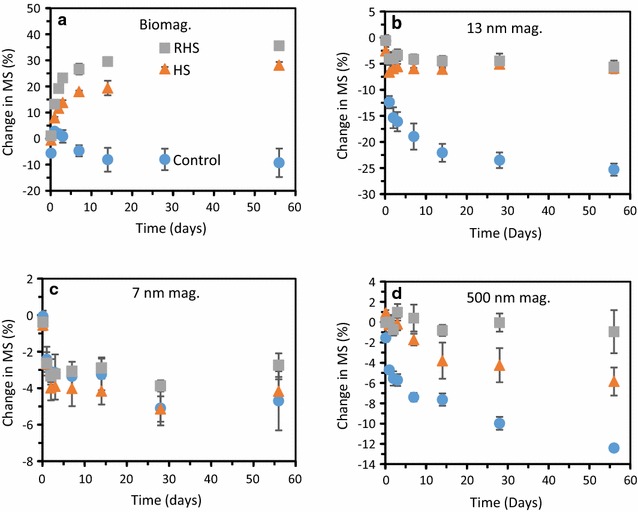
Humic substances (HS) are redox-active compounds that are ubiquitous in the environment and can serve as electron shuttles during microbial Fe(III) reduction thus reducing a variety of Fe(III) minerals. However, not much is known about redox reactions between HS and the mixed-valent mineral magnetite (FeO) that can potentially lead to changes in Fe(II)/Fe(III) stoichiometry and even dissolve the magnetite. To address this knowledge gap, we incubated non-reduced (native) and reduced HS with four types of magnetite that varied in particle size and solid-phase Fe(II)/Fe(III) stoichiometry. We followed dissolved and solid-phase Fe(II) and Fe(III) concentrations over time to quantify redox reactions between HS and magnetite. Magnetite redox reactions and dissolution processes with HS varied depending on the initial magnetite and HS properties. The interaction between biogenic magnetite and reduced HS resulted in dissolution of the solid magnetite mineral, as well as an overall reduction of the magnetite. In contrast, a slight oxidation and no dissolution was observed when native and reduced HS interacted with 500 nm magnetite. This variability in the solubility and electron accepting and donating capacity of the different types of magnetite is likely an effect of differences in their reduction potential that is correlated to the magnetite Fe(II)/Fe(III) stoichiometry, particle size, and crystallinity. Our study suggests that redox-active HS play an important role for Fe redox speciation within minerals such as magnetite and thereby influence the reactivity of these Fe minerals and their role in biogeochemical Fe cycling. Furthermore, such processes are also likely to have an effect on the fate of other elements bound to the surface of Fe minerals.
腐殖质(HS)是环境中普遍存在的具有氧化还原活性的化合物,在微生物还原Fe(III)过程中可作为电子穿梭体,从而还原多种Fe(III)矿物。然而,关于HS与混合价态矿物磁铁矿(FeO)之间的氧化还原反应,人们了解甚少,这种反应可能会导致Fe(II)/Fe(III)化学计量比发生变化,甚至使磁铁矿溶解。为填补这一知识空白,我们将未还原(天然)和还原的HS与四种粒径和固相Fe(II)/Fe(III)化学计量比不同的磁铁矿进行孵育。我们随时间跟踪溶解态和固相Fe(II)和Fe(III)的浓度,以量化HS与磁铁矿之间的氧化还原反应。HS与磁铁矿的氧化还原反应和溶解过程因初始磁铁矿和HS的性质而异。生物源磁铁矿与还原的HS之间的相互作用导致固体磁铁矿矿物溶解,以及磁铁矿整体还原。相比之下,当天然和还原的HS与500 nm磁铁矿相互作用时,观察到轻微氧化且无溶解现象。不同类型磁铁矿在溶解度、电子接受和供体能力方面的这种差异,可能是由于其还原电位不同所致,而还原电位与磁铁矿的Fe(II)/Fe(III)化学计量比、粒径和结晶度相关。我们的研究表明,具有氧化还原活性的HS在磁铁矿等矿物内的Fe氧化还原形态形成中起重要作用,从而影响这些Fe矿物的反应性及其在生物地球化学Fe循环中的作用。此外,此类过程也可能会对与Fe矿物表面结合的其他元素的归宿产生影响。