Metal Metabolism Group, Departments of Biochemistry and Nutritional Sciences, School of Life Course Sciences, Faculty of Life Sciences and Medicine, King's College London, Franklin-Wilkins Bldg, 150 Stamford St., London SE1 9NH, UK.
Int J Mol Sci. 2017 Oct 31;18(11):2285. doi: 10.3390/ijms18112285.
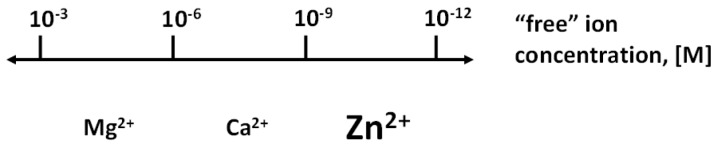
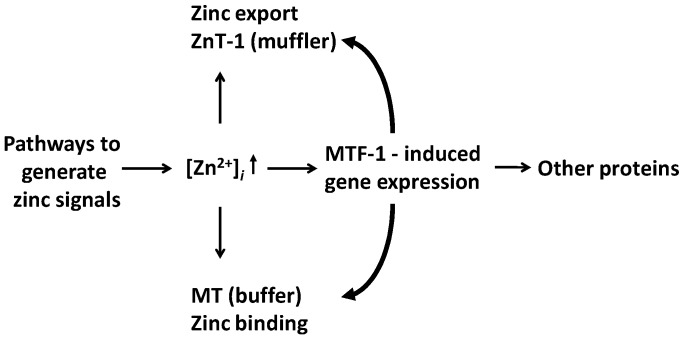
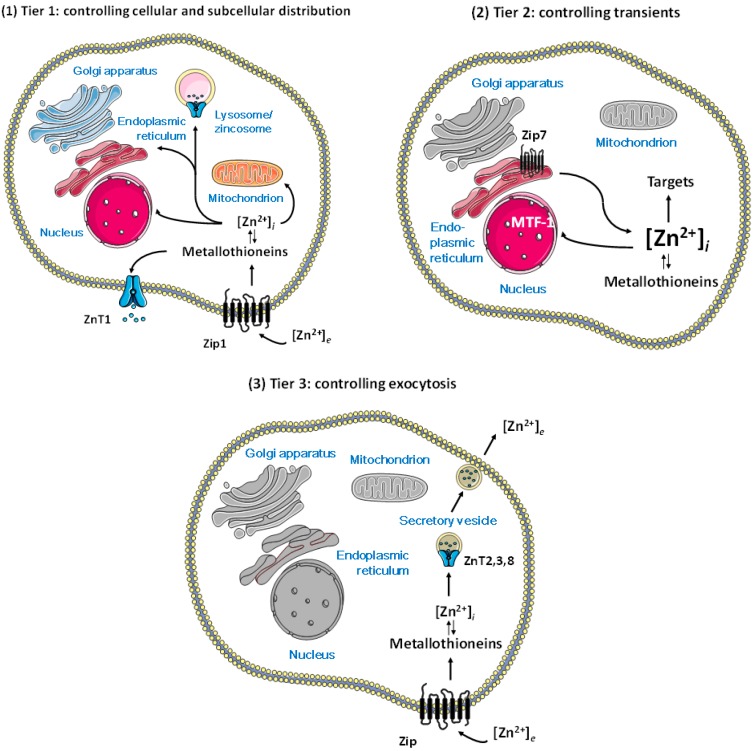
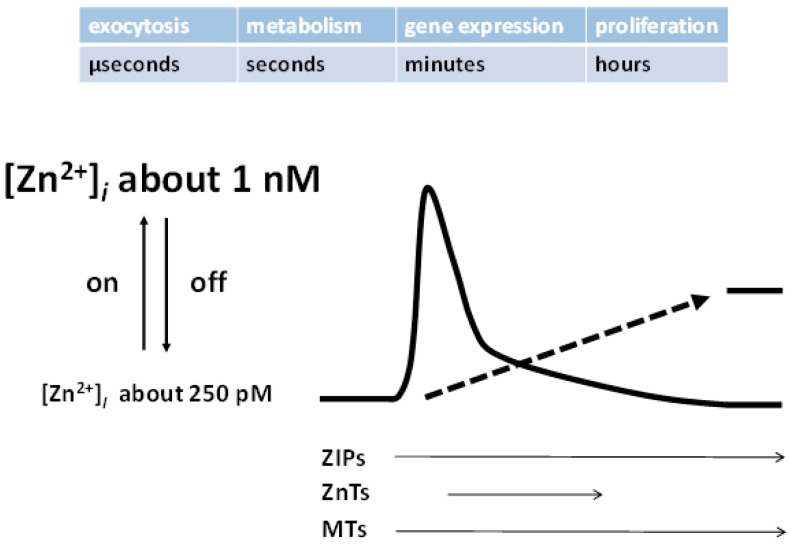
In the last decade, we witnessed discoveries that established Zn as a second major signalling metal ion in the transmission of information within cells and in communication between cells. Together with Ca and Mg, Zn covers biological regulation with redox-inert metal ions over many orders of magnitude in concentrations. The regulatory functions of zinc ions, together with their functions as a cofactor in about three thousand zinc metalloproteins, impact virtually all aspects of cell biology. This article attempts to define the regulatory functions of zinc ions, and focuses on the nature of zinc signals and zinc signalling in pathways where zinc ions are either extracellular stimuli or intracellular messengers. These pathways interact with Ca, redox, and phosphorylation signalling. The regulatory functions of zinc require a complex system of precise homeostatic control for transients, subcellular distribution and traffic, organellar homeostasis, and vesicular storage and exocytosis of zinc ions.
在过去的十年中,我们见证了一些发现,这些发现确立了 Zn 作为细胞内信息传递和细胞间通讯的第二大主要信号金属离子。与 Ca 和 Mg 一起,Zn 用氧化还原惰性金属离子覆盖了生物调节,其浓度范围跨越了许多数量级。锌离子的调节功能,以及它们作为大约三千种锌金属蛋白酶的辅助因子的功能,几乎影响了细胞生物学的所有方面。本文试图定义锌离子的调节功能,并侧重于锌信号的本质以及在锌离子作为细胞外刺激或细胞内信使的途径中的锌信号转导。这些途径与 Ca、氧化还原和磷酸化信号转导相互作用。锌的调节功能需要一个复杂的系统来进行精确的动态平衡控制、亚细胞分布和运输、细胞器稳态以及锌离子的囊泡储存和胞吐作用。