Ferreira Lia, Silva João, Garrido Susana, Bello Carlos, Oliveira Diana, Simões Hélder, Paiva Isabel, Guimarães Joana, Ferreira Marta, Pereira Teresa, Bettencourt-Silva Rita, Martins Ana Filipa, Silva Tiago, Fernandes Vera, Pereira Maria Lopes
Department of EndocrinologyCentro Hospitalar do Porto, Porto, Portugal
Department of EndocrinologyHospital das Forças Armadas, Lisboa, Portugal.
Endocr Connect. 2017 Nov;6(8):935-942. doi: 10.1530/EC-17-0295. Epub 2017 Oct 31.
Primary adrenal insufficiency (PAI) is a rare but severe and potentially life-threatening condition. No previous studies have characterized Portuguese patients with PAI.
To characterize the clinical presentation, diagnostic workup, treatment and follow-up of Portuguese patients with confirmed PAI.
This multicentre retrospective study examined PAI patients in 12 Portuguese hospitals.
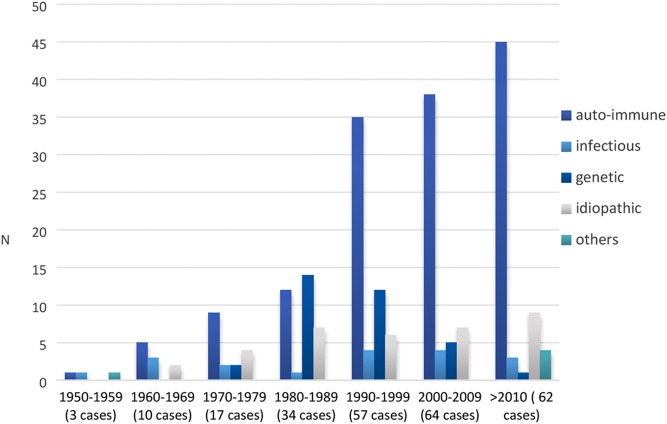
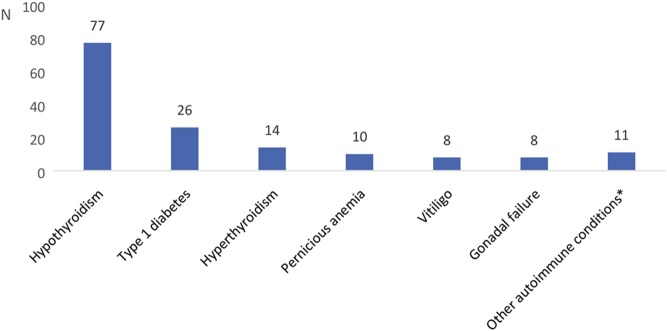
We investigated 278 patients with PAI (55.8% were females), with a mean age of 33.6 ± 19.3 years at diagnosis. The most frequent presenting clinical features were asthenia (60.1%), mucocutaneous hyperpigmentation (55.0%) and weight loss (43.2%); 29.1% of the patients presented with adrenal crisis. Diagnosis was established by high plasma ACTH and low serum cortisol in most patients (43.9%). The most common aetiology of PAI was autoimmune adrenalitis (61.0%). There were 38 idiopathic cases. Autoimmune comorbidities were found in 70% of the patients, the most frequent being autoimmune thyroiditis (60.7%) and type 1 diabetes mellitus (17.3%). Seventy-nine percent were treated with hydrocortisone (mean dose 26.3 ± 8.3 mg/day) mostly in three (57.5%) or two (37.4%) daily doses. The remaining patients were treated with prednisolone (10.1%), dexamethasone (6.2%) and methylprednisolone (0.7%); 66.2% were also on fludrocortisone (median dose of 100 µg/day). Since diagnosis, 33.5% of patients were hospitalized for disease decompensation. In the last appointment, 17.2% of patients had complaints (7.6% asthenia and 6.5% depression) and 9.7% had electrolyte disturbances.
This is the first multicentre Portuguese study regarding PAI. The results emphasize the need for standardization in diagnostic tests and etiological investigation and provide a framework for improving treatment.
原发性肾上腺功能不全(PAI)是一种罕见但严重且可能危及生命的疾病。此前尚无针对葡萄牙PAI患者的特征描述研究。
对确诊为PAI的葡萄牙患者的临床表现、诊断检查、治疗及随访情况进行特征描述。
这项多中心回顾性研究对葡萄牙12家医院的PAI患者进行了检查。
我们调查了278例PAI患者(55.8%为女性),诊断时的平均年龄为33.6±19.3岁。最常见的临床表现为乏力(60.1%)、皮肤黏膜色素沉着(55.0%)和体重减轻(43.2%);29.1%的患者出现肾上腺危象。大多数患者(43.9%)通过高血浆促肾上腺皮质激素(ACTH)和低血清皮质醇确诊。PAI最常见的病因是自身免疫性肾上腺炎(61.0%)。有38例特发性病例。70%的患者存在自身免疫性合并症,最常见的是自身免疫性甲状腺炎(60.7%)和1型糖尿病(17.3%)。79%的患者接受氢化可的松治疗(平均剂量26.3±8.3毫克/天),大多为每日三次(57.5%)或两次(37.4%)给药。其余患者接受泼尼松龙治疗(10.1%)、地塞米松治疗(6.2%)和甲泼尼龙治疗(0.7%);66.2%的患者还接受氟氢可的松治疗(中位剂量为100微克/天)。自诊断以来,33.5%的患者因病情失代偿而住院。在最后一次就诊时,17.2%的患者有不适症状(7.6%为乏力,6.5%为抑郁),9.7%的患者有电解质紊乱。
这是葡萄牙第一项关于PAI的多中心研究。研究结果强调了诊断测试和病因调查标准化的必要性,并为改善治疗提供了一个框架。