Scott Aaron J, Song Eun-Kee, Bagby Stacey, Purkey Alicia, McCarter Martin, Gajdos Csaba, Quackenbush Kevin S, Cross Benjamin, Pitts Todd M, Tan Aik Choon, Eckhardt S Gail, Fenton Hubert, Arcaroli John, Messersmith Wells A
Division of Medical Oncology, Banner University of Arizona Cancer Center, Tucson, AZ, United States of America.
Chonbuk National University Medical School, Jeonju, South Korea.
PLoS One. 2017 Nov 1;12(11):e0187173. doi: 10.1371/journal.pone.0187173. eCollection 2017.
Dysregulation of the Src pathway has been shown to be important at various stages of cancer. Dasatinib is a potent Src/Abl inhibitor and has demonstrated to have anti-proliferative and anti-invasive activity in many preclinical models. The objective of this study was to determine the anti-tumor activity of dasatinib using in vitro and in vivo preclinical colorectal (CRC) models.
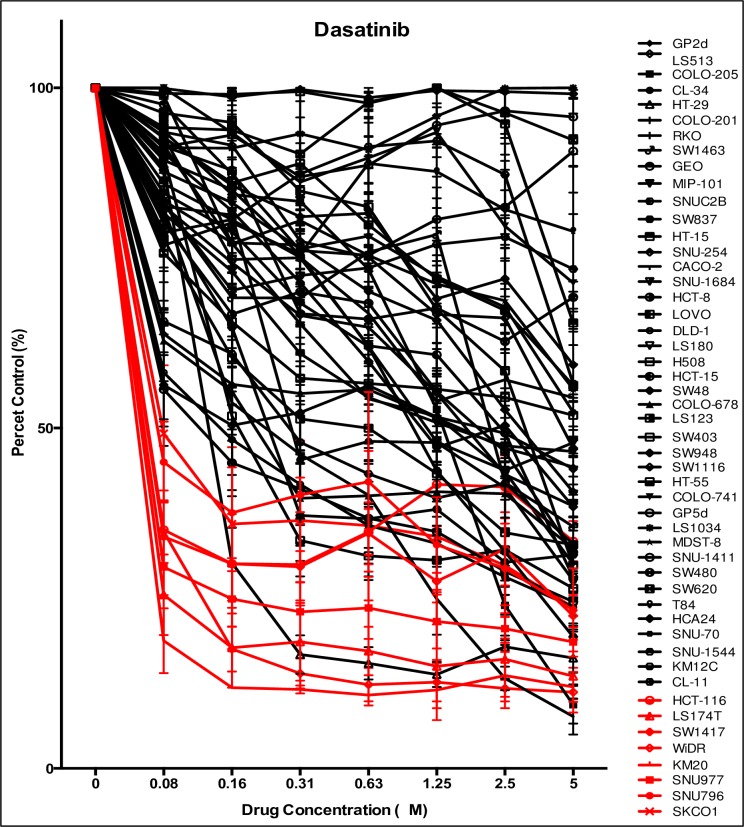
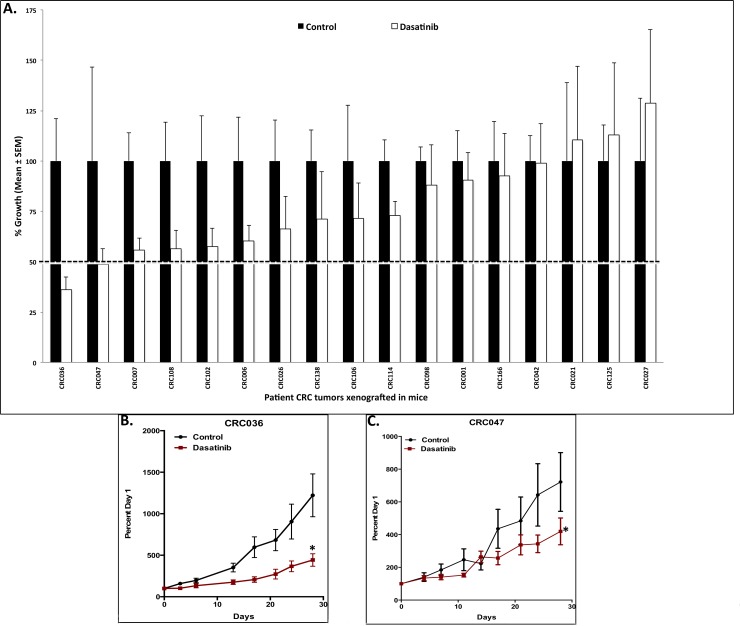
CRC cell lines and patient-derived tumor explant (PDX) models were used to investigate the efficacy of dasatinib. We treated 50 CRC cell lines with dasatinib for 72 hours and proliferation was assayed by a sulforhodamine B (SRB) assay; an IC50 ≤ 0.08 μmol/L was considered sensitive. We treated 17 patient-derived CRC explants with dasatinib (50 mg/kg/day, administered once-daily) for 28 days to determine in vivo efficacy. Tumor growth inhibition (TGI) ≥ 50% was considered sensitive.
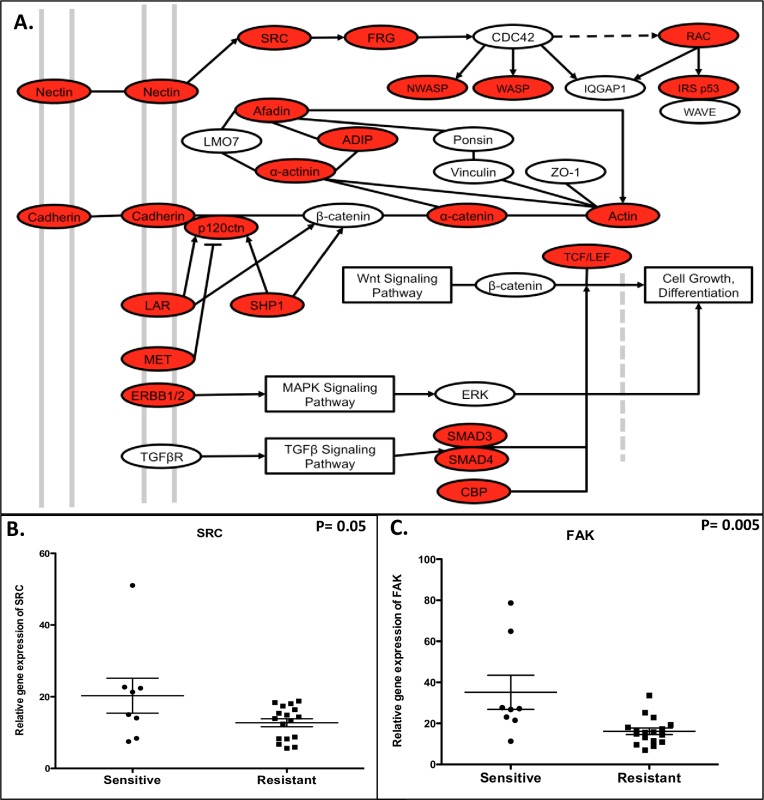
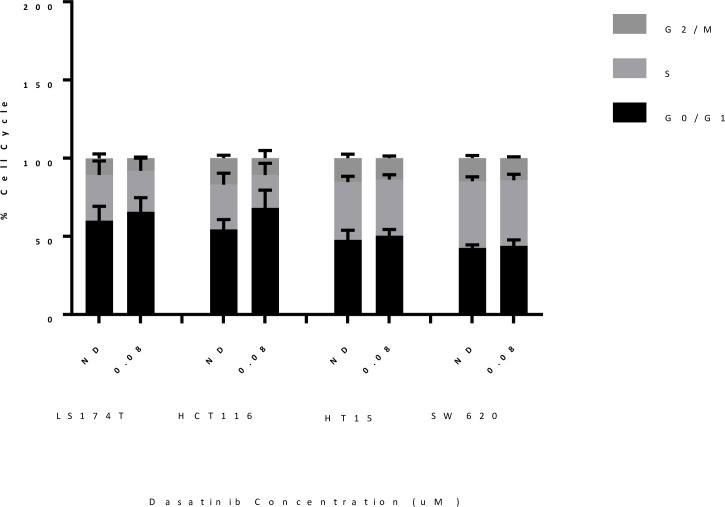
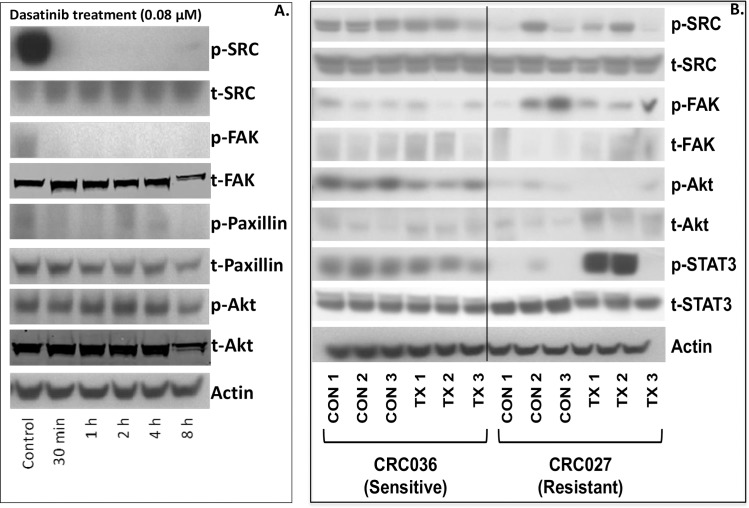
We found that 8 out of 50 CRC cell lines reached an IC50 ≤ 0.08 μmol/L with dasatinib treatment. In addition, of 17 CRC explants grown in the xenograft mouse model, 2 showed sensitivity to dasatinib. The anti-tumor effects observed in this study were a result of G1 cell cycle arrest as the dasatinib sensitive CRC cell lines exhibited G1 inhibition. Moreover, those CRC cell lines that were responsive (0.08 μmol/L) to treatment demonstrated a significant baseline increase in Src and FAK gene expression.
Dasatinib demonstrated significant anti-proliferative activity in a subset of CRC cell lines in vitro, especially in those with increased Src expression at baseline, but only showed modest efficacy in CRC explants. Dasatinib is currently being studied in combination with chemotherapy in patients with advanced CRC, as its use as a single agent appears limited.
Src 信号通路失调在癌症的各个阶段都显示出重要性。达沙替尼是一种强效的 Src/Abl 抑制剂,在许多临床前模型中已证明具有抗增殖和抗侵袭活性。本研究的目的是使用体外和体内临床前结直肠癌(CRC)模型确定达沙替尼的抗肿瘤活性。
使用 CRC 细胞系和患者来源的肿瘤外植体(PDX)模型来研究达沙替尼的疗效。我们用达沙替尼处理 50 个 CRC 细胞系 72 小时,并通过磺基罗丹明 B(SRB)测定法检测增殖;IC50≤0.08μmol/L 被认为是敏感的。我们用达沙替尼(50mg/kg/天,每日一次给药)处理 17 个患者来源的 CRC 外植体 28 天以确定体内疗效。肿瘤生长抑制(TGI)≥50%被认为是敏感的。
我们发现,50 个 CRC 细胞系中有 8 个在达沙替尼处理后达到 IC50≤0.08μmol/L。此外,在异种移植小鼠模型中生长的 17 个 CRC 外植体中,有 2 个对达沙替尼敏感。本研究中观察到的抗肿瘤作用是 G1 期细胞周期停滞的结果,因为达沙替尼敏感的 CRC 细胞系表现出 G1 期抑制。此外,那些对治疗有反应(IC50≤0.08μmol/L)的 CRC 细胞系在 Src 和 FAK 基因表达上显示出显著的基线增加。
达沙替尼在体外的一部分 CRC 细胞系中显示出显著的抗增殖活性,特别是在那些基线时 Src 表达增加的细胞系中,但在 CRC 外植体中仅显示出适度的疗效。由于其作为单一药物的应用似乎有限,目前正在对晚期 CRC 患者进行达沙替尼与化疗联合使用的研究。