School of Chemistry, University of New South Wales, Sydney, NSW 2052, Australia.
The Australian Centre for Nanomedicine and the ARC Centre of Excellence in Convergent Bio-Nano Science and Technology, University of New South Wales, Sydney, NSW 2052, Australia.
Nat Commun. 2017 Nov 1;8(1):1240. doi: 10.1038/s41467-017-01372-z.
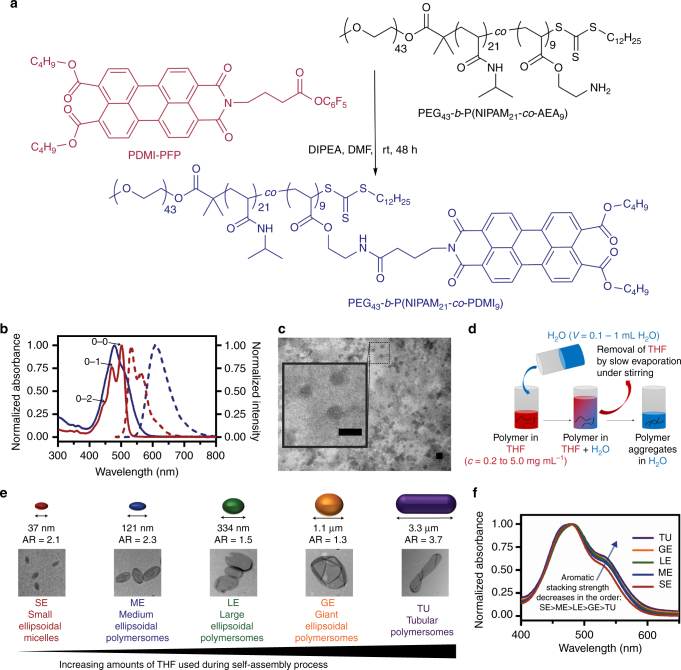
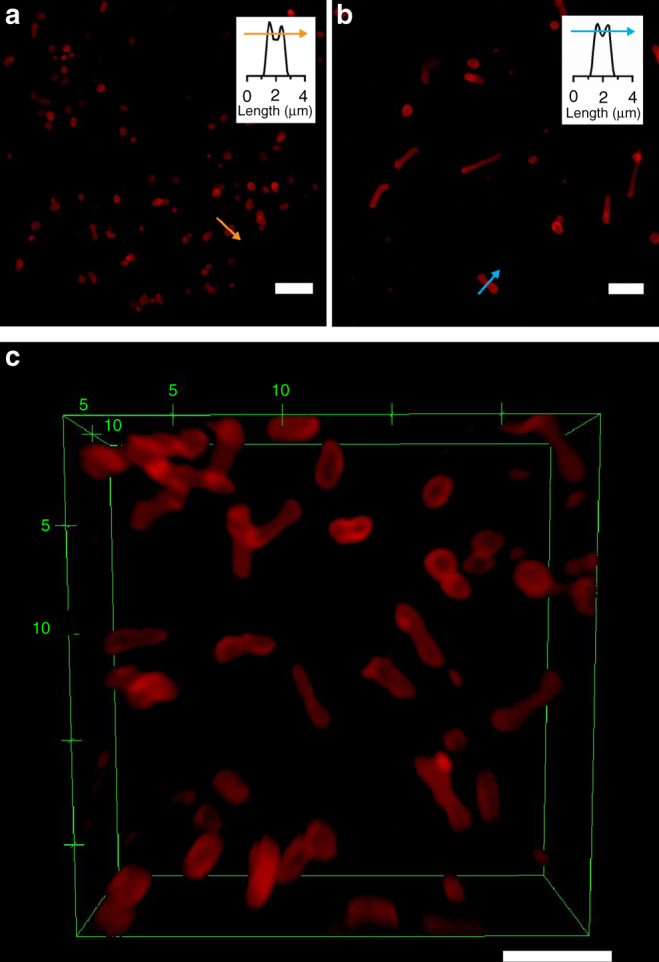
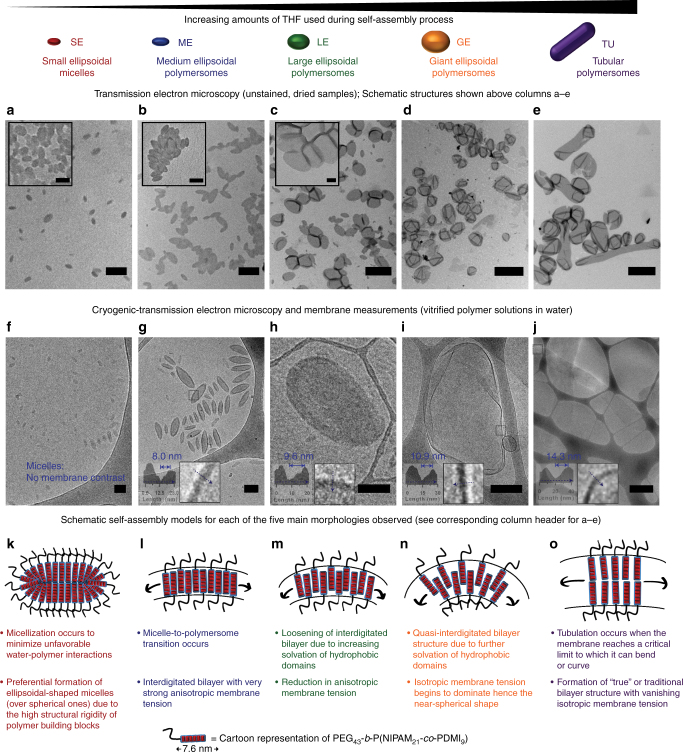
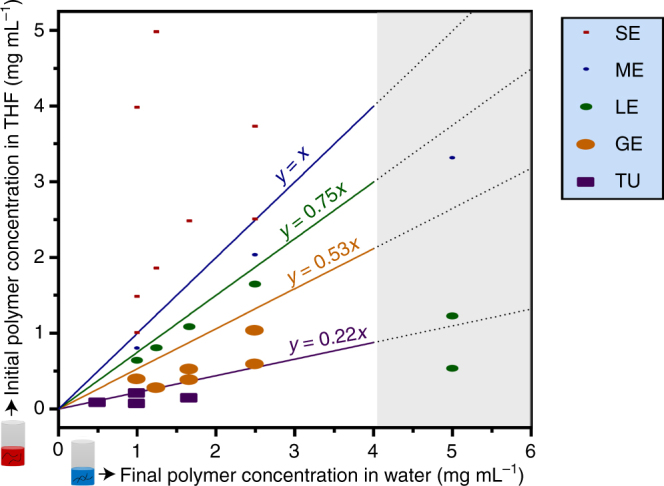
Polymersomes, made up of amphiphilic block copolymers, are emerging as a powerful tool in drug delivery and synthetic biology due to their high stability, chemical versatility, and surface modifiability. The full potential of polymersomes, however, has been hindered by a lack of versatile methods for shape control. Here we show that a range of non-spherical polymersome morphologies with anisotropic membranes can be obtained by exploiting hydrophobic directional aromatic interactions between perylene polymer units within the membrane structure. By controlling the extent of solvation/desolvation of the aromatic side chains through changes in solvent quality, we demonstrate facile access to polymersomes that are either ellipsoidal or tubular-shaped. Our results indicate that perylene aromatic interactions have a great potential in the design of non-spherical polymersomes and other structurally complex self-assembled polymer structures.
聚合物囊泡由两亲性嵌段共聚物组成,由于其高稳定性、化学多功能性和表面可修饰性,在药物传递和合成生物学领域成为一种强大的工具。然而,由于缺乏通用的形状控制方法,聚合物囊泡的全部潜力尚未得到充分发挥。在这里,我们通过利用膜结构中芘聚合物单元之间的疏水定向芳族相互作用,展示了一系列具有各向异性膜的非球形聚合物囊泡形态。通过控制溶剂质量的变化来控制芳族侧链的溶胀/去溶胀程度,我们证明了可以轻松获得椭圆形或管状形状的聚合物囊泡。我们的结果表明,芘芳族相互作用在非球形聚合物囊泡和其他结构复杂的自组装聚合物结构的设计中有很大的潜力。