Ajima Rieko, Suzuki Emiko, Saga Yumiko
Mammalian Development Laboratory, Genetic Strains Research Center, National Institute of Genetics, Mishima, Shizuoka, Japan.
Mouse Research Supporting Unit, National Institute of Genetics, Mishima, Shizuoka, Japan.
PLoS One. 2017 Nov 2;12(11):e0187248. doi: 10.1371/journal.pone.0187248. eCollection 2017.
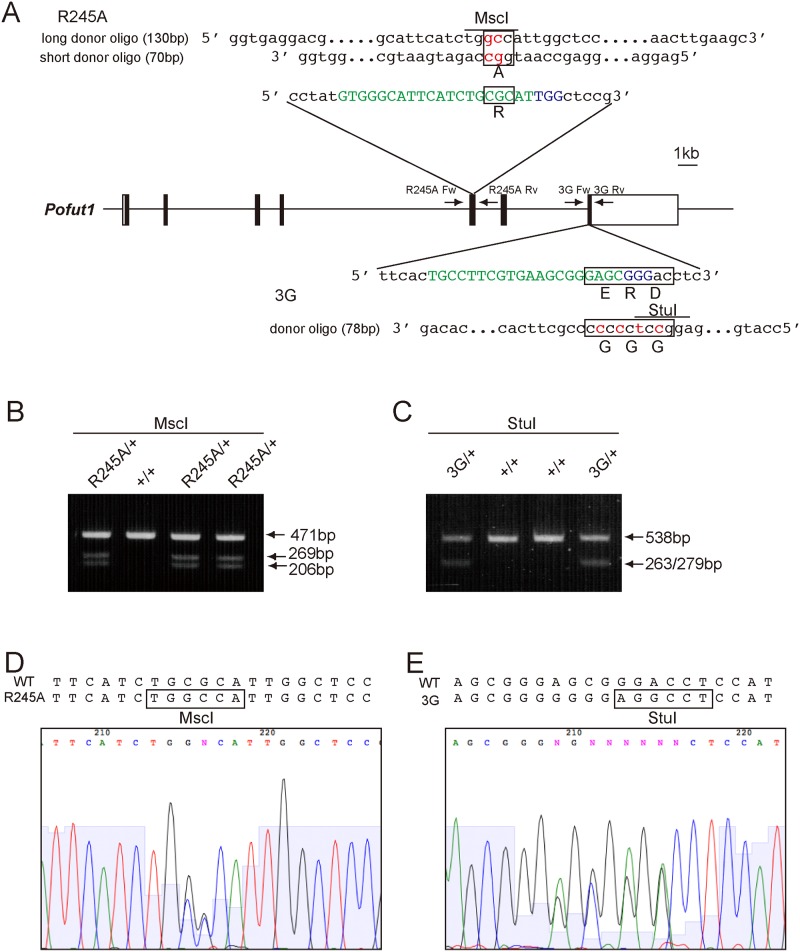
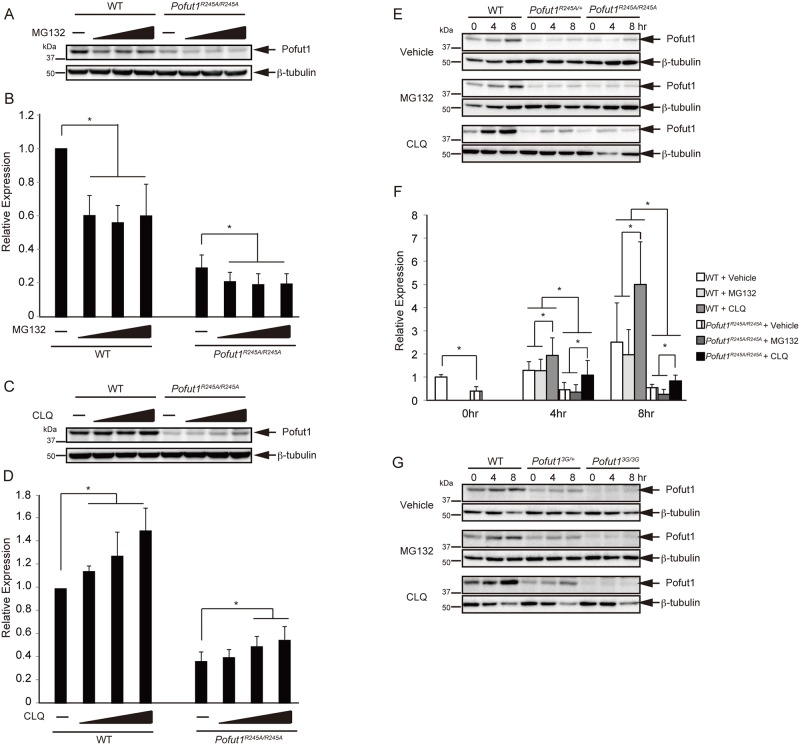
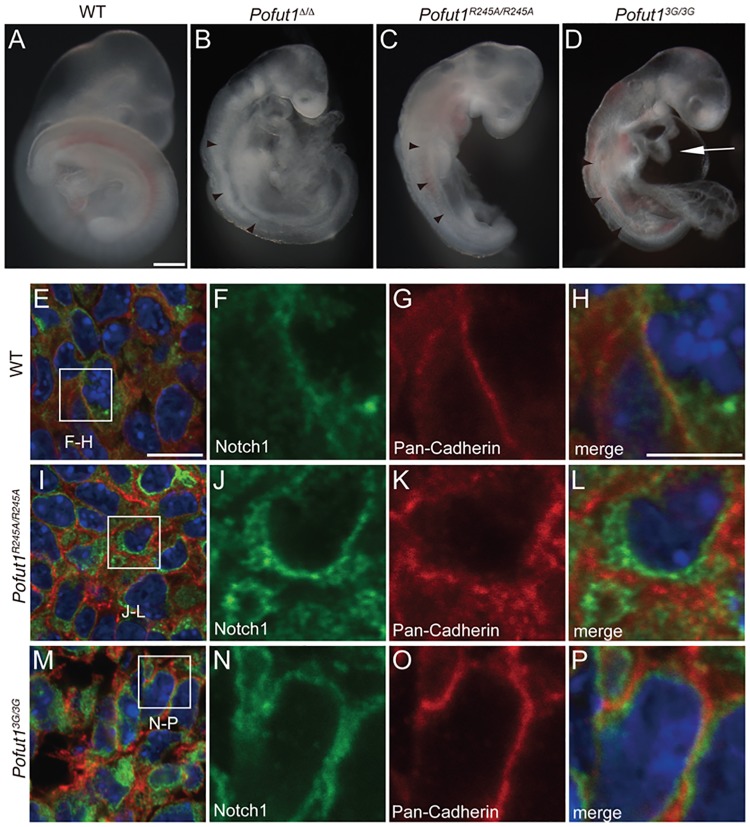
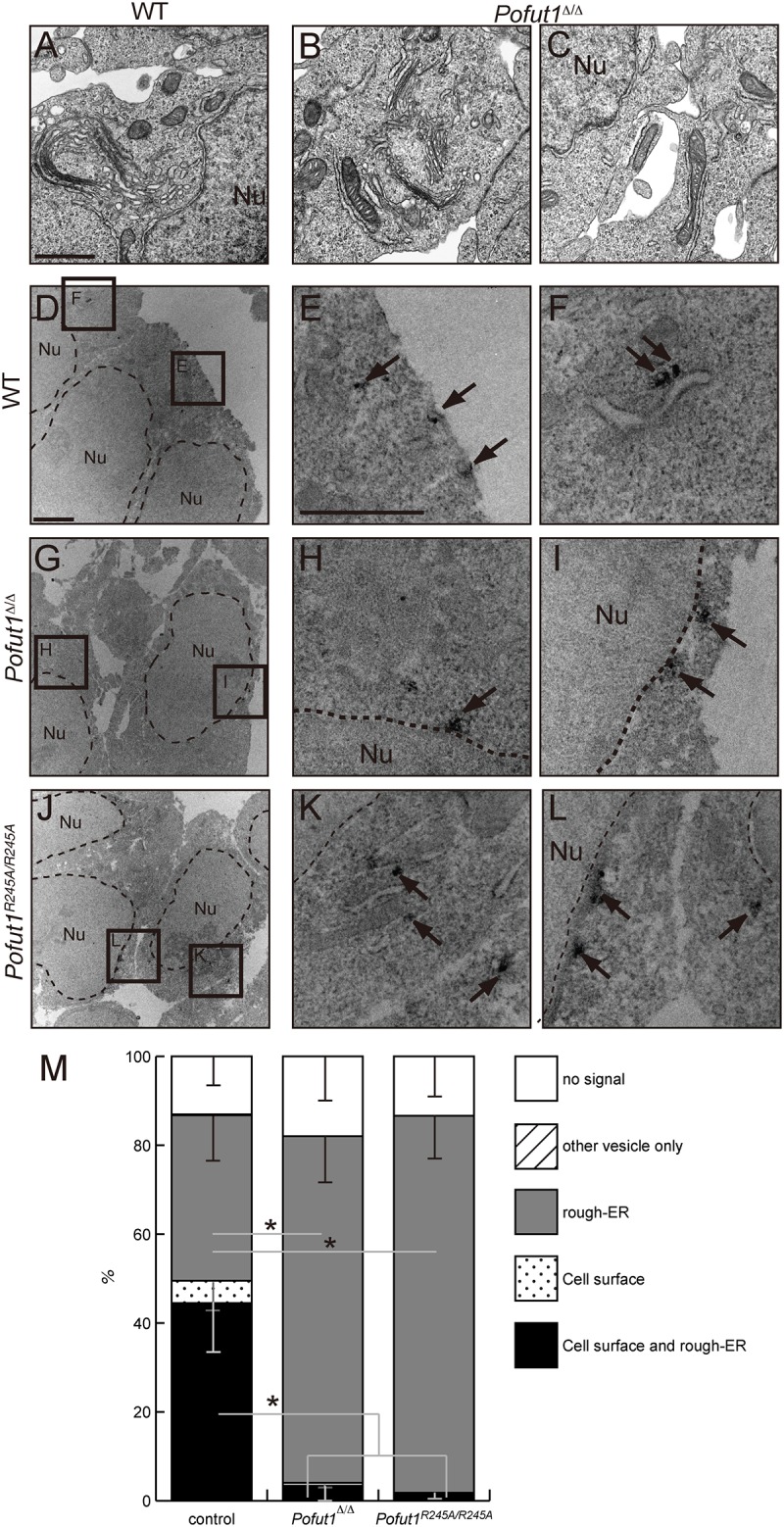
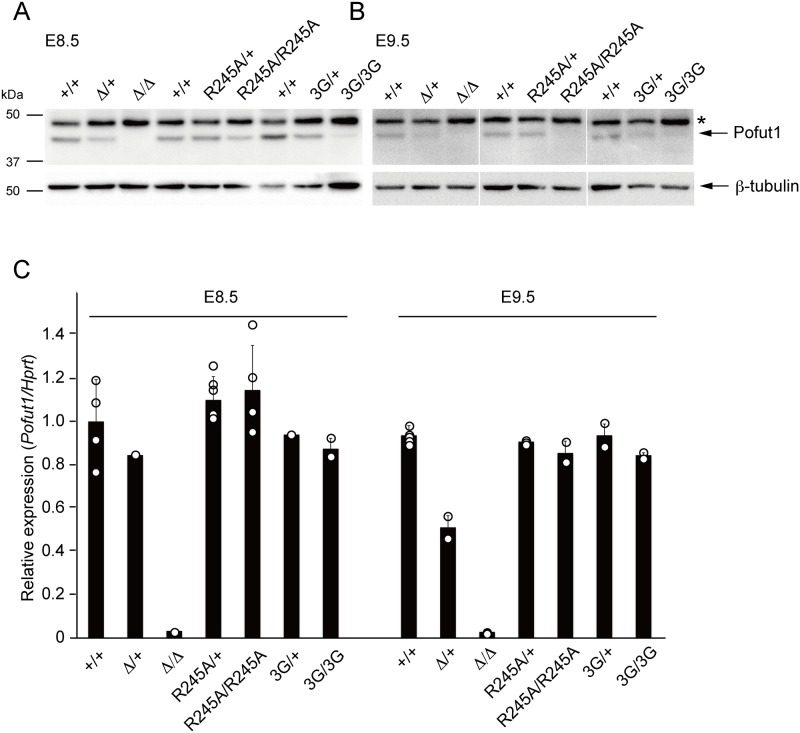
The segmental pattern of the vertebrate body is established via the periodic formation of somites from the presomitic mesoderm (PSM). This periodical process is controlled by the cyclic and synchronized activation of Notch signaling in the PSM. Protein O-fucosyltransferase1 (Pofut1), which transfers O-fucose to the EGF domains of the Notch1 receptor, is indispensable for Notch signaling activation. The Drosophila homologue Ofut1 was reported to control Notch localization via two different mechanisms, working as a chaperone for Notch or as a regulator of Notch endocytosis. However, these were found to be independent of O-fucosyltransferase activity because the phenotypes were rescued by Ofut1 mutants lacking O-fucosyltransferase activity. Pofut1 may also be involved in the Notch receptor localization in mice. However, the contribution of enzymatic activity of Pofut1 to the Notch receptor dynamics remains to be elucidated. In order to clarify the importance of the O-fucosyltransferase activity of Pofut1 for Notch signaling activation and the protein localization in the PSM, we established mice carrying point mutations at the 245th a.a. or 370-372th a.a., highly conserved amino-acid sequences whose mutations disrupt the O-fucosyltransferase activity of both Drosophila Ofut1 and mammalian Pofut1, with the CRISPR/Cas9 mediated genome-engineering technique. Both mutants displayed the same severely perturbed somite formation and Notch1 subcellular localization defects as the Pofut1 null mutants. In the mutants, Pofut1 protein, but not RNA, became undetectable by E9.5. Furthermore, both wild-type and mutant Pofut1 proteins were degraded through lysosome dependent machinery. Pofut1 protein loss in the point mutant embryos caused the same phenotypes as those observed in Pofut1 null embryos.
脊椎动物身体的节段模式是通过从前体节中胚层(PSM)周期性形成体节而建立的。这个周期性过程由PSM中Notch信号的周期性和同步激活所控制。蛋白质O-岩藻糖基转移酶1(Pofut1)将O-岩藻糖转移到Notch1受体的EGF结构域,对于Notch信号激活是必不可少的。据报道,果蝇同源物Ofut1通过两种不同机制控制Notch定位,作为Notch的分子伴侣或Notch内吞作用的调节剂。然而,发现这些机制独立于O-岩藻糖基转移酶活性,因为缺乏O-岩藻糖基转移酶活性的Ofut1突变体挽救了这些表型。Pofut1也可能参与小鼠Notch受体的定位。然而,Pofut1的酶活性对Notch受体动力学的贡献仍有待阐明。为了阐明Pofut1的O-岩藻糖基转移酶活性对Notch信号激活和PSM中蛋白质定位的重要性,我们利用CRISPR/Cas9介导的基因组工程技术,建立了在第245位氨基酸或第370 - 372位氨基酸处携带点突变的小鼠,这些高度保守的氨基酸序列的突变会破坏果蝇Ofut1和哺乳动物Pofut1的O-岩藻糖基转移酶活性。两个突变体都表现出与Pofut1基因敲除突变体相同的严重扰乱的体节形成和Notch1亚细胞定位缺陷。在突变体中,到胚胎第9.5天,Pofut1蛋白而不是RNA变得无法检测到。此外,野生型和突变型Pofut1蛋白都通过溶酶体依赖性机制降解。点突变胚胎中Pofut1蛋白的缺失导致了与Pofut1基因敲除胚胎中观察到的相同表型。