Baba Masanori, Toyama Masaaki, Sakakibara Norikazu, Okamoto Mika, Arima Naomichi, Saijo Masayuki
1 Division of Antiviral Chemotherapy, Center for Chronic Viral Diseases, Kagoshima, University, Kagoshima, Japan.
2 Faculty of Pharmaceutical Sciences at Kagawa Campus, Tokushima Bunri University, Sanuki, Japan.
Antivir Chem Chemother. 2017 Dec;25(3):83-89. doi: 10.1177/2040206617740303. Epub 2017 Nov 3.
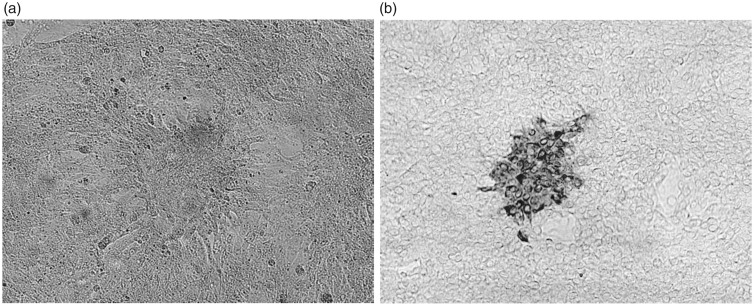
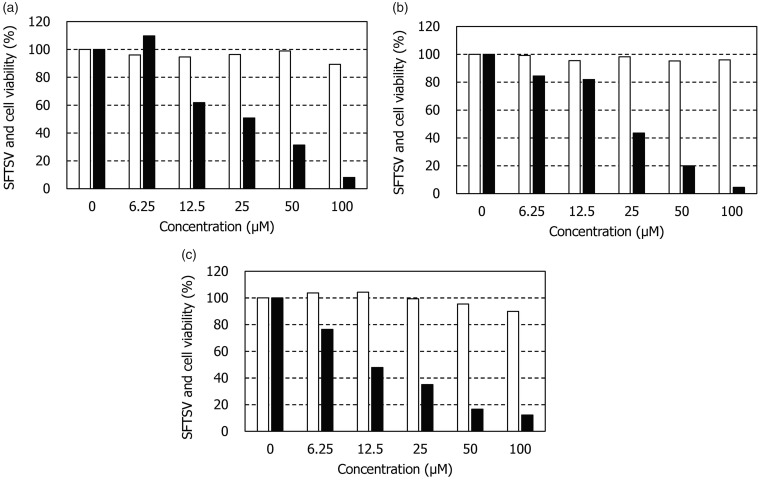
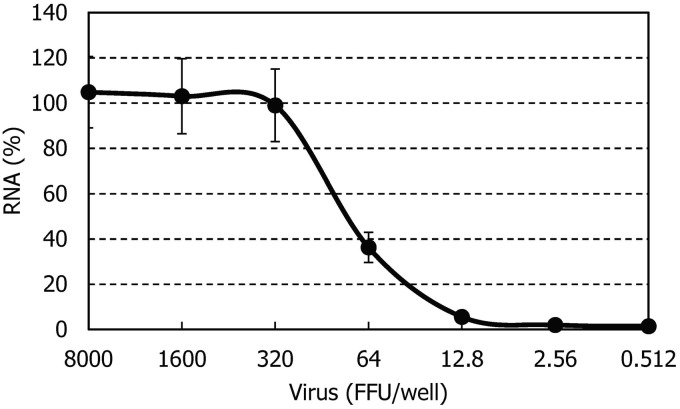
Aims Severe fever with thrombocytopenia syndrome (SFTS) is an emerging tick-borne infectious disease. SFTS is epidemic in Asia, and its fatality rate is around 30% in Japan. The causative virus severe fever with thrombocytopenia syndrome virus (SFTSV) is a phlebovirus of the family Phenuiviridae (the order Bunyavirales). Although effective treatments are required, there are no antiviral agents currently approved for clinical use. Ribavirin and favipiravir were examined for their anti-SFTSV activity and found to be selective inhibitors of SFTSV replication in vitro. However, their activity was not sufficient. Therefore, it is mandatory to identify novel compounds active against SFTSV. To this end, we have established a safe and rapid assay system for screening selective inhibitors of SFTSV. Methods The virus was isolated from SFTS patients treated in Kagoshima University Hospital. Vero cells were infected with SFTSV and incubated in the presence of various concentrations of test compounds. After three days, the cells were examined for their intracellular viral RNA levels by real-time reverse transcription-PCR without extracting viral RNA. The cytotoxicity of test compounds was determined by a tetrazolium dye method. Results Among the test compounds, the antimalarial agent amodiaquine was identified as a selective inhibitor of SFTSV replication. Its 50% effective concentration (EC) and cytotoxic concentration (CC) were 19.1 ± 5.1 and >100 µM, respectively. The EC value of amodiaquine was comparable to those of ribavirin and favipiravir. Conclusion Amodiaquine is considered to be a promising lead of novel anti-SFTSV agents, and evaluating the anti-SFTSV activity of its derivatives is in progress.
目的 严重发热伴血小板减少综合征(SFTS)是一种新出现的蜱传传染病。SFTS在亚洲流行,在日本其病死率约为30%。致病病毒严重发热伴血小板减少综合征病毒(SFTSV)是白蛉病毒科(布尼亚病毒目)的一种静脉病毒。尽管需要有效的治疗方法,但目前尚无被批准用于临床的抗病毒药物。对利巴韦林和法匹拉韦的抗SFTSV活性进行了检测,发现它们是SFTSV体外复制的选择性抑制剂。然而,它们的活性并不足够。因此,必须鉴定出对SFTSV有活性的新型化合物。为此,我们建立了一种安全、快速的检测系统,用于筛选SFTSV的选择性抑制剂。方法 从鹿儿岛大学医院治疗的SFTS患者中分离病毒。用SFTSV感染Vero细胞,并在存在各种浓度测试化合物的情况下孵育。三天后,通过实时逆转录PCR检测细胞内病毒RNA水平,无需提取病毒RNA。通过四唑盐染料法测定测试化合物的细胞毒性。结果 在测试化合物中,抗疟药阿莫地喹被鉴定为SFTSV复制的选择性抑制剂。其50%有效浓度(EC)和细胞毒性浓度(CC)分别为19.1±5.1和>100μM。阿莫地喹的EC值与利巴韦林和法匹拉韦的相当。结论 阿莫地喹被认为是新型抗SFTSV药物的有前景的先导物,目前正在评估其衍生物的抗SFTSV活性。