Institute of Hepatology London, Foundation for Liver Research, London, UK.
Division of Transplantation, Immunology and Mucosal Biology, Faculty of Life Sciences and Medicine, King's College London, London, UK.
Gut. 2018 May;67(5):918-930. doi: 10.1136/gutjnl-2017-314458. Epub 2017 Nov 2.
BACKGROUND/AIMS: Intestinal permeability with systemic distribution of bacterial products are central in the immunopathogenesis of alcoholic liver disease (ALD), yet links with intestinal immunity remain elusive. Mucosa-associated invariant T cells (MAIT) are found in liver, blood and intestinal mucosa and are a key component of antibacterial host defences. Their role in ALD is unknown.
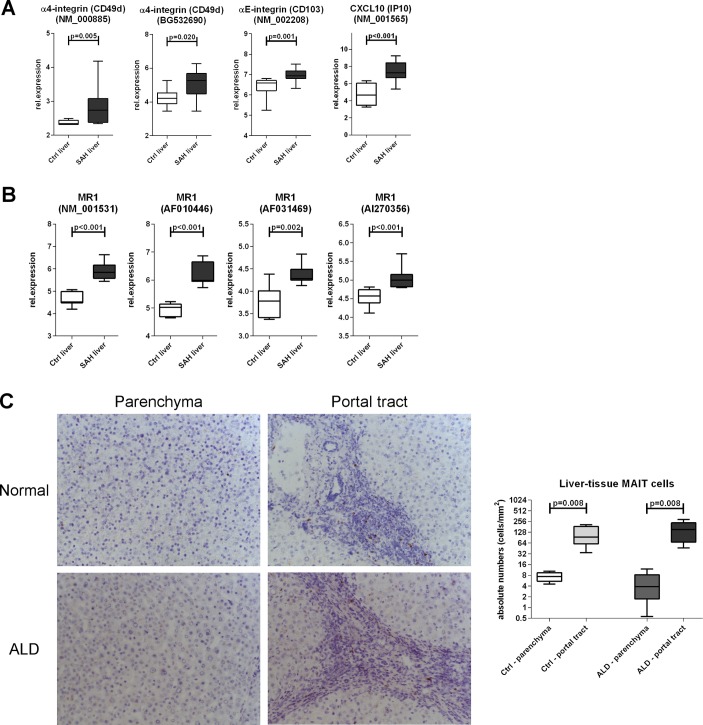
METHODS/DESIGN: We analysed frequency, phenotype, transcriptional regulation and function of blood MAIT cells in severe alcoholic hepatitis (SAH), alcohol-related cirrhosis (ARC) and healthy controls (HC). We also examined direct impact of ethanol, bacterial products from faecal extracts and antigenic hyperstimulation on MAIT cell functionality. Presence of MAIT cells in colon and liver was assessed by quantitative PCR and immunohistochemistry/gene expression respectively.
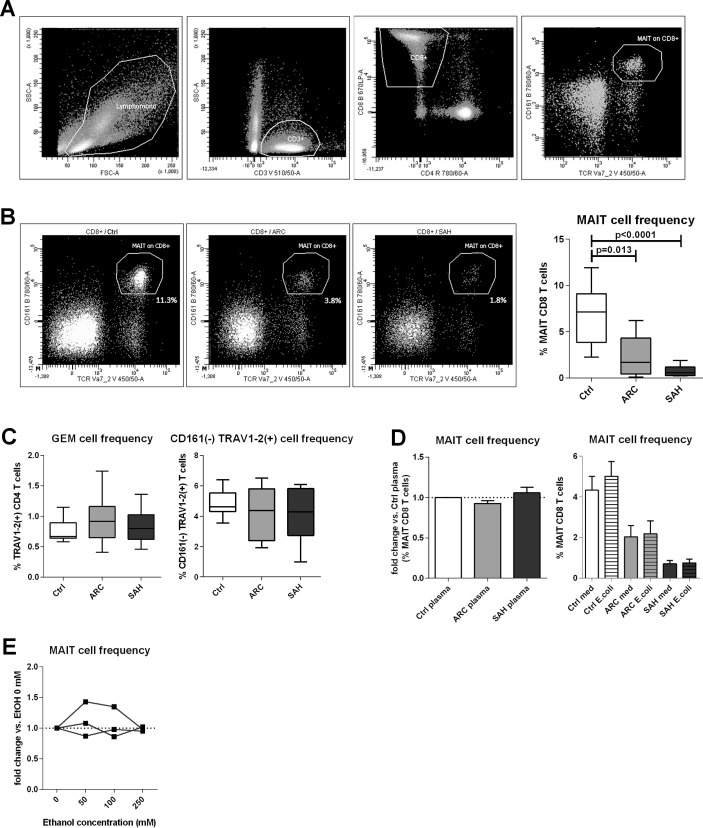
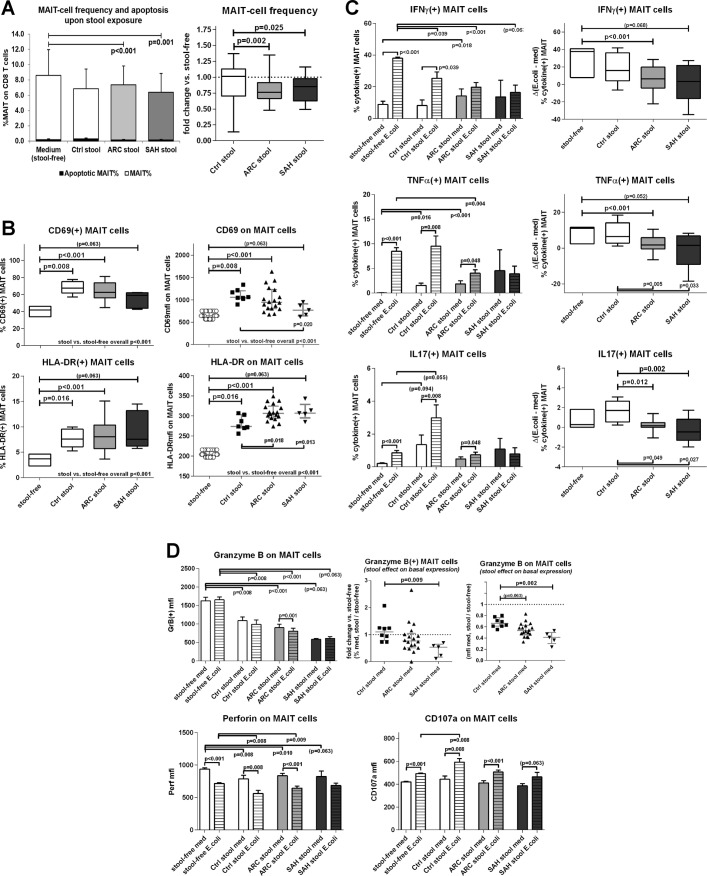
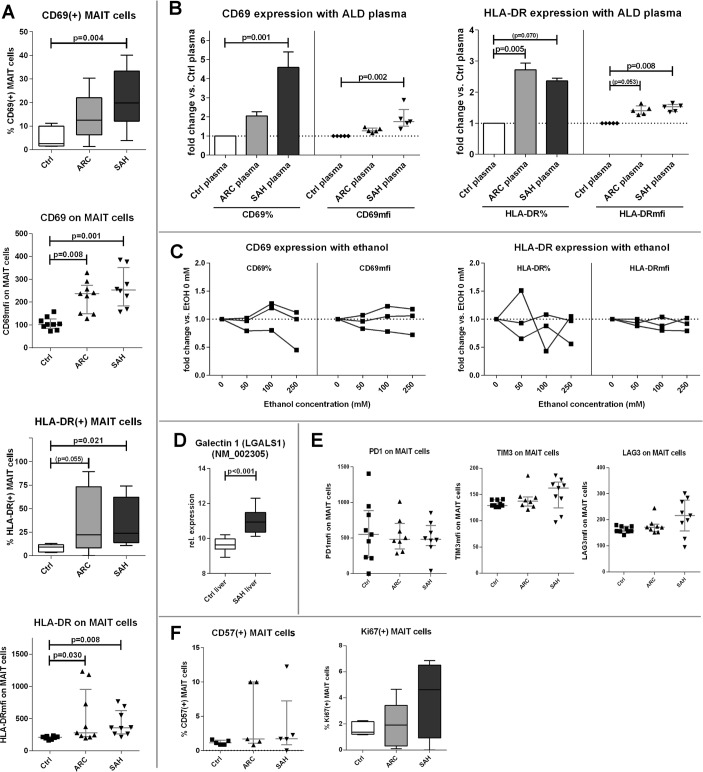
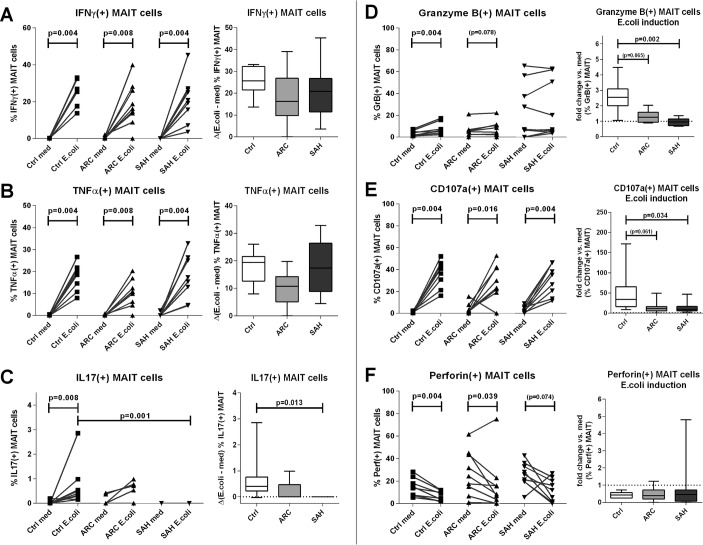
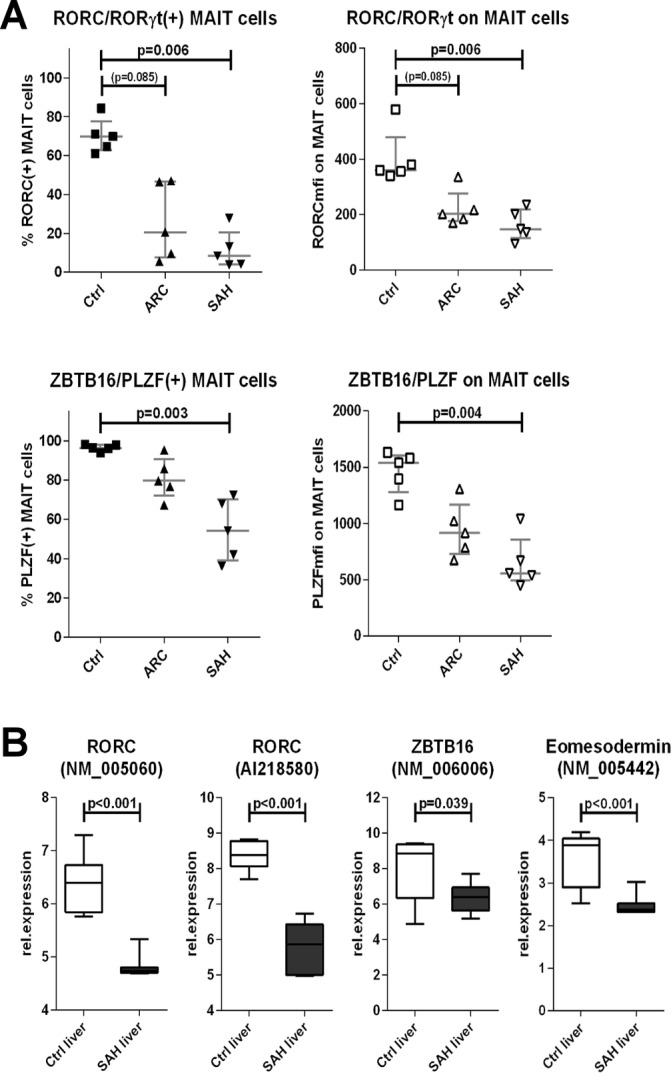
In ARC and SAH, blood MAIT cells were dramatically depleted, hyperactivated and displayed defective antibacterial cytokine/cytotoxic responses. These correlated with suppression of lineage-specific transcription factors and hyperexpression of homing receptors in the liver with intrahepatic preservation of MAIT cells in ALD. These alterations were stronger in SAH, where surrogate markers of bacterial infection and microbial translocation were higher than ARC. Ethanol exposure in vitro, in vivo alcohol withdrawal and treatment with had no effect on MAIT cell frequencies, whereas exposure to faecal bacteria/antigens induced functional impairments comparable with blood MAIT cells from ALD and significant MAIT cell depletion, which was not observed in other T cell compartments.
In ALD, the antibacterial potency of MAIT cells is compromised as a consequence of contact with microbial products and microbiota, suggesting that the 'leaky' gut observed in ALD drives MAIT cell dysfunction and susceptibility to infection in these patients.
背景/目的:肠道通透性和细菌产物的全身分布是酒精性肝病(ALD)免疫发病机制的核心,但与肠道免疫的联系仍不清楚。黏膜相关不变 T 细胞(MAIT)存在于肝脏、血液和肠道黏膜中,是宿主抗菌防御的关键组成部分。它们在 ALD 中的作用尚不清楚。
方法/设计:我们分析了严重酒精性肝炎(SAH)、酒精相关肝硬化(ARC)和健康对照(HC)患者血液 MAIT 细胞的频率、表型、转录调控和功能。我们还研究了乙醇、粪便提取物中的细菌产物和抗原过度刺激对 MAIT 细胞功能的直接影响。通过定量 PCR 和免疫组织化学/基因表达分别评估 MAIT 细胞在结肠和肝脏中的存在。
在 ARC 和 SAH 中,血液 MAIT 细胞明显耗竭、过度激活,并表现出缺陷的抗菌细胞因子/细胞毒性反应。这些与肝脏中谱系特异性转录因子的抑制和归巢受体的过度表达相关,而 ALD 中肝内 MAIT 细胞的保留。在 SAH 中,这些改变更为明显,其细菌感染和微生物易位的替代标志物高于 ARC。体外乙醇暴露、体内酒精戒断和治疗与对 MAIT 细胞频率没有影响,而暴露于粪便细菌/抗原会诱导与 ALD 血液 MAIT 细胞相似的功能障碍,并导致明显的 MAIT 细胞耗竭,而在其他 T 细胞区室中则没有观察到这种情况。
在 ALD 中,MAIT 细胞的抗菌效力因接触微生物产物和微生物群而受损,这表明 ALD 中观察到的“渗漏”肠道导致 MAIT 细胞功能障碍和这些患者易感染。