Park David S, Fishman Glenn I
Leon H. Charney Division of Cardiology, New York University School of Medicine, New York, NY 10016, USA.
J Cardiovasc Dev Dis. 2017;4(2). doi: 10.3390/jcdd4020007. Epub 2017 Jun 7.
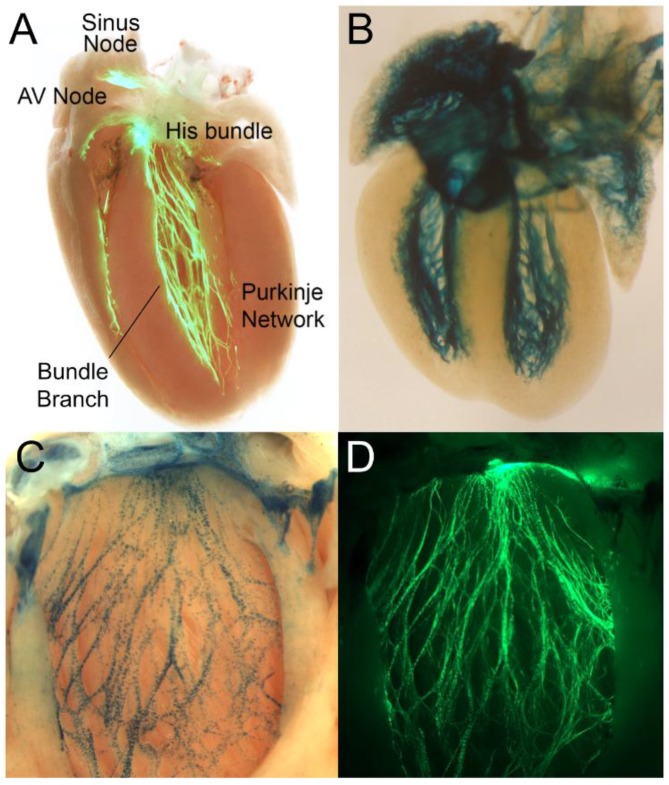
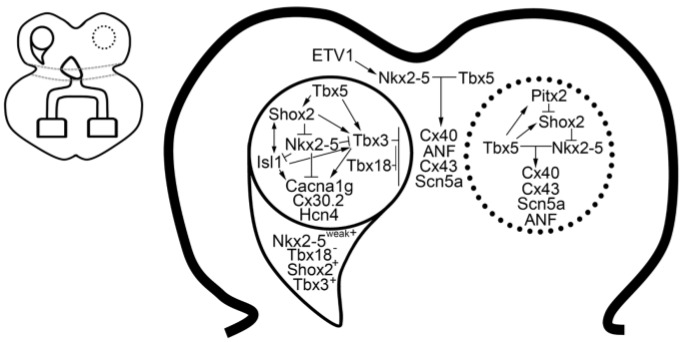
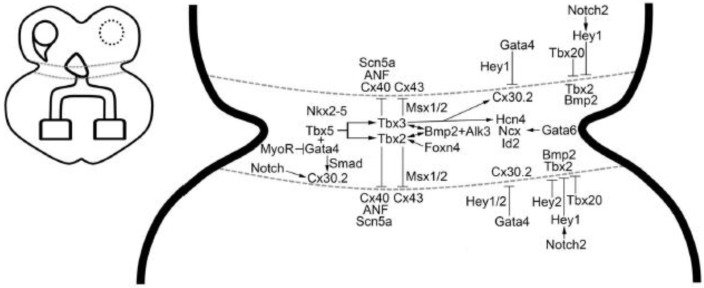
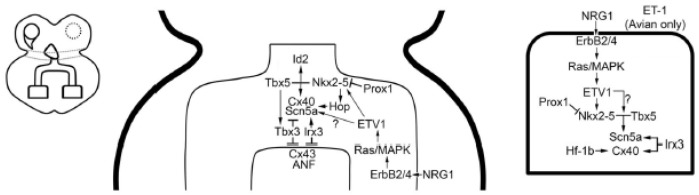
The generation and propagation of the cardiac impulse is the central function of the cardiac conduction system (CCS). Impulse initiation occurs in nodal tissues that have high levels of automaticity, but slow conduction properties. Rapid impulse propagation is a feature of the ventricular conduction system, which is essential for synchronized contraction of the ventricular chambers. When functioning properly, the CCS produces ~2.4 billion heartbeats during a human lifetime and orchestrates the flow of cardiac impulses, designed to maximize cardiac output. Abnormal impulse initiation or propagation can result in brady- and tachy-arrhythmias, producing an array of symptoms, including syncope, heart failure or sudden cardiac death. Underlying the functional diversity of the CCS are gene regulatory networks that direct cell fate towards a nodal or a fast conduction gene program. In this review, we will discuss our current understanding of the transcriptional networks that dictate the components of the CCS, the growth factor-dependent signaling pathways that orchestrate some of these transcriptional hierarchies and the effect of aberrant transcription factor expression on mammalian conduction disease.
心脏冲动的产生和传播是心脏传导系统(CCS)的核心功能。冲动起始发生在具有高自律性但传导特性缓慢的节点组织中。快速的冲动传播是心室传导系统的一个特征,这对于心室腔的同步收缩至关重要。正常运作时,CCS在人的一生中产生约24亿次心跳,并协调心脏冲动的流动,旨在使心输出量最大化。异常的冲动起始或传播可导致缓慢性和快速性心律失常,产生一系列症状,包括晕厥、心力衰竭或心源性猝死。CCS功能多样性的基础是基因调控网络,这些网络将细胞命运导向节点或快速传导基因程序。在这篇综述中,我们将讨论我们目前对决定CCS组成的转录网络、协调其中一些转录层次的生长因子依赖性信号通路以及异常转录因子表达对哺乳动物传导疾病的影响的理解。