Neuroscience Program, Michigan State University, East Lansing, MI 48824.
Department of Cell and Molecular Physiology, Stritch School of Medicine, Loyola University Chicago, Maywood, IL 60153.
eNeuro. 2017 Nov 2;4(5). doi: 10.1523/ENEURO.0133-17.2017. eCollection 2017 Sep-Oct.
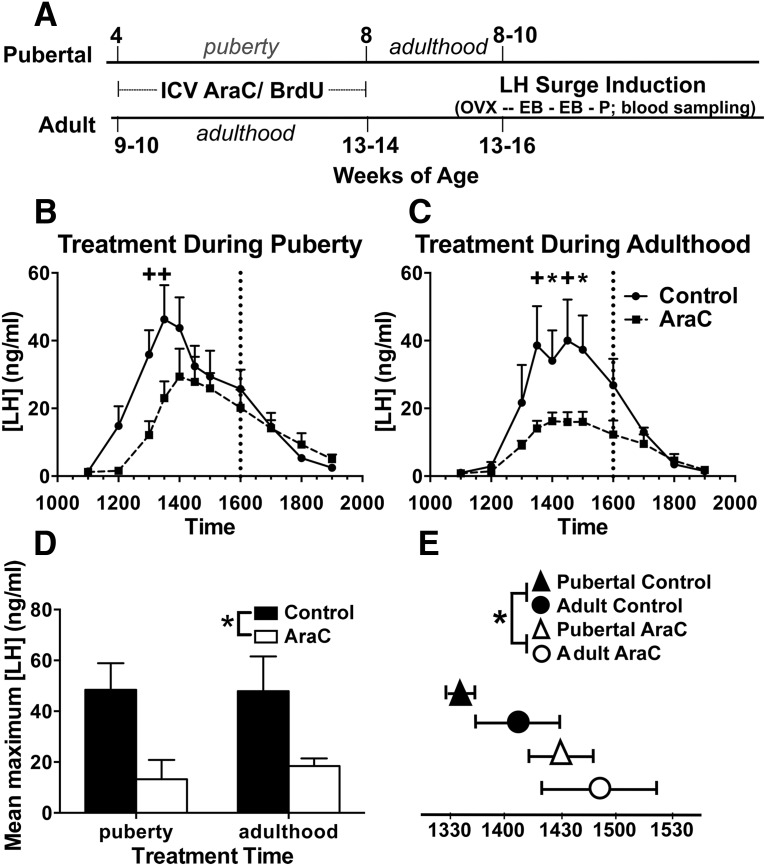
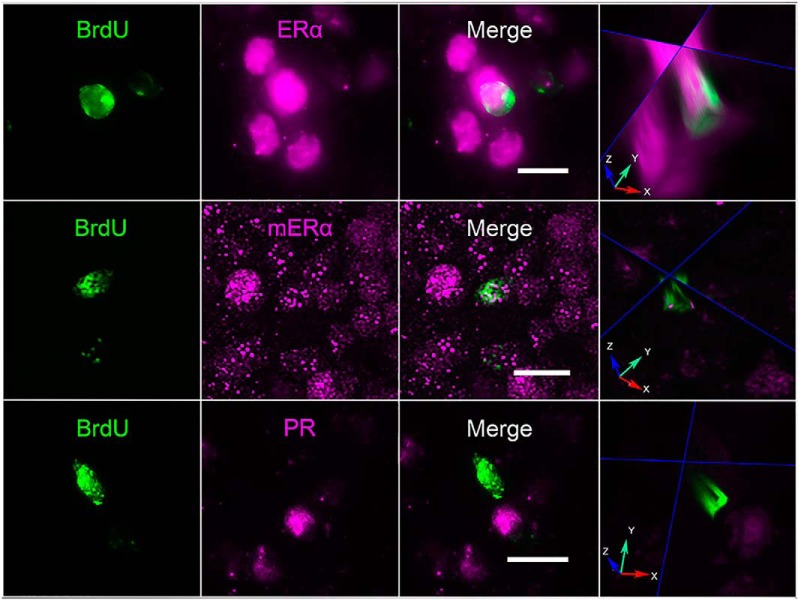
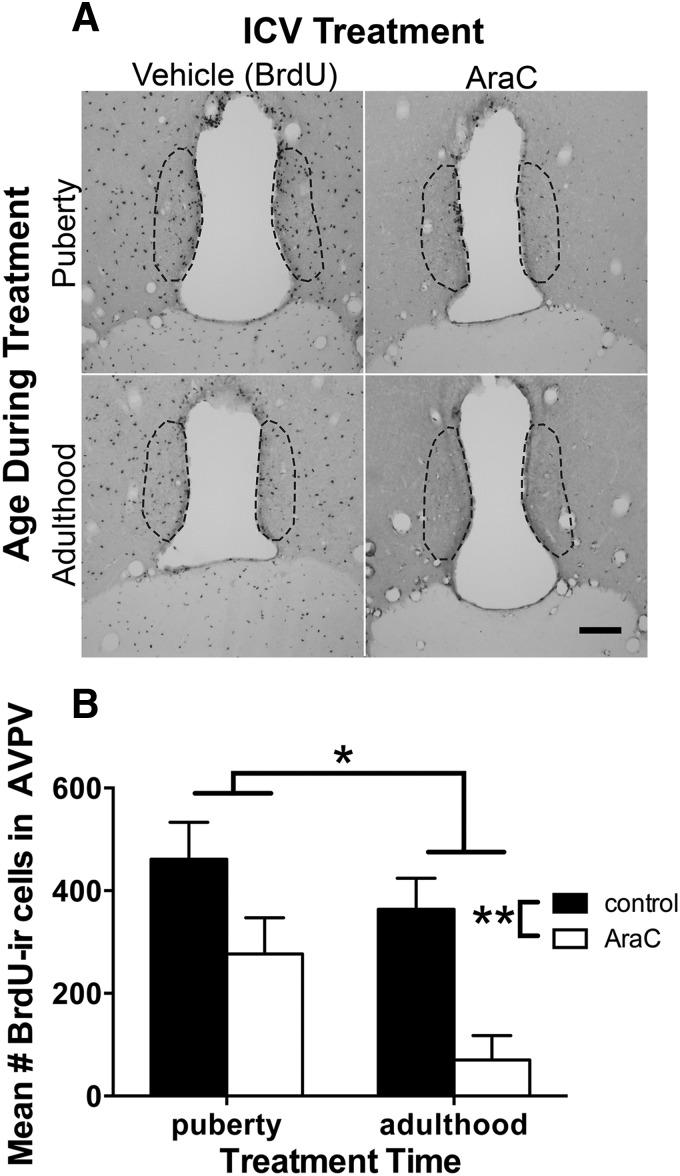
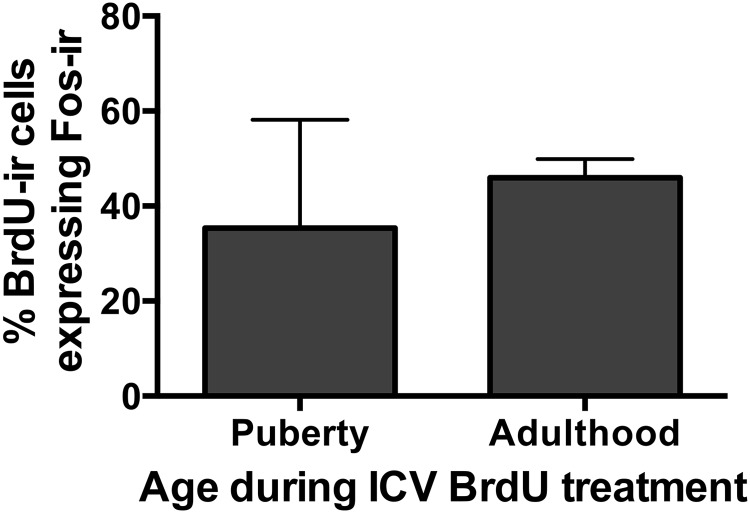
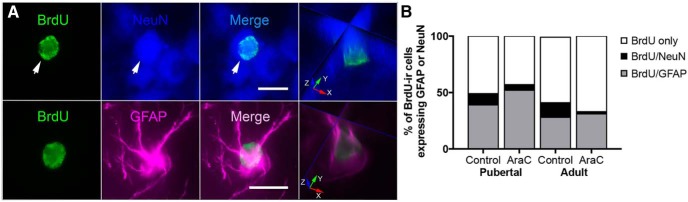
New cells are added during both puberty and adulthood to hypothalamic regions that govern reproduction, homeostasis, and social behaviors, yet the functions of these late-born cells remain elusive. Here, we pharmacologically inhibited cell proliferation in ventricular zones during puberty or in adulthood and determined subsequent effects on the hormone-induced surge of luteinizing hormone (LH) in female rats. Initial neuroanatomical analyses focused on verifying incorporation, activation, and pharmacological inhibition of pubertally or adult born cells in the anteroventral periventricular nucleus (AVPV) of the hypothalamus because of the essential role of the AVPV in triggering the preovulatory LH surge in females. We first showed that approximately half of the pubertally born AVPV cells are activated by estradiol plus progesterone (P) treatment, as demonstrated by Fos expression, and that approximately 10% of pubertally born AVPV cells express estrogen receptor alpha (ERα). Next, we found that mitotic inhibition through intracerebroventricular (ICV) administration of cytosine β-D-arabinofuranoside (AraC), whether during puberty or in adulthood, decreased the number of new cells added to the AVPV and the suprachiasmatic nucleus (SCN), and also blunted and delayed the hormone-induced LH surge. These studies do not prove, but are highly suggestive, that ongoing postnatal addition of new cells in periventricular brain regions, including the AVPV and SCN, may be important to the integrity of female reproduction.
新的细胞在青春期和成年期都会被添加到下丘脑区域,这些区域控制着生殖、内稳态和社交行为,但这些迟发性细胞的功能仍然难以捉摸。在这里,我们在青春期或成年期通过药理学方法抑制脑室区域的细胞增殖,并确定其对雌性大鼠黄体生成素(LH)激素诱导激增的后续影响。最初的神经解剖学分析主要集中在验证前脑室腹侧核(AVPV)中青春期或成年期产生的细胞的掺入、激活和药理学抑制,因为 AVPV 在触发雌性的促排卵 LH 激增中起着至关重要的作用。我们首先表明,大约一半的青春期产生的 AVPV 细胞通过雌二醇加孕酮(P)处理被激活,如 Fos 表达所示,并且大约 10%的青春期产生的 AVPV 细胞表达雌激素受体α(ERα)。接下来,我们发现通过脑室内(ICV)给予胞嘧啶β-D-阿拉伯呋喃糖苷(AraC)进行有丝分裂抑制,无论是在青春期还是成年期,都会减少添加到 AVPV 和视交叉上核(SCN)的新细胞数量,并使激素诱导的 LH 激增减弱和延迟。这些研究并没有证明,但却非常提示,在脑室周围脑区(包括 AVPV 和 SCN)中持续进行的新生细胞的添加,对于女性生殖的完整性可能很重要。