Xu Ji-Feng, Wang Ya-Ping, Zhang Shui-Jun, Chen Yu, Gu Hai-Feng, Dou Xiao-Fan, Xia Bing, Bi Qing, Fan Shun-Wu
Department of Orthopedics, Zhejiang Provincial People's Hospital, Hangzhou Medical College, Hangzhou, Zhejiang 310014, P.R. China.
Department of Orthopedics, Sir Run Run Shaw Hospital, School of Medicine, Zhejiang University, Hangzhou, Zhejiang 310016, P.R. China.
Oncotarget. 2017 Jun 6;8(44):75968-75978. doi: 10.18632/oncotarget.18373. eCollection 2017 Sep 29.
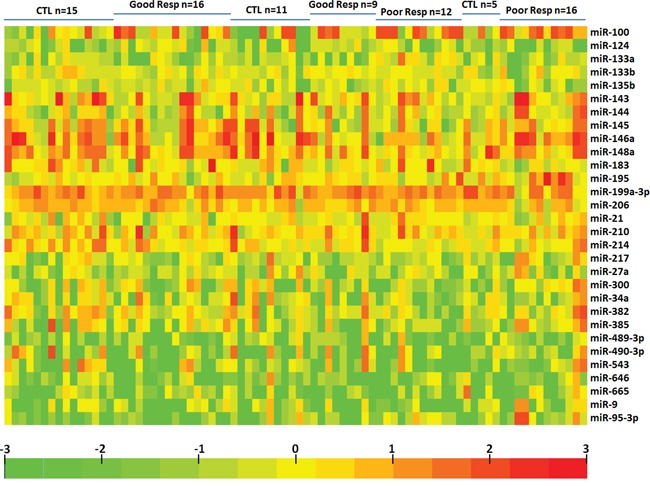
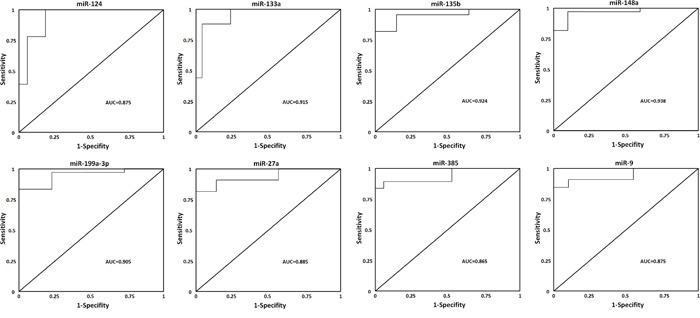
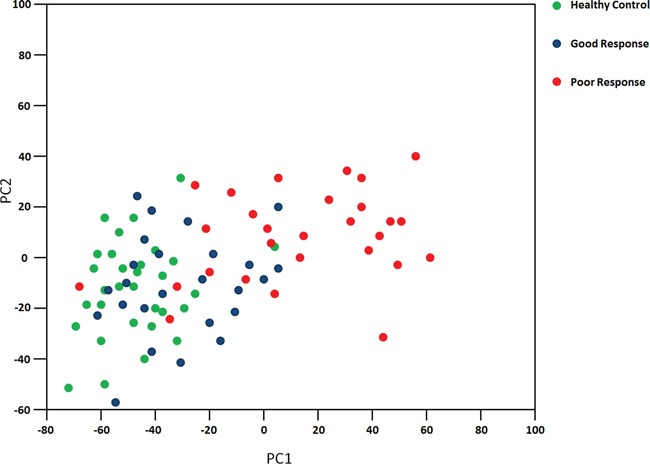
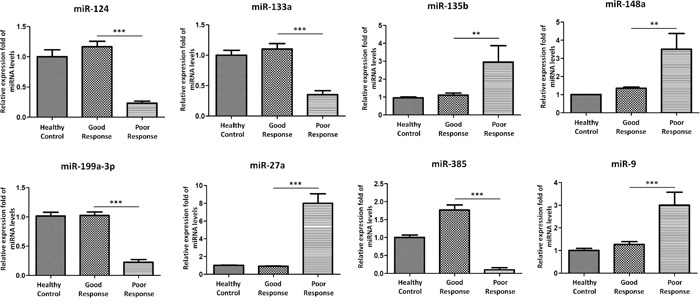
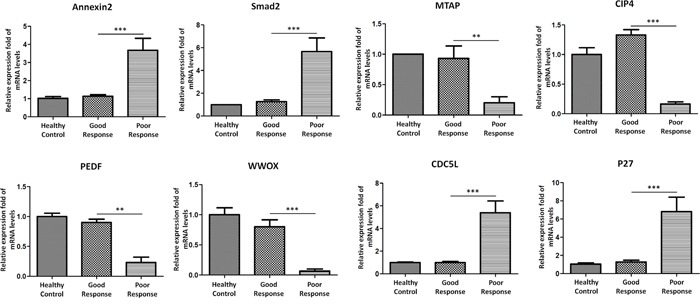
A major challenge in osteosarcoma (OS) is the selection of the most effective chemotherapeutic agents for individual patients, while the administration of ineffective chemotherapy increases mortality and decreases quality of life in patients. This emphasizes the need to evaluate every patient's probability of responding to each chemotherapeutic agent. We developed a profiling strategy for serum exosomal microRNAs and mRNAs in OS patients with differential chemotherapeutic responses. Twelve miRNAs were up regulated and 18 miRNAs were under regulated significantly in OS patient with poor chemotherapeutic response when compared with those in good chemotherapeutic response (p<0.05). In addition, miR-124, miR133a, miR-199a-3p, and miR-385 were validated and significantly reduced in poorly responded patients with an independent OS cohort. While miR-135b, miR-148a, miR-27a, and miR-9 were significantly over expressed in serum exosomes. Bioinformatic analysis by DIANA-mirPath demonstrated that Proteoglycans in cancer, Hippo signaling pathway, Pathways in cancer, Transcriptional misregulation in cancer, PI3K-Akt signaling pathway, Ras signaling pathway, Ubiquitin mediated proteolysis, Choline metabolism in cancer were the most prominent pathways enriched in quantiles with the miRNA patterns related to poor chemotherapeutic response. Messenger RNAs(mRNAs) includingAnnexin2, Smad2, Methylthioadenosine phosphorylase (MTAP), Cdc42-interacting protein 4 (CIP4), Pigment Epithelium-Derived Factor (PEDF), WW domain-containing oxidoreductase (WWOX), Cell division cycle 5-like (Cdc5L), P27 were differentially expressed in exosomes in OS patients with different chemotherapeutic response. These data demonstrated that exosomal RNA molecules are reliable biomarkers in classifying osteosarcoma with different chemotherapy sensitivity.
骨肉瘤(OS)治疗中的一个主要挑战是为个体患者选择最有效的化疗药物,而无效化疗的使用会增加患者死亡率并降低其生活质量。这凸显了评估每位患者对每种化疗药物反应概率的必要性。我们针对化疗反应不同的骨肉瘤患者,开发了一种血清外泌体微小RNA(miRNA)和信使核糖核酸(mRNA)的分析策略。与化疗反应良好的患者相比,化疗反应差的骨肉瘤患者中有12种miRNA上调,18种miRNA显著下调(p<0.05)。此外,在一个独立的骨肉瘤队列中,miR-124、miR133a、miR-199a-3p和miR-385在反应较差的患者中得到验证且显著降低。而miR-135b、miR-148a、miR-27a和miR-9在血清外泌体中显著过表达。通过DIANA-mirPath进行的生物信息学分析表明, 癌症中的蛋白聚糖、Hippo信号通路、癌症中的信号通路、癌症中的转录失调、PI3K-Akt信号通路、Ras信号通路、泛素介导的蛋白水解、癌症中的胆碱代谢是与化疗反应差相关的miRNA模式在分位数中最显著富集的通路。包括膜联蛋白2、Smad2、甲硫腺苷磷酸化酶(MTAP)、Cdc42相互作用蛋白4(CIP4)、色素上皮衍生因子(PEDF)、含WW结构域的氧化还原酶(WWOX)、细胞分裂周期5样蛋白(Cdc5L)、P27在内的mRNA在化疗反应不同的骨肉瘤患者的外泌体中差异表达。这些数据表明,外泌体RNA分子是区分具有不同化疗敏感性骨肉瘤的可靠生物标志物。