Department of Molecular Developmental Biology, Faculty of Science, Radboud Institute for Molecular Life Sciences, Radboud University, 274, Postbus 9101, 6500HB, Nijmegen, The Netherlands.
CAPES Foundation, Ministry of Education of Brazil, Brasília, Brazil.
Cell Mol Life Sci. 2018 Apr;75(7):1179-1190. doi: 10.1007/s00018-017-2701-z. Epub 2017 Nov 4.
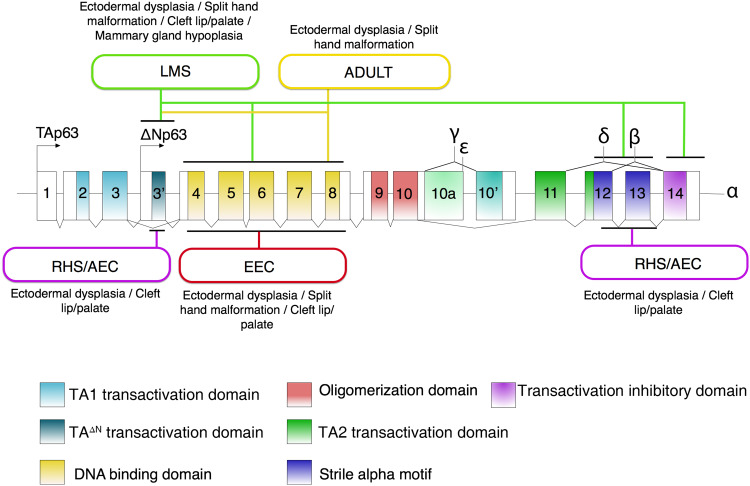
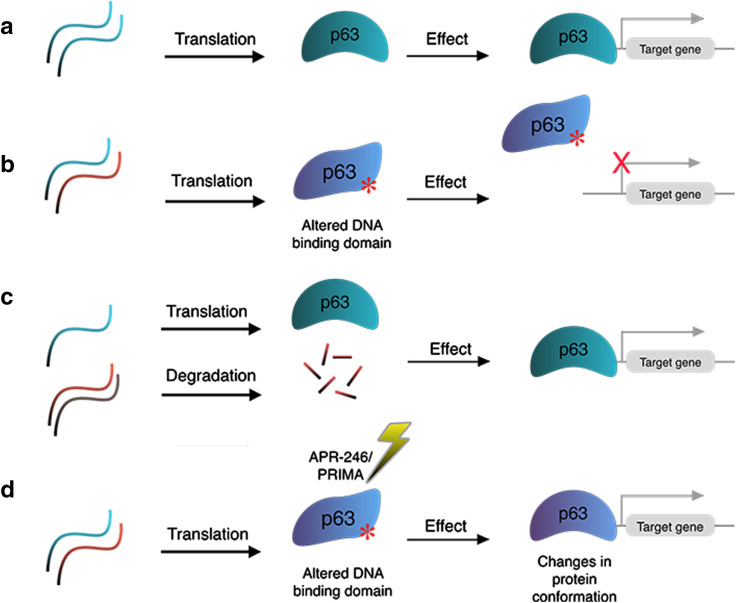
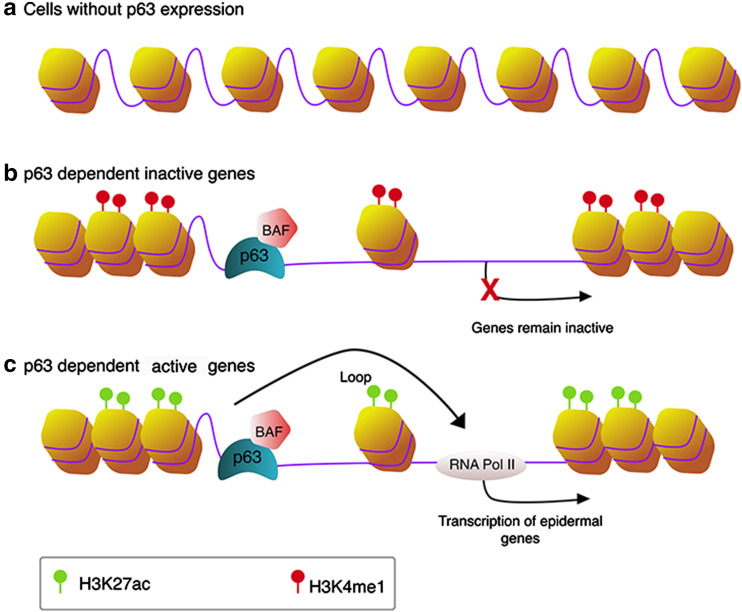
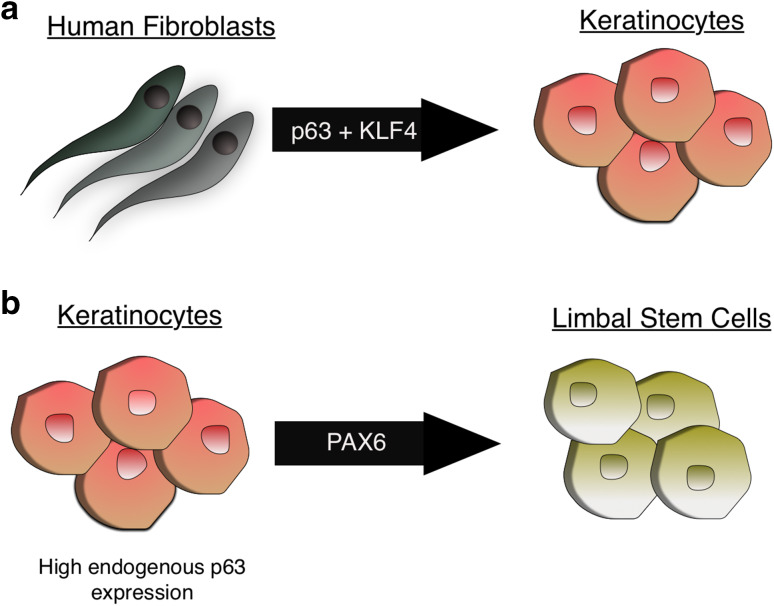
The transcription factor p63 is a master regulator of epidermal development. Mutations in p63 give rise to human developmental diseases that often manifest epidermal defects. In this review, we summarize major p63 isoforms identified so far and p63 mutation-associated human diseases that show epidermal defects. We discuss key roles of p63 in epidermal keratinocyte proliferation and differentiation, emphasizing its master regulatory control of the gene expression pattern and epigenetic landscape that define epidermal fate. We subsequently review the essential function of p63 during epidermal commitment and transdifferentiation towards epithelial lineages, highlighting the notion that p63 is the guardian of the epithelial lineage. Finally, we discuss current therapeutic development strategies for p63 mutation-associated diseases. Our review proposes future directions for dissecting p63-controlled mechanisms in normal and diseased epidermal development and for developing therapeutic options.
转录因子 p63 是表皮发育的主要调节因子。p63 的突变导致人类发育性疾病,这些疾病常表现为表皮缺陷。在这篇综述中,我们总结了迄今为止发现的主要 p63 异构体以及与 p63 突变相关的表现出表皮缺陷的人类疾病。我们讨论了 p63 在表皮角质形成细胞增殖和分化中的关键作用,强调了它对基因表达模式和决定表皮命运的表观遗传景观的主要调控作用。随后,我们综述了 p63 在表皮细胞向上皮谱系的定向分化和转分化过程中的重要功能,突出了 p63 是上皮谱系守护者的概念。最后,我们讨论了 p63 突变相关疾病的当前治疗开发策略。我们的综述提出了在正常和患病表皮发育中解析 p63 控制机制以及开发治疗选择的未来方向。