Petersen Mark A, Ryu Jae Kyu, Chang Kae-Jiun, Etxeberria Ainhoa, Bardehle Sophia, Mendiola Andrew S, Kamau-Devers Wanjiru, Fancy Stephen P J, Thor Andrea, Bushong Eric A, Baeza-Raja Bernat, Syme Catriona A, Wu Michael D, Rios Coronado Pamela E, Meyer-Franke Anke, Yahn Stephanie, Pous Lauriane, Lee Jae K, Schachtrup Christian, Lassmann Hans, Huang Eric J, Han May H, Absinta Martina, Reich Daniel S, Ellisman Mark H, Rowitch David H, Chan Jonah R, Akassoglou Katerina
Gladstone Institutes, San Francisco, CA, USA; Department of Pediatrics, University of California, San Francisco, CA, USA.
Gladstone Institutes, San Francisco, CA, USA.
Neuron. 2017 Dec 6;96(5):1003-1012.e7. doi: 10.1016/j.neuron.2017.10.008. Epub 2017 Nov 2.
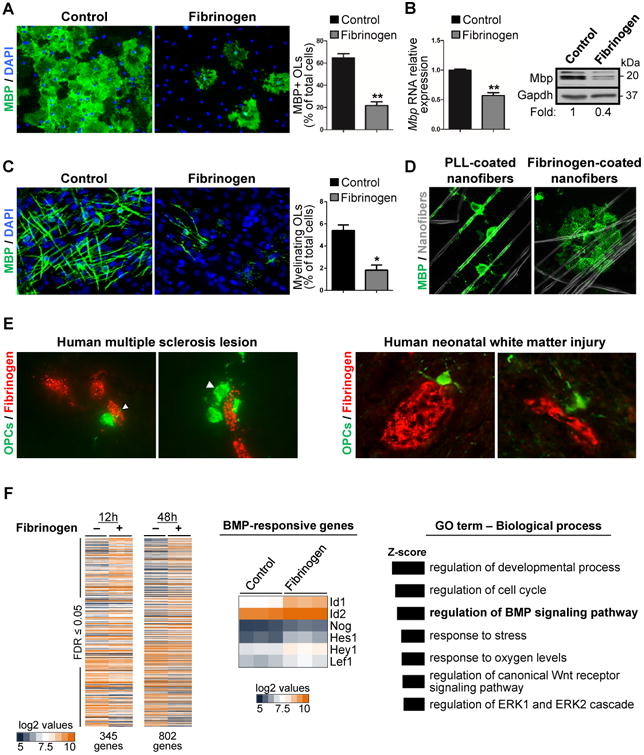
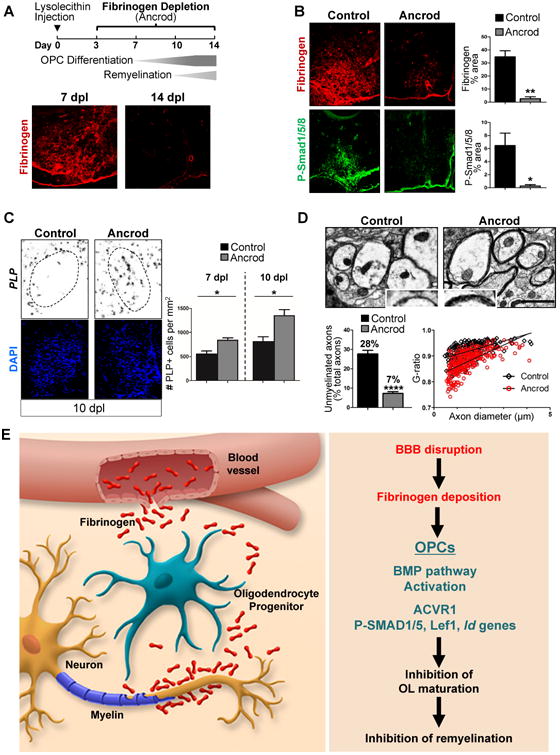
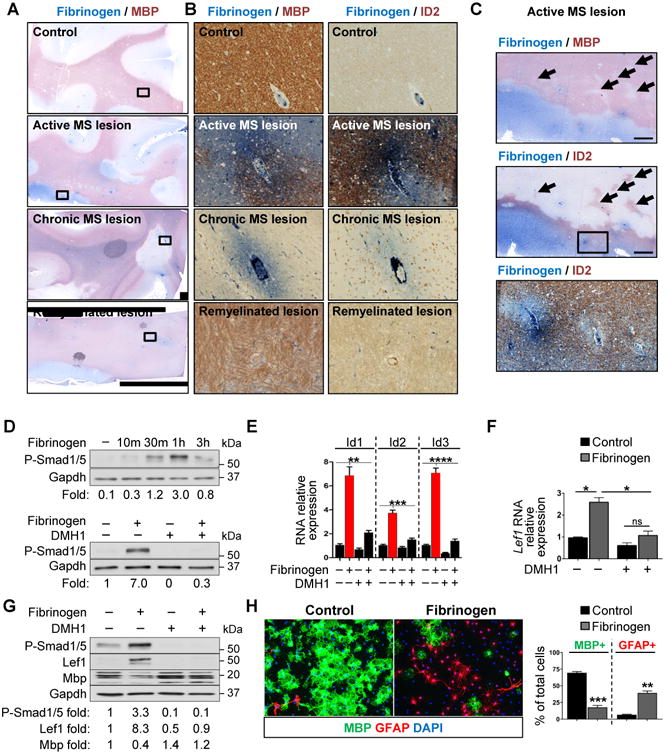
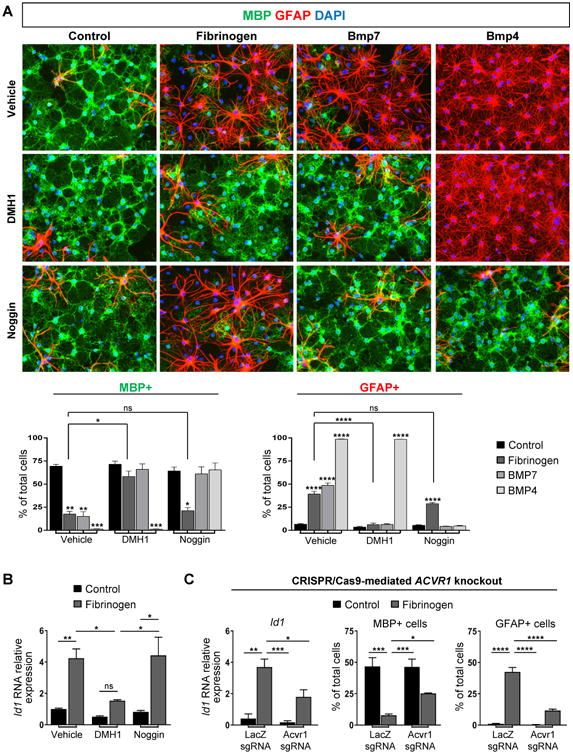
Blood-brain barrier (BBB) disruption alters the composition of the brain microenvironment by allowing blood proteins into the CNS. However, whether blood-derived molecules serve as extrinsic inhibitors of remyelination is unknown. Here we show that the coagulation factor fibrinogen activates the bone morphogenetic protein (BMP) signaling pathway in oligodendrocyte progenitor cells (OPCs) and suppresses remyelination. Fibrinogen induces phosphorylation of Smad 1/5/8 and inhibits OPC differentiation into myelinating oligodendrocytes (OLs) while promoting an astrocytic fate in vitro. Fibrinogen effects are rescued by BMP type I receptor inhibition using dorsomorphin homolog 1 (DMH1) or CRISPR/Cas9 activin A receptor type I (ACVR1) knockout in OPCs. Fibrinogen and the BMP target Id2 are increased in demyelinated multiple sclerosis (MS) lesions. Therapeutic depletion of fibrinogen decreases BMP signaling and enhances remyelination in vivo. Targeting fibrinogen may be an upstream therapeutic strategy to promote the regenerative potential of CNS progenitors in diseases with remyelination failure.
血脑屏障(BBB)破坏通过使血液中的蛋白质进入中枢神经系统(CNS)而改变脑微环境的组成。然而,血液来源的分子是否作为髓鞘再生的外在抑制剂尚不清楚。在此,我们表明凝血因子纤维蛋白原激活少突胶质前体细胞(OPCs)中的骨形态发生蛋白(BMP)信号通路并抑制髓鞘再生。纤维蛋白原诱导Smad 1/5/8磷酸化,并在体外抑制OPCs分化为有髓鞘形成能力的少突胶质细胞(OLs),同时促进星形胶质细胞命运的形成。使用多效唑同系物1(DMH1)抑制BMP I型受体或在OPCs中通过CRISPR/Cas9敲除激活素A受体I型(ACVR1)可挽救纤维蛋白原的作用。在脱髓鞘的多发性硬化症(MS)病变中,纤维蛋白原和BMP靶标Id2增加。体内治疗性清除纤维蛋白原可降低BMP信号传导并增强髓鞘再生。靶向纤维蛋白原可能是一种上游治疗策略,以促进中枢神经系统祖细胞在髓鞘再生失败疾病中的再生潜力。