Tsai Hui-Hsin, Niu Jianqin, Munji Roeben, Davalos Dimitrios, Chang Junlei, Zhang Haijing, Tien An-Chi, Kuo Calvin J, Chan Jonah R, Daneman Richard, Fancy Stephen P J
Department of Pediatrics, University of California at San Francisco (UCSF), San Francisco, CA 94158, USA.
Departments of Pharmacology and Neuroscience, University of California at San Diego (UCSD), San Diego, CA 92093, USA.
Science. 2016 Jan 22;351(6271):379-84. doi: 10.1126/science.aad3839.
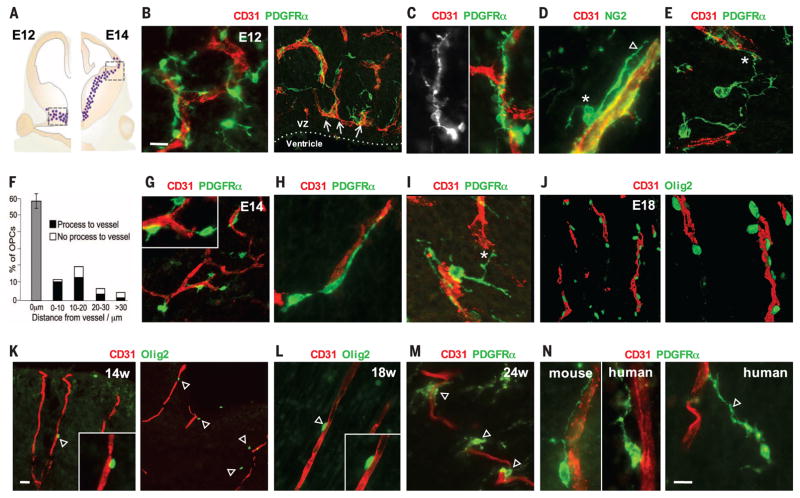
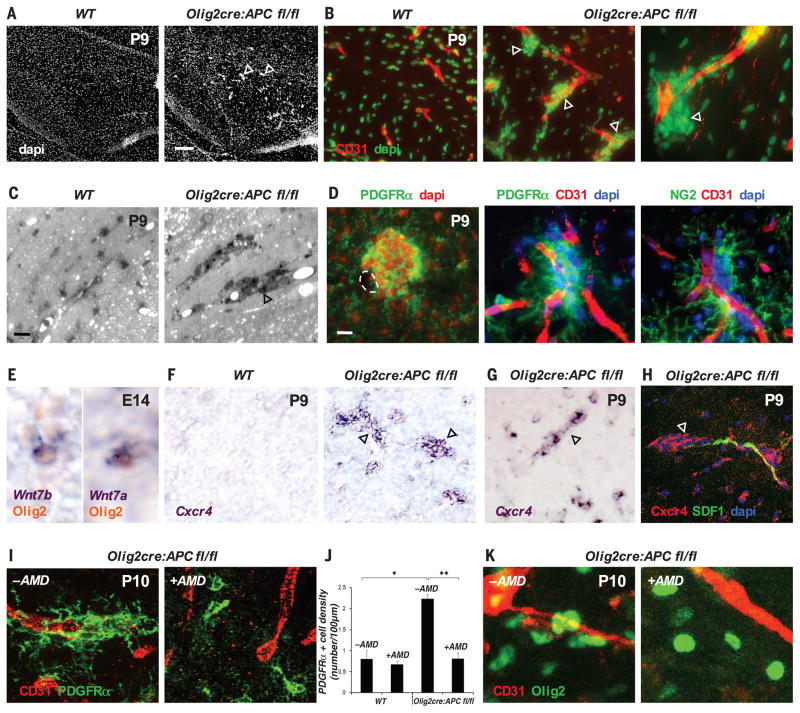
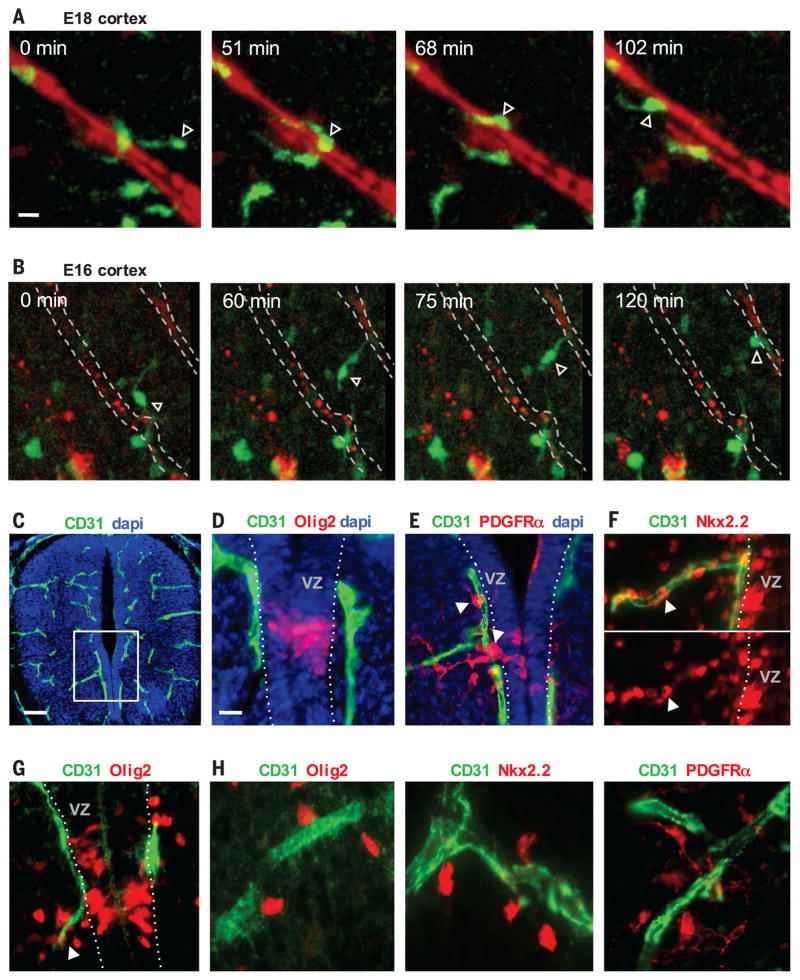
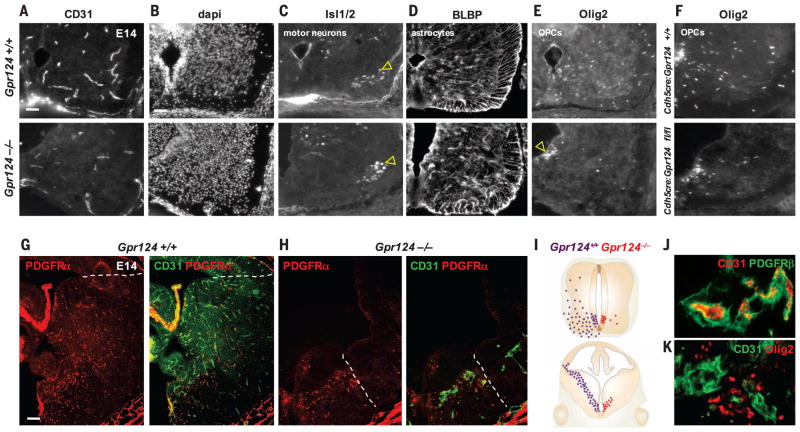
Oligodendrocytes myelinate axons in the central nervous system and develop from oligodendrocyte precursor cells (OPCs) that must first migrate extensively during brain and spinal cord development. We show that OPCs require the vasculature as a physical substrate for migration. We observed that OPCs of the embryonic mouse brain and spinal cord, as well as the human cortex, emerge from progenitor domains and associate with the abluminal endothelial surface of nearby blood vessels. Migrating OPCs crawl along and jump between vessels. OPC migration in vivo was disrupted in mice with defective vascular architecture but was normal in mice lacking pericytes. Thus, physical interactions with the vascular endothelium are required for OPC migration. We identify Wnt-Cxcr4 (chemokine receptor 4) signaling in regulation of OPC-endothelial interactions and propose that this signaling coordinates OPC migration with differentiation.
少突胶质细胞在中枢神经系统中形成轴突髓鞘,由少突胶质前体细胞(OPC)发育而来,而OPC在脑和脊髓发育过程中必须首先进行广泛迁移。我们发现,OPC需要脉管系统作为迁移的物理底物。我们观察到,胚胎小鼠脑和脊髓以及人类皮层中的OPC从祖细胞区域出现,并与附近血管的无腔内皮表面相关联。迁移的OPC沿着血管爬行并在血管之间跳跃。血管结构有缺陷的小鼠体内OPC迁移受到破坏,但缺乏周细胞的小鼠体内OPC迁移正常。因此,OPC迁移需要与血管内皮进行物理相互作用。我们确定了Wnt-Cxcr4(趋化因子受体4)信号在调节OPC-内皮相互作用中的作用,并提出该信号协调OPC迁移与分化。