Azari Abbas, Nikzad Jamnani Sakineh, Yazdani Arash, Atri Faezeh, Rasaie Vania, Fazel Anvari Yazdi Abbas
Associated Professor, Department of Prosthodontics, School of Dentistry, Tehran University of Medical Sciences, Tehran, Iran.
Assistant Professor, School of Mechanical Engineering, Shahrood University of Technology, Shahrood, Iran.
J Dent (Tehran). 2017 Mar;14(2):62-68.
Many advantages have been attributed to dental zirconia ceramics in terms of mechanical and physical properties; however, the bonding ability of this material to dental structure and/or veneering ceramics has always been a matter of concern. On the other hand, hydroxyapatite (HA) shows excellent biocompatibility and good bonding ability to tooth structure, with mechanically unstable and brittle characteristics, that make it clinically unacceptable for use in high stress bearing areas. The main purpose of this study was to introduce two simple yet practical methods to deposit the crystalline HA nanoparticles on zirconia ceramics.
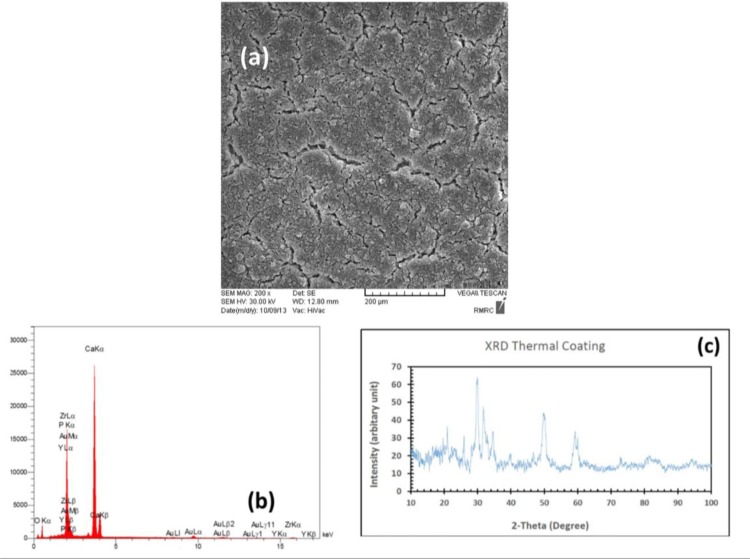
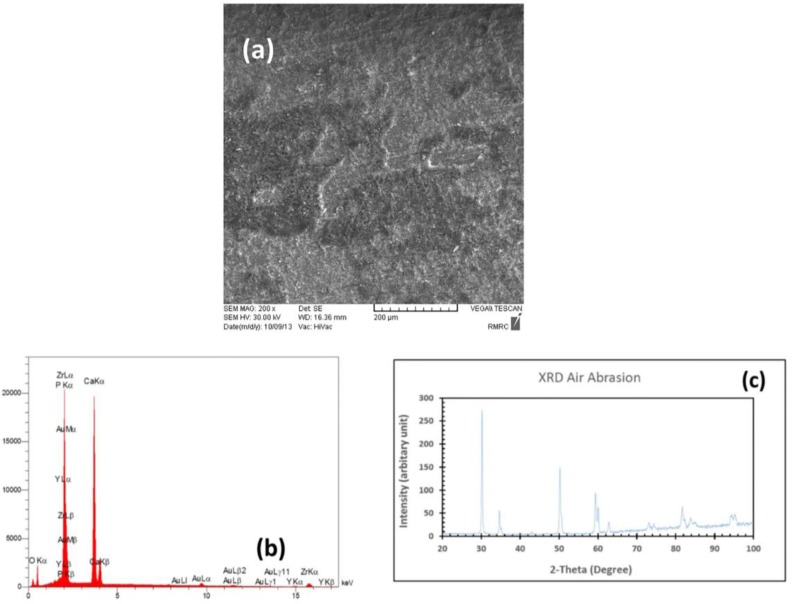
zirconia blocks were treated with HA via two different deposition methods namely thermal coating and air abrasion. Specimens were analyzed by scanning electron microscopy, energy dispersive spectroscopy (EDS) and X-ray diffraction (XRD).
In both groups, the deposition techniques used were successfully accomplished, while the substrate showed no structural change. However, thermal coating group showed a uniform deposition of crystalline HA but in air abrasion method, there were dispersed thin islands of HA.
Thermal coating method has the potential to significantly alter the surface characteristics of zirconia. The simple yet practical nature of the proposed method may be able to shift the bonding paradigm of dental zirconia ceramics. This latter subject needs to be addressed in future investigations.
牙科氧化锆陶瓷在机械性能和物理性能方面具有诸多优势;然而,这种材料与牙齿结构和/或贴面陶瓷的粘结能力一直是人们关注的问题。另一方面,羟基磷灰石(HA)具有出色的生物相容性和与牙齿结构良好的粘结能力,但其机械性能不稳定且易碎,这使其在临床上无法用于高应力承载区域。本研究的主要目的是介绍两种简单而实用的方法,将结晶性HA纳米颗粒沉积在氧化锆陶瓷上。
通过两种不同的沉积方法,即热涂层法和空气磨蚀法,用HA处理氧化锆块体。通过扫描电子显微镜、能量色散光谱(EDS)和X射线衍射(XRD)对样本进行分析。
在两组中,所使用的沉积技术均成功完成,而基底未显示出结构变化。然而,热涂层组显示出结晶性HA的均匀沉积,但在空气磨蚀法中,有分散的HA薄岛。
热涂层法有可能显著改变氧化锆的表面特性。所提出方法的简单实用性可能能够改变牙科氧化锆陶瓷的粘结模式。这一问题在未来的研究中需要进一步探讨。