McGranahan Nicholas, Rosenthal Rachel, Hiley Crispin T, Rowan Andrew J, Watkins Thomas B K, Wilson Gareth A, Birkbak Nicolai J, Veeriah Selvaraju, Van Loo Peter, Herrero Javier, Swanton Charles
Cancer Research UK Lung Cancer Centre of Excellence, University College London Cancer Institute, Paul O'Gorman Building, 72 Huntley Street, London WC1E 6BT, UK.
Cancer Research UK Lung Cancer Centre of Excellence, University College London Cancer Institute, Paul O'Gorman Building, 72 Huntley Street, London WC1E 6BT, UK.
Cell. 2017 Nov 30;171(6):1259-1271.e11. doi: 10.1016/j.cell.2017.10.001. Epub 2017 Oct 26.
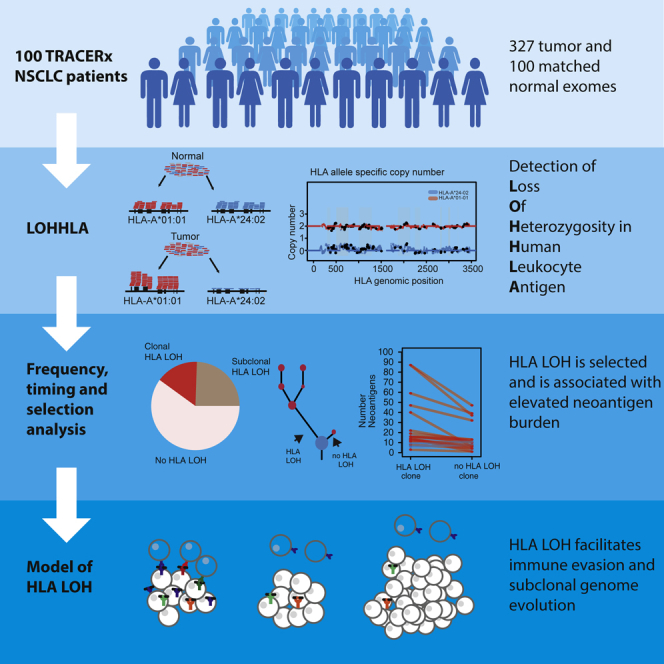
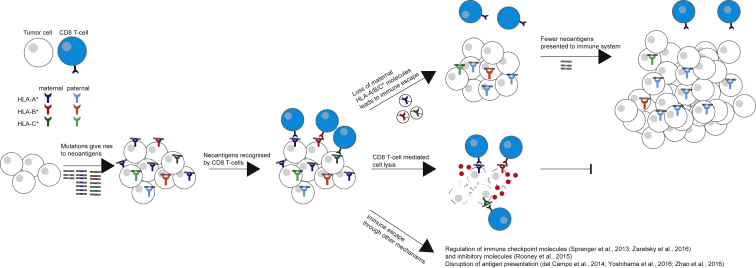
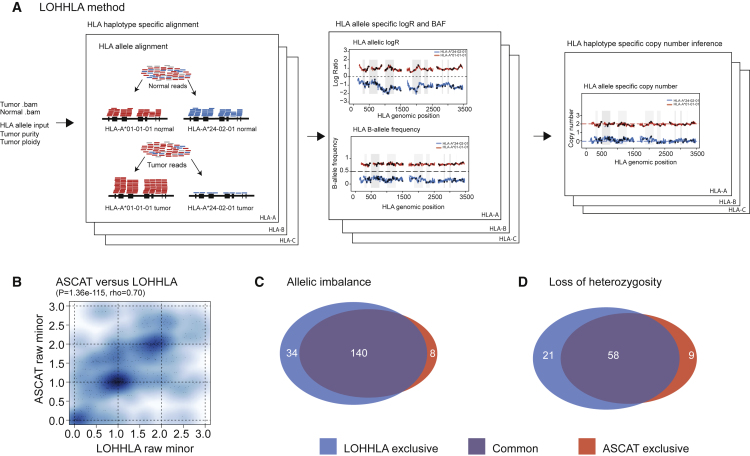
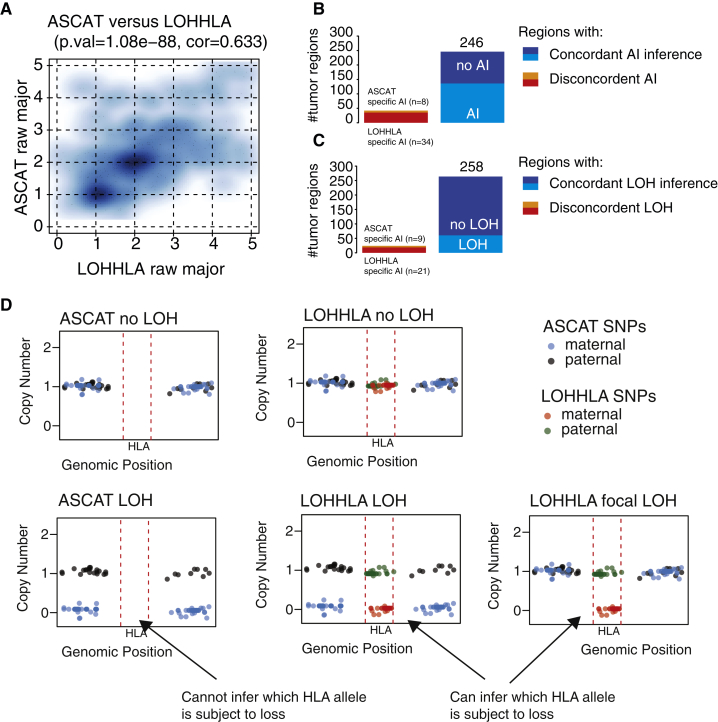
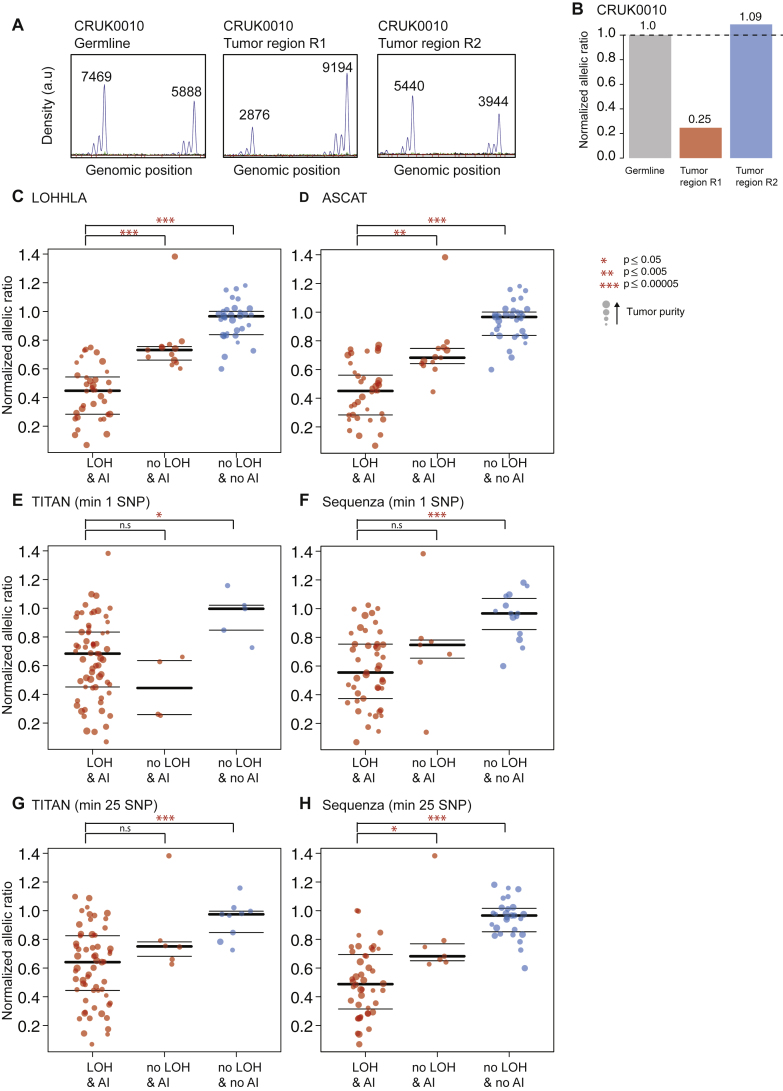
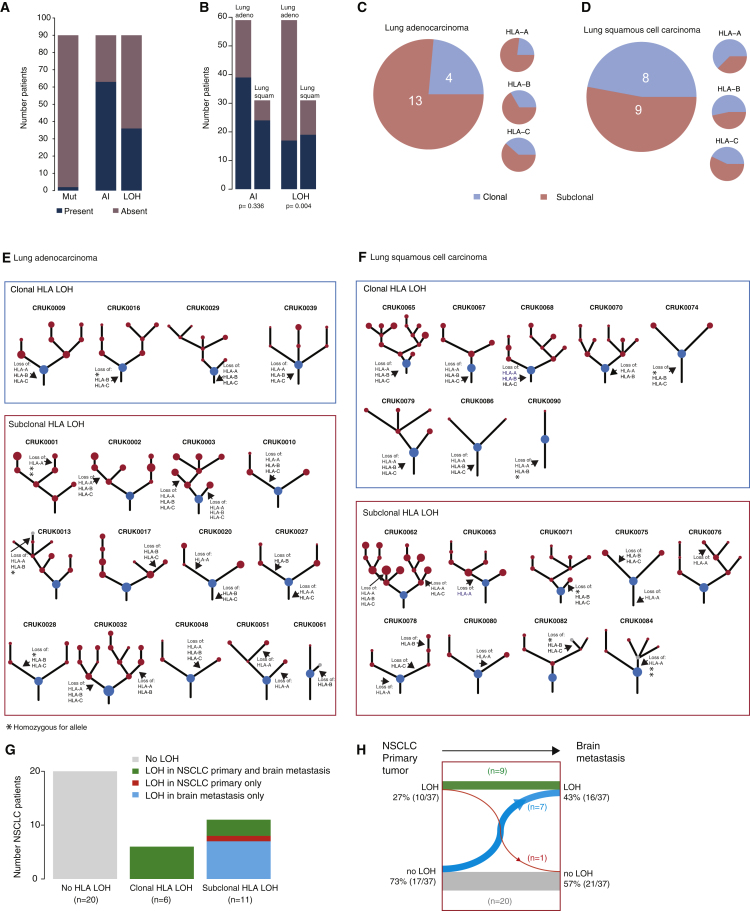
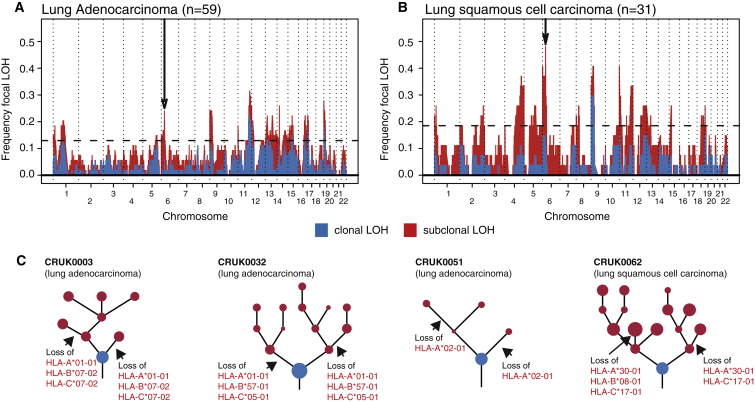
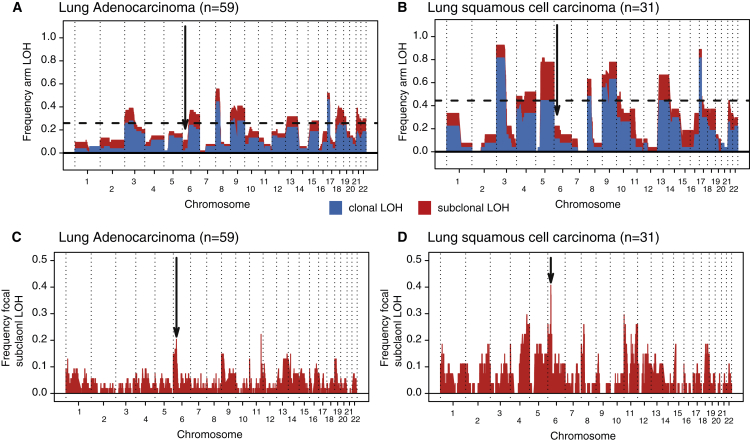
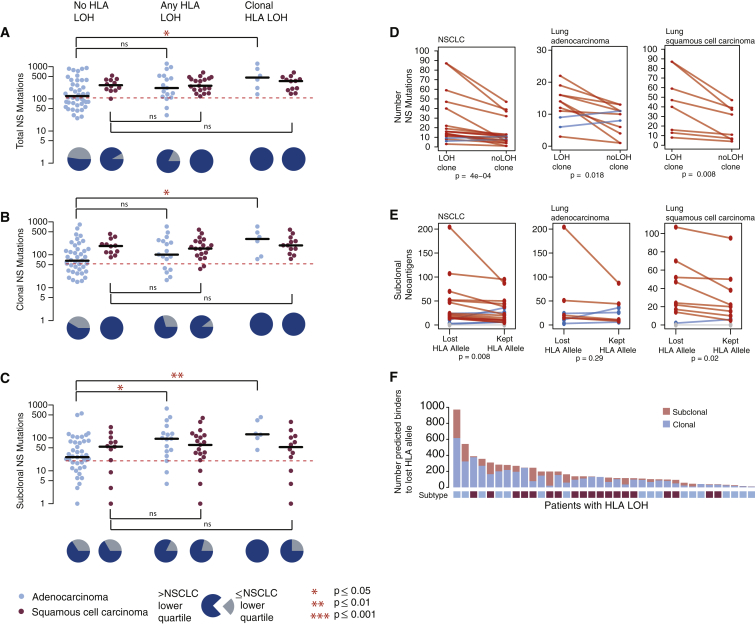
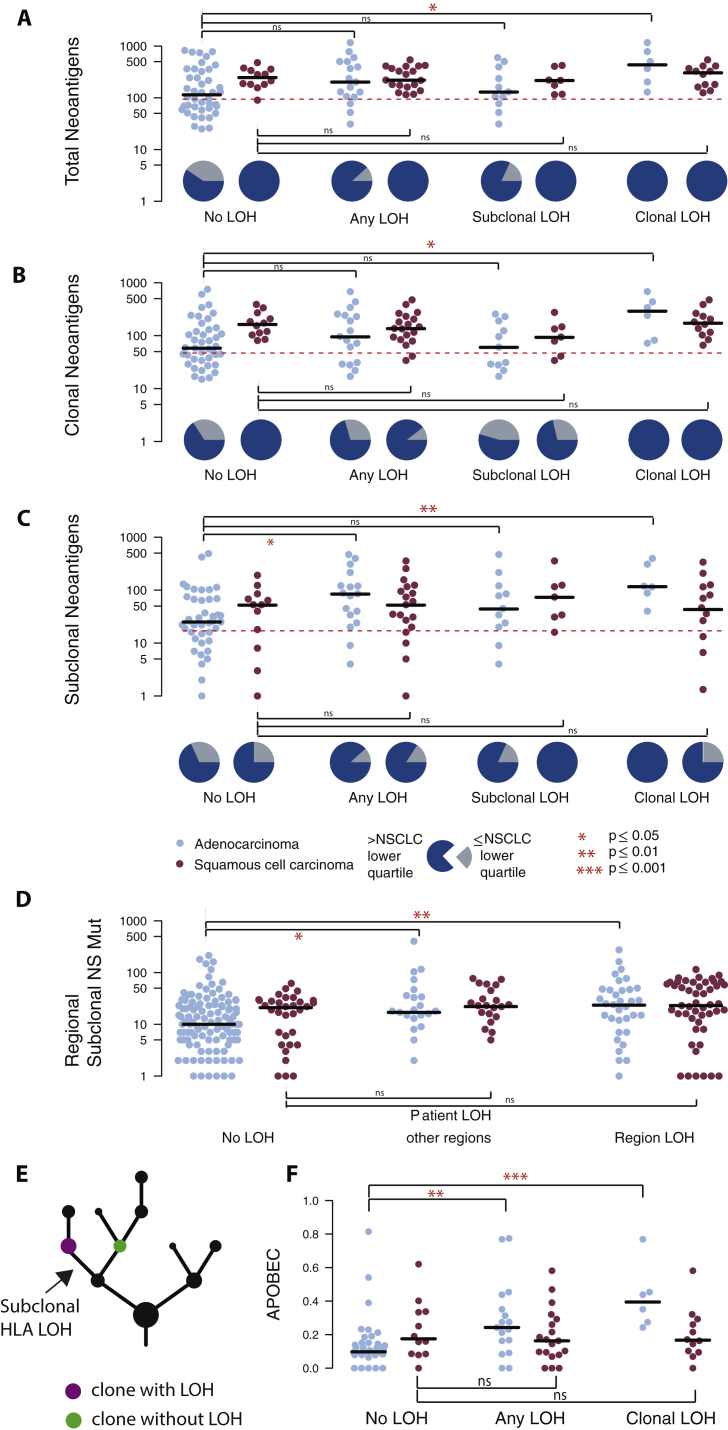
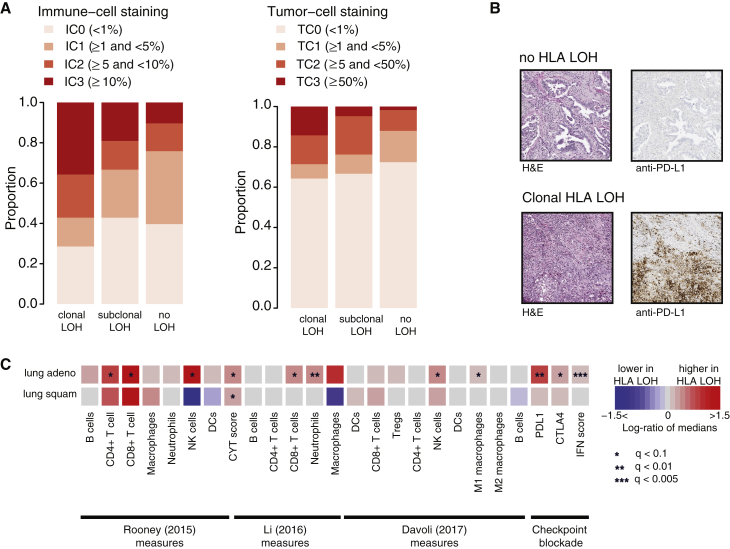
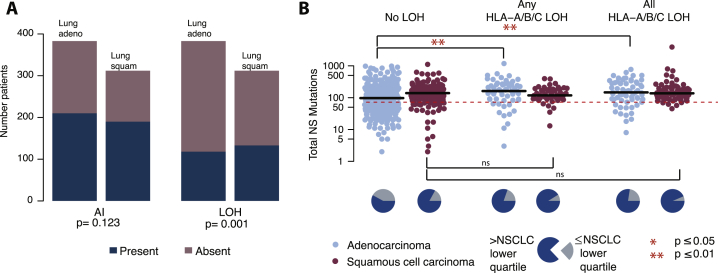
Immune evasion is a hallmark of cancer. Losing the ability to present neoantigens through human leukocyte antigen (HLA) loss may facilitate immune evasion. However, the polymorphic nature of the locus has precluded accurate HLA copy-number analysis. Here, we present loss of heterozygosity in human leukocyte antigen (LOHHLA), a computational tool to determine HLA allele-specific copy number from sequencing data. Using LOHHLA, we find that HLA LOH occurs in 40% of non-small-cell lung cancers (NSCLCs) and is associated with a high subclonal neoantigen burden, APOBEC-mediated mutagenesis, upregulation of cytolytic activity, and PD-L1 positivity. The focal nature of HLA LOH alterations, their subclonal frequencies, enrichment in metastatic sites, and occurrence as parallel events suggests that HLA LOH is an immune escape mechanism that is subject to strong microenvironmental selection pressures later in tumor evolution. Characterizing HLA LOH with LOHHLA refines neoantigen prediction and may have implications for our understanding of resistance mechanisms and immunotherapeutic approaches targeting neoantigens. VIDEO ABSTRACT.
免疫逃逸是癌症的一个标志。通过人类白细胞抗原(HLA)缺失而丧失呈递新抗原的能力可能会促进免疫逃逸。然而,该基因座的多态性使得准确的HLA拷贝数分析变得困难。在此,我们介绍了人类白细胞抗原杂合性缺失(LOHHLA),这是一种从测序数据中确定HLA等位基因特异性拷贝数的计算工具。使用LOHHLA,我们发现HLA杂合性缺失发生在40%的非小细胞肺癌(NSCLC)中,并且与高亚克隆新抗原负荷、载脂蛋白B mRNA编辑酶催化多肽样3(APOBEC)介导的诱变、细胞溶解活性上调以及程序性死亡配体1(PD-L1)阳性相关。HLA杂合性缺失改变的局灶性、它们的亚克隆频率、在转移部位的富集以及作为平行事件的发生表明,HLA杂合性缺失是一种免疫逃逸机制,在肿瘤进化后期会受到强烈的微环境选择压力。用LOHHLA表征HLA杂合性缺失可优化新抗原预测,并可能对我们理解针对新抗原的耐药机制和免疫治疗方法产生影响。视频摘要。