Garrido María Antonia, Navarro-Ocón Alba, Ronco-Díaz Víctor, Olea Nicolás, Aptsiauri Natalia
Radiology Service, Virgen de la Nieves University Hospital, 18014 Granada, Spain.
Department of Biochemistry, Molecular Biology III and Immunology, School of Medicine, University of Granada, 18016 Granada, Spain.
Genes (Basel). 2024 Nov 28;15(12):1542. doi: 10.3390/genes15121542.
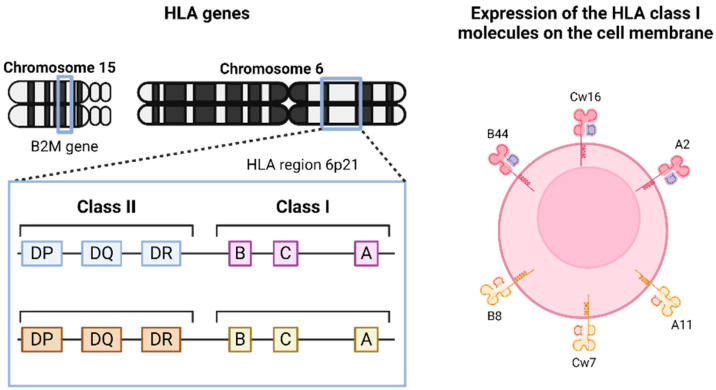
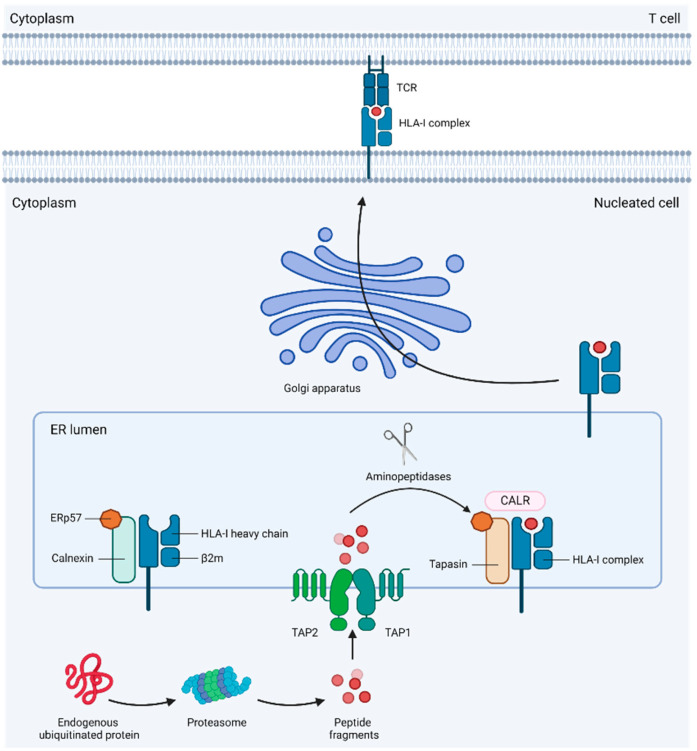
Major histocompatibility complex (MHC) class-I molecules (or Human Leucocyte Antigen class-I) play a key role in adaptive immunity against cancer. They present specific tumor neoantigens to cytotoxic T cells and provoke an antitumor cytotoxic response. The total or partial loss of HLA molecules can inhibit the immune system's ability to detect and destroy cancer cells. Loss of heterozygosity (LOH) is a common irreversible genetic alteration that occurs in the great majority of human tumors, including breast cancer. LOH at chromosome 6, which involves HLA genes (LOH-HLA), leads to the loss of an HLA haplotype and is linked to cancer progression and a weak response to cancer immunotherapy. Therefore, the loss of genes or an entire chromosomal region which are critical for antigen presentation is of particular importance in the search for novel prognostic and clinical biomarkers in breast cancer. Here, we review the role of LOH-HLA in breast cancer, its contribution to an understanding of cancer immune escape and tumor progression, and discuss how it can be targeted in cancer therapy.
主要组织相容性复合体(MHC)I类分子(或人类白细胞抗原I类)在针对癌症的适应性免疫中起关键作用。它们将特定的肿瘤新抗原呈递给细胞毒性T细胞,并引发抗肿瘤细胞毒性反应。HLA分子的全部或部分缺失会抑制免疫系统检测和破坏癌细胞的能力。杂合性缺失(LOH)是一种常见的不可逆基因改变,发生在包括乳腺癌在内的绝大多数人类肿瘤中。6号染色体上的杂合性缺失(涉及HLA基因,即LOH-HLA)会导致HLA单倍型的丢失,并与癌症进展以及对癌症免疫治疗的弱反应相关。因此,对于乳腺癌新型预后和临床生物标志物的研究而言,对抗原呈递至关重要的基因或整个染色体区域的缺失具有特别重要的意义。在此,我们综述了LOH-HLA在乳腺癌中的作用、其对理解癌症免疫逃逸和肿瘤进展的贡献,并讨论了在癌症治疗中如何将其作为靶点。