Zheng Xiaoying, Dong Qianze, Zhang Xiupeng, Han Qiang, Han Xu, Han Yong, Wu Jingjing, Rong Xuezhu, Wang Enhua
Department of Pathology, College of Basic Medical Science and First Affiliated Hospital, China Medical University, Shenyang, China.
Department of Electron Microscopy, Basic Medical College, Chengde Medical College, Chengde, China.
Oncotarget. 2017 Aug 12;8(45):78734-78748. doi: 10.18632/oncotarget.20223. eCollection 2017 Oct 3.
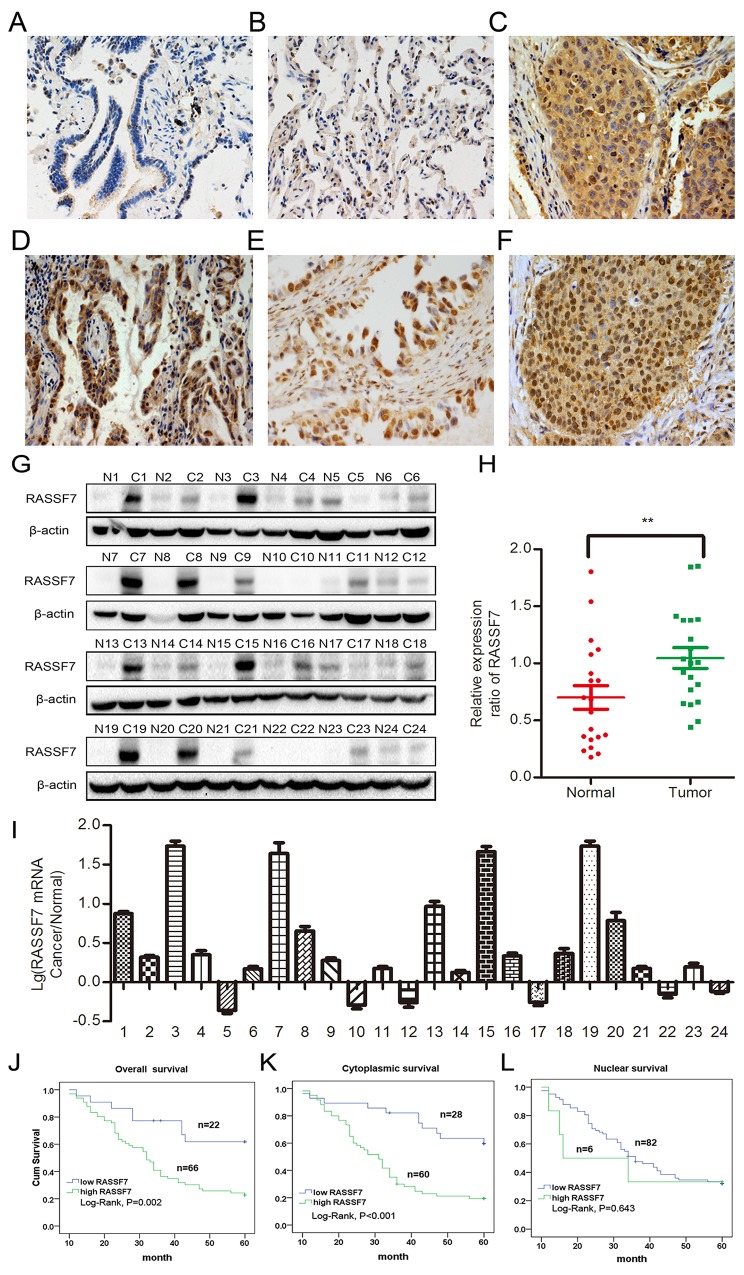
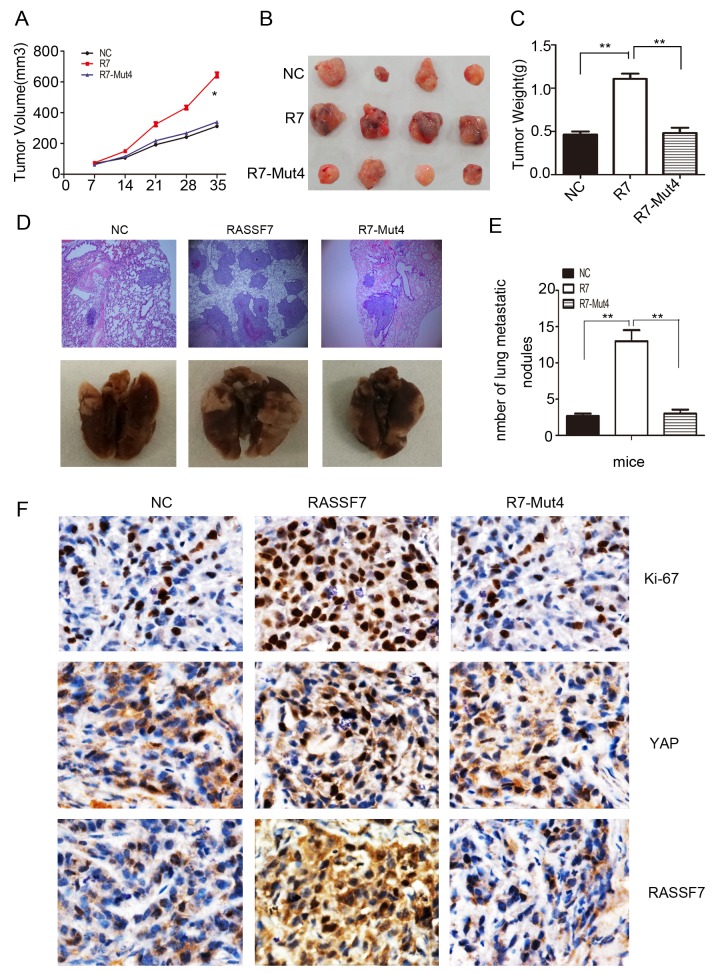
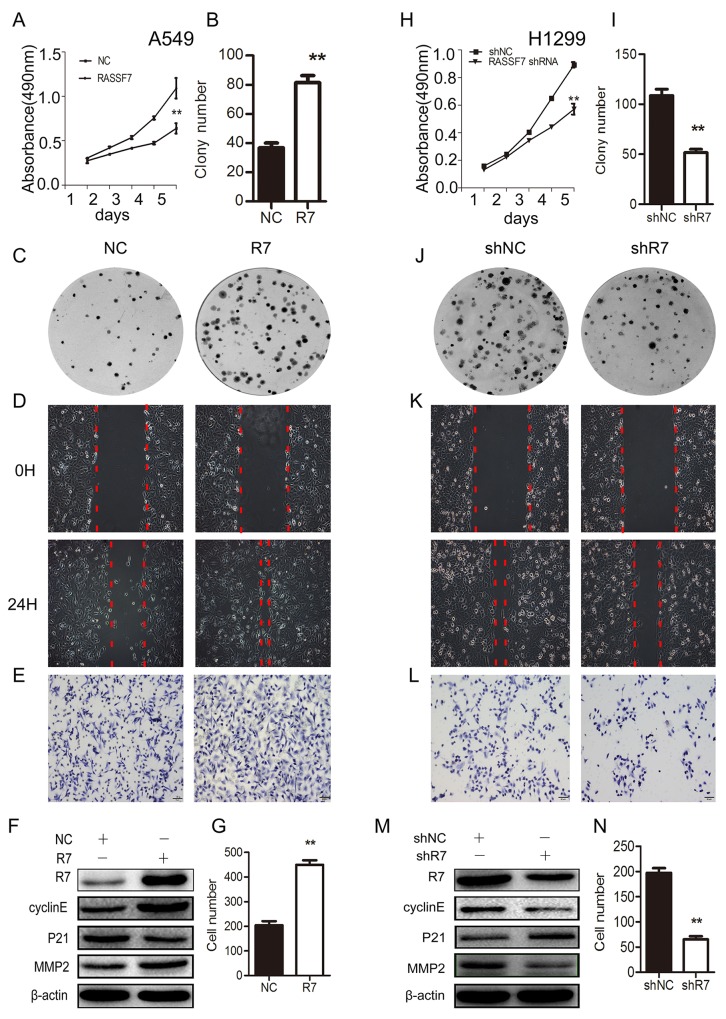
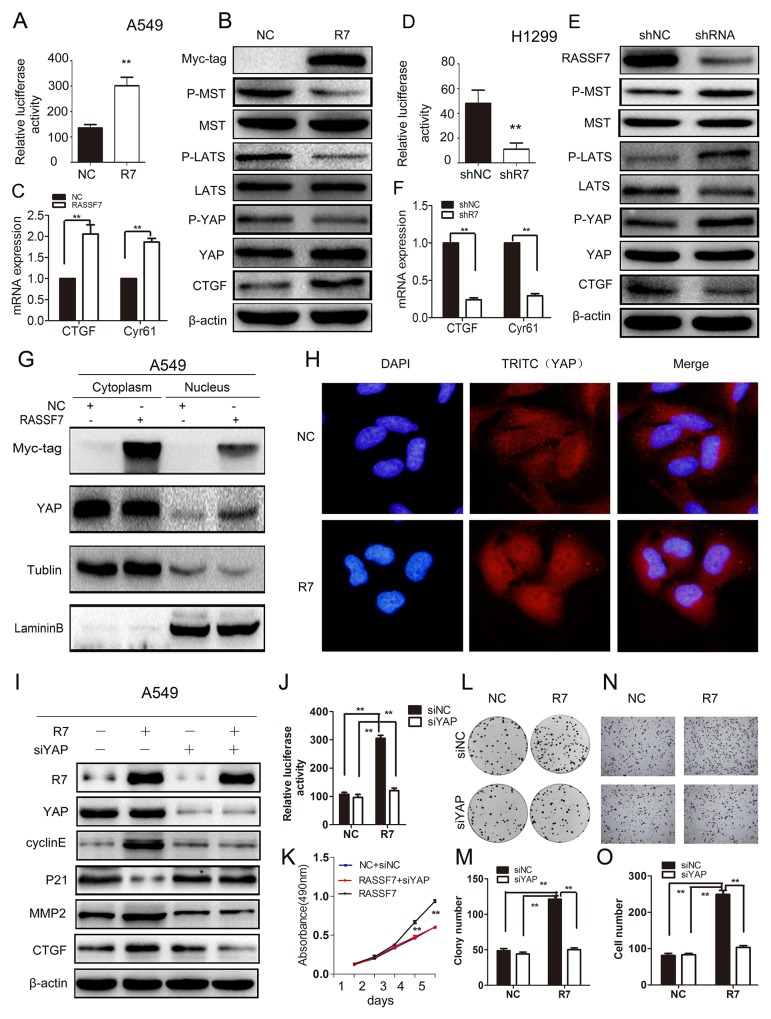
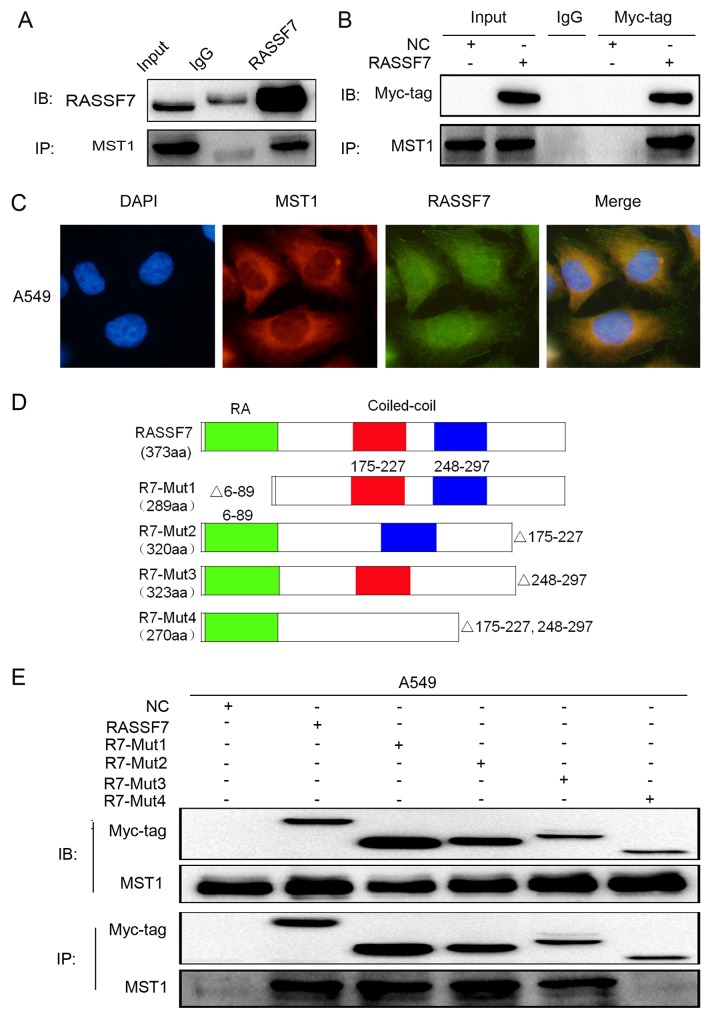
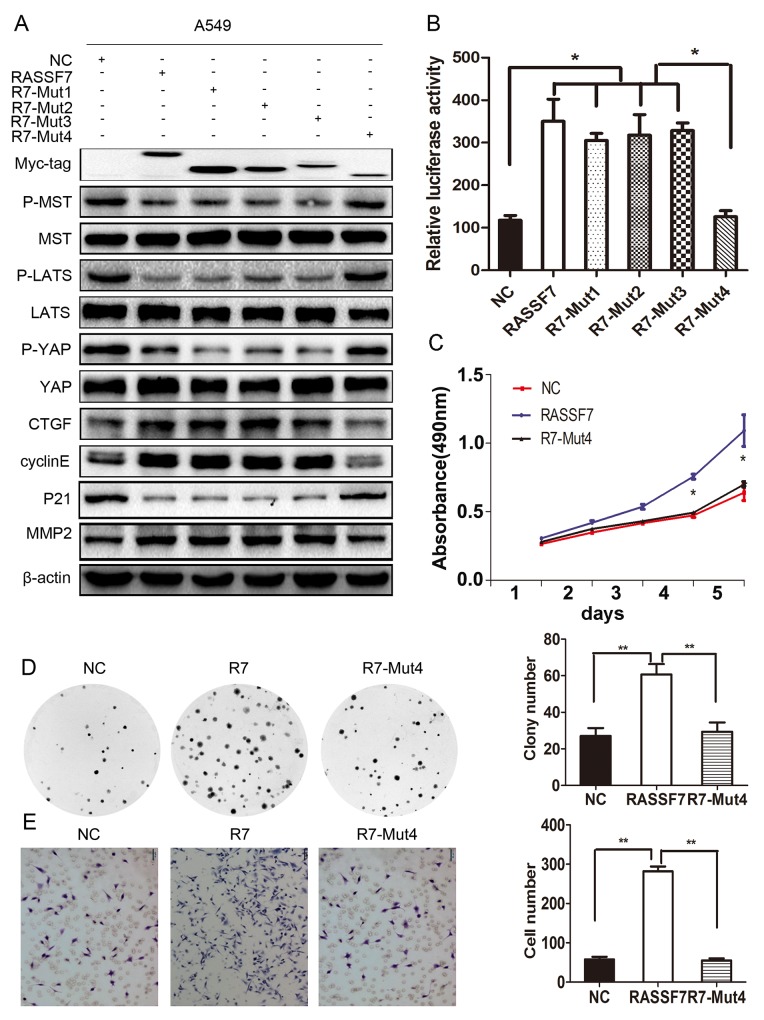
Lung cancer is the leading cause of cancer-related deaths worldwide, and despite recent improvements in treatment patient prognosis remains dismal. In this study, we examined the role of N-terminal Ras-association domain family 7 (RASSF7) in human non-small cell lung cancer (NSCLC). We found that RASSF7 was overexpressed NSCLC tissues, which correlated with advanced TNM stage, positive lymph node metastasis, and poor prognosis. This RASSF7 overexpression promoted lung cancer cell proliferation, migration, and invasion. We also found that RASSF7 interacted with mammalian Ste20-like kinase 1(MST1) through its C-terminal coiled-coil domain to inhibit MST1 phosphorylation as well as the phosphorylation of large tumor suppressor kinase 1(LATS1) and yes-associated protein (YAP), while promoting the nuclear translocation of YAP. In addition, RASSF7 overexpression inhibited the Hippo signaling pathway both in and and promoted the expression of proteins associated with proliferation and invasion, such as connective tissue growth factor. These results suggest that targeting RASSF7 could be exploited for therapeutic benefit in the treatment of NSCLC.
肺癌是全球癌症相关死亡的主要原因,尽管近期治疗有所改善,但患者预后仍然不佳。在本研究中,我们检测了N端Ras关联结构域家族7(RASSF7)在人类非小细胞肺癌(NSCLC)中的作用。我们发现RASSF7在NSCLC组织中过表达,这与晚期TNM分期、阳性淋巴结转移及不良预后相关。这种RASSF7过表达促进肺癌细胞增殖、迁移和侵袭。我们还发现RASSF7通过其C端卷曲螺旋结构域与哺乳动物Ste20样激酶1(MST1)相互作用,抑制MST1磷酸化以及大肿瘤抑制激酶1(LATS1)和Yes相关蛋白(YAP)的磷酸化,同时促进YAP的核转位。此外,RASSF7过表达在体内和体外均抑制Hippo信号通路,并促进与增殖和侵袭相关的蛋白表达,如结缔组织生长因子。这些结果表明,靶向RASSF7可能对NSCLC治疗具有治疗益处。