Instituto de Medicina Molecular, Faculdade de Medicina, Universidade de Lisboa, Lisboa, Portugal.
Department of Molecular Microbiology, Center for Infectious Disease Research, Washington University School of Medicine, St Louis, MO, USA.
Nat Microbiol. 2018 Jan;3(1):17-25. doi: 10.1038/s41564-017-0054-x. Epub 2017 Nov 6.
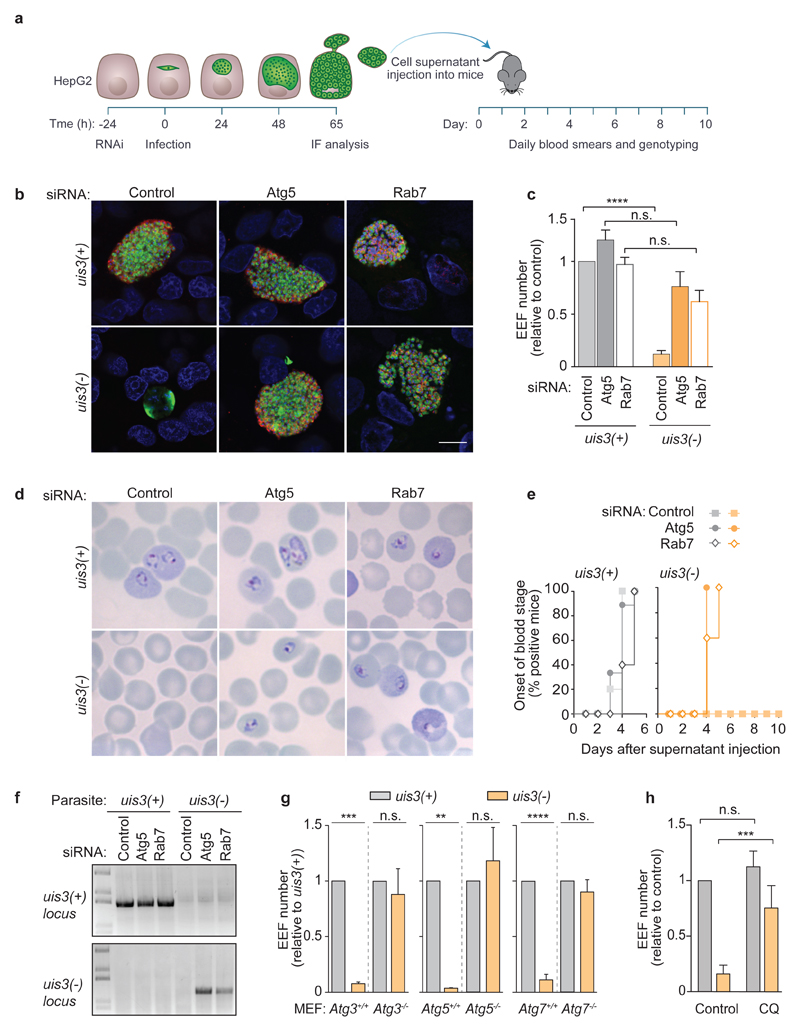
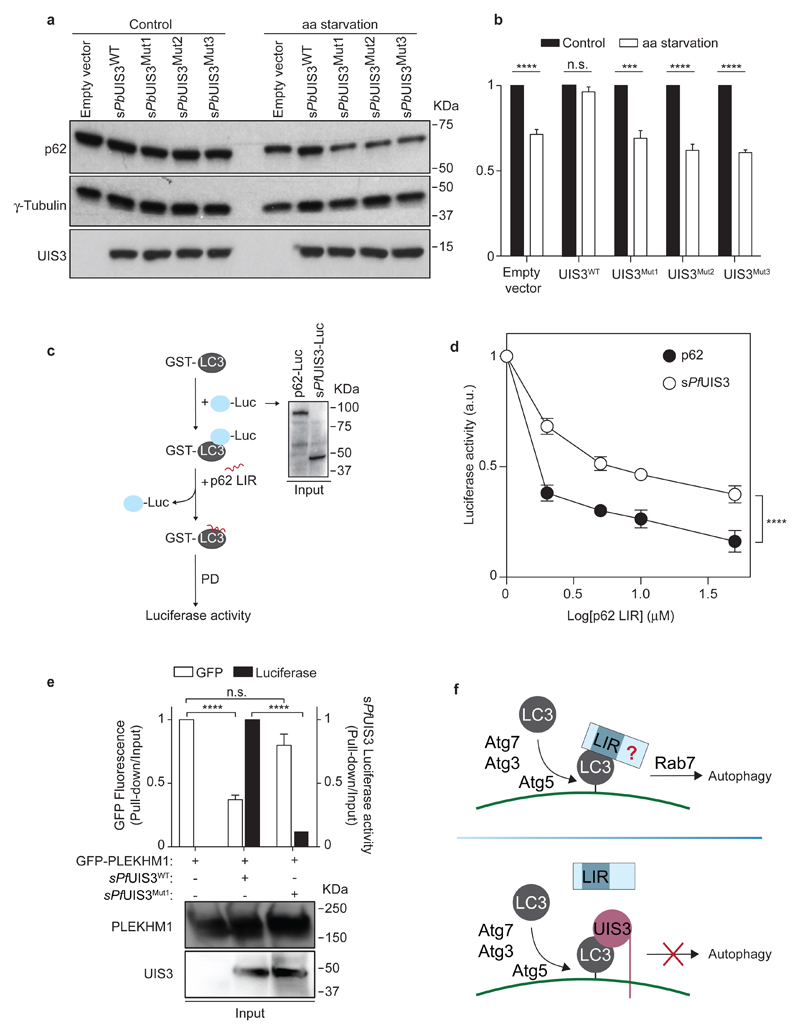
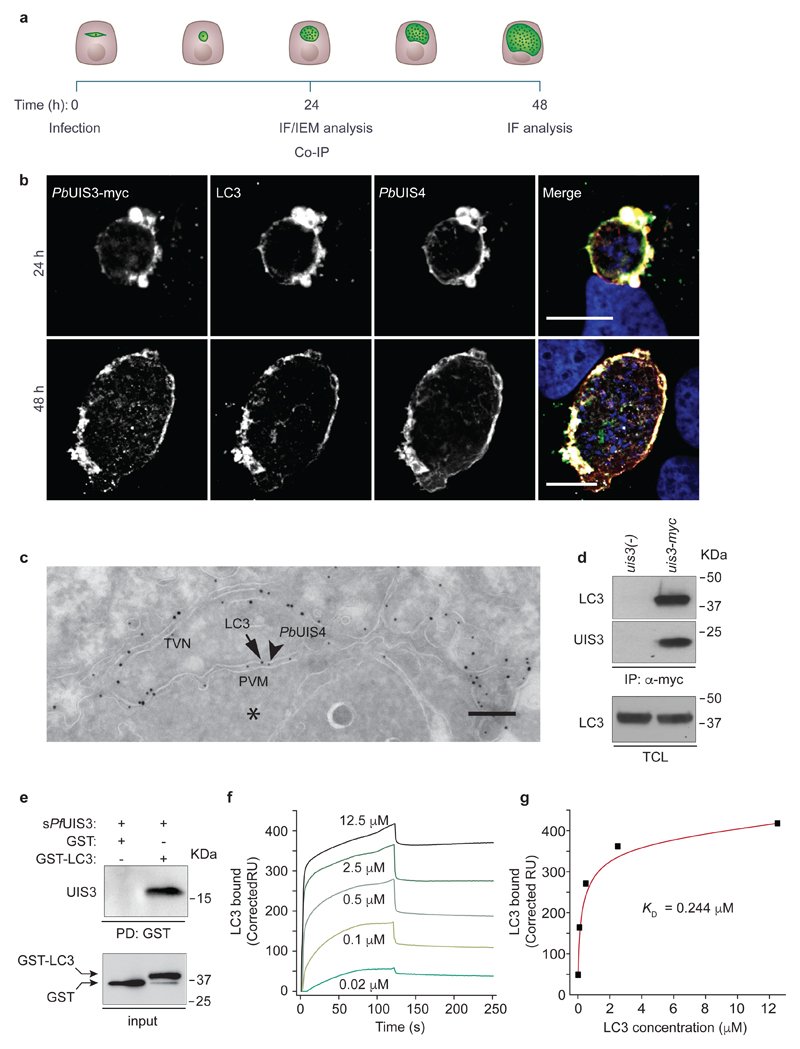
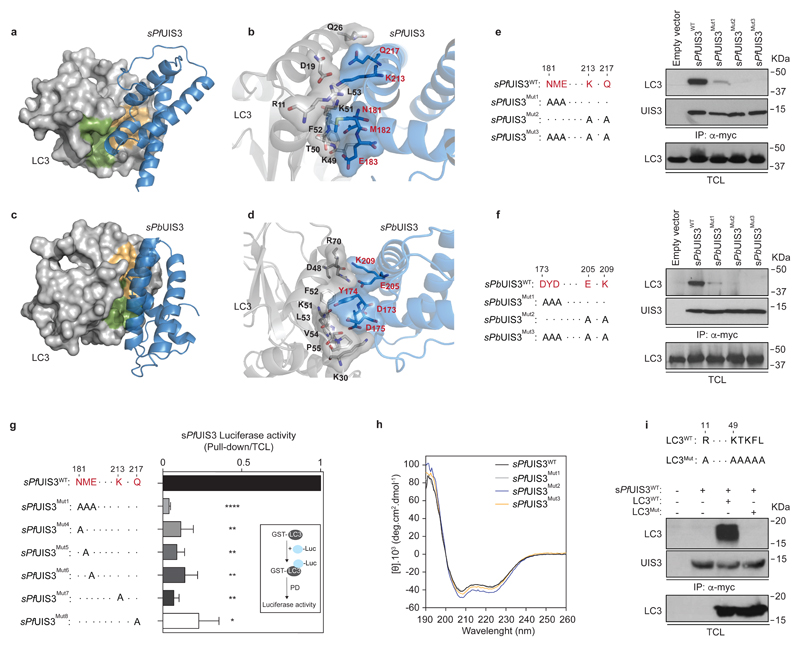
The causative agent of malaria, Plasmodium, replicates inside a membrane-bound parasitophorous vacuole (PV), which shields this intracellular parasite from the cytosol of the host cell . One common threat for intracellular pathogens is the homeostatic process of autophagy, through which cells capture unwanted intracellular material for lysosomal degradation . During the liver stage of a malaria infection, Plasmodium parasites are targeted by the autophagy machinery of the host cell, and the PV membrane (PVM) becomes decorated with several autophagy markers, including LC3 (microtubule-associated protein 1 light chain 3) . Here we show that Plasmodium berghei parasites infecting hepatic cells rely on the PVM transmembrane protein UIS3 to avoid elimination by host-cell-mediated autophagy. We found that UIS3 binds host LC3 through a non-canonical interaction with a specialized surface on LC3 where host proteins with essential functions during autophagy also bind. UIS3 acts as a bona fide autophagy inhibitor by competing with host LC3-interacting proteins for LC3 binding. Our work identifies UIS3, one of the most promising candidates for a genetically attenuated vaccine against malaria , as a unique and potent mediator of autophagy evasion in Plasmodium. We propose that the protein-protein interaction between UIS3 and host LC3 represents a target for antimalarial drug development.
疟原虫是疟疾的病原体,它在一个膜结合的滋养液泡(PV)内复制,这个 PV 可以保护这个细胞内寄生虫免受宿主细胞质的影响。细胞内病原体的一个常见威胁是自噬的动态平衡过程,通过这个过程,细胞可以捕获不需要的细胞内物质进行溶酶体降解。在疟疾感染的肝脏阶段,宿主细胞的自噬机制会靶向疟原虫寄生虫,PV 膜(PVM)会被几种自噬标记物修饰,包括 LC3(微管相关蛋白 1 轻链 3)。在这里,我们表明感染肝细胞的伯氏疟原虫寄生虫依赖 PVM 跨膜蛋白 UIS3 来避免被宿主细胞介导的自噬消除。我们发现 UIS3 通过与 LC3 上一个特殊表面的非经典相互作用与宿主 LC3 结合,而这个特殊表面是自噬过程中宿主蛋白结合的关键部位。UIS3 通过与宿主 LC3 相互作用的蛋白竞争 LC3 结合,充当真正的自噬抑制剂。我们的工作确定了 UIS3,作为对抗疟疾的基因减毒疫苗最有希望的候选者之一,是疟原虫逃避自噬的独特而有效的介质。我们提出,UIS3 和宿主 LC3 之间的蛋白-蛋白相互作用代表了抗疟药物开发的一个靶点。