Villares Marie, Lourenço Nelly, Ktorza Ivan, Berthelet Jérémy, Panagiotou Aristeidis, Richard Aurélie, Amo Angélique, Koziy Yulianna, Medjkane Souhila, Valente Sergio, Fioravanti Rossella, Pioche-Durieu Catherine, Lignière Laurent, Chevreux Guillaume, Mai Antonello, Weitzman Jonathan B
Université Paris Cité, CNRS, UMR7126 Epigenetics and Cell Fate, Paris, 75013, France.
Department of Drug Chemistry & Technologies, Sapienza University of Rome, Rome, 00185, Italy.
Nat Commun. 2024 Mar 12;15(1):2235. doi: 10.1038/s41467-024-45022-7.
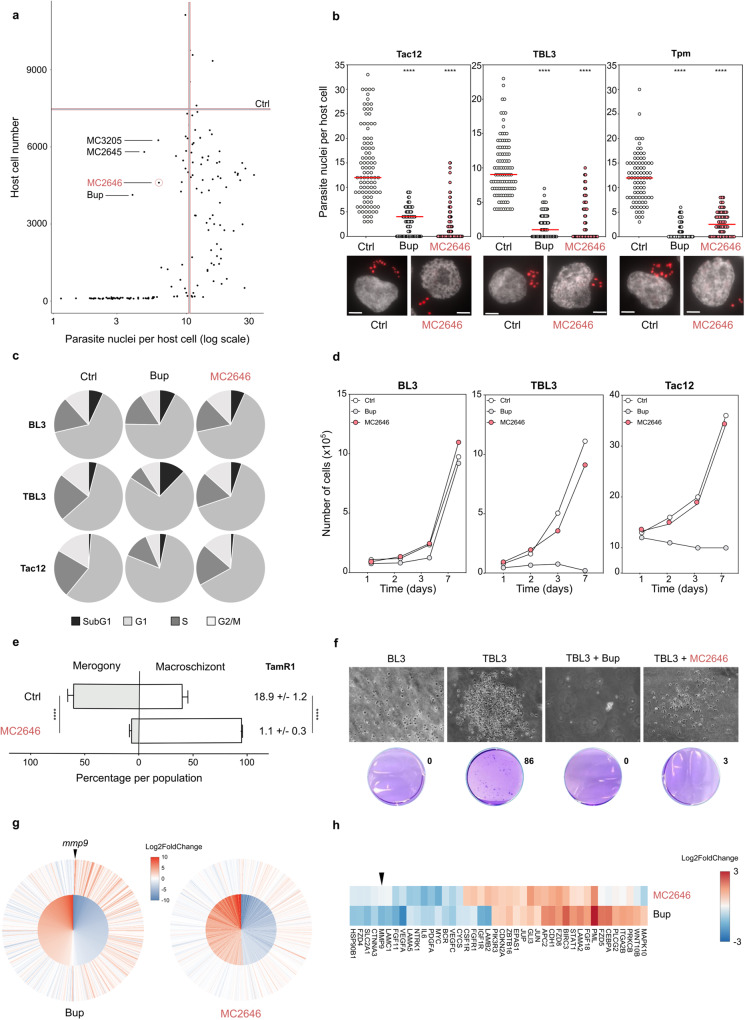
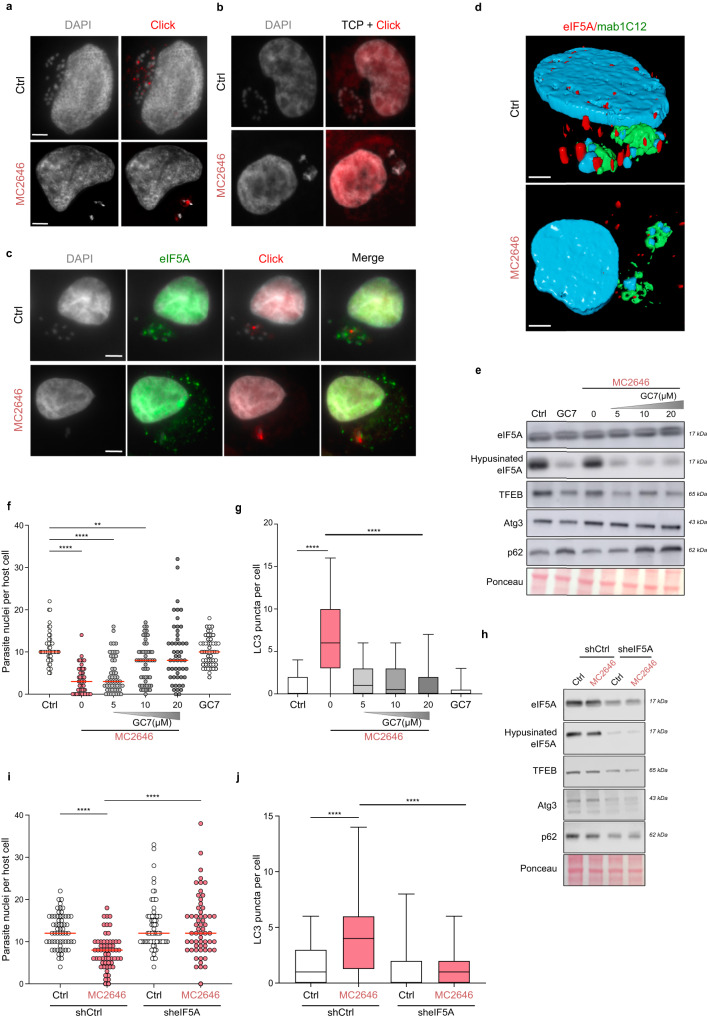
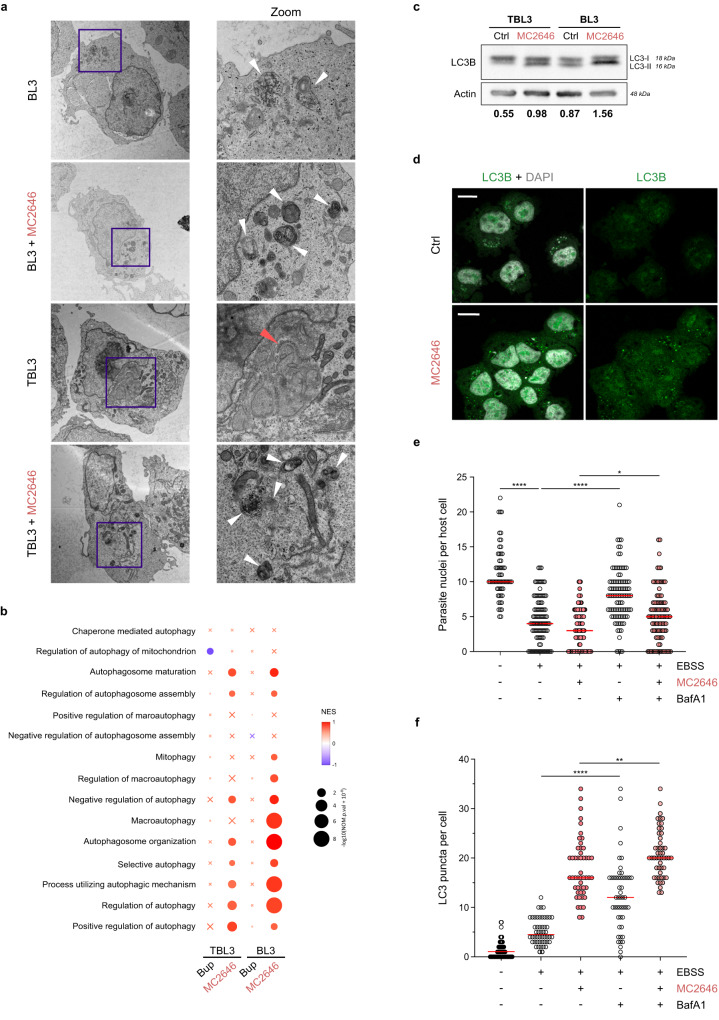
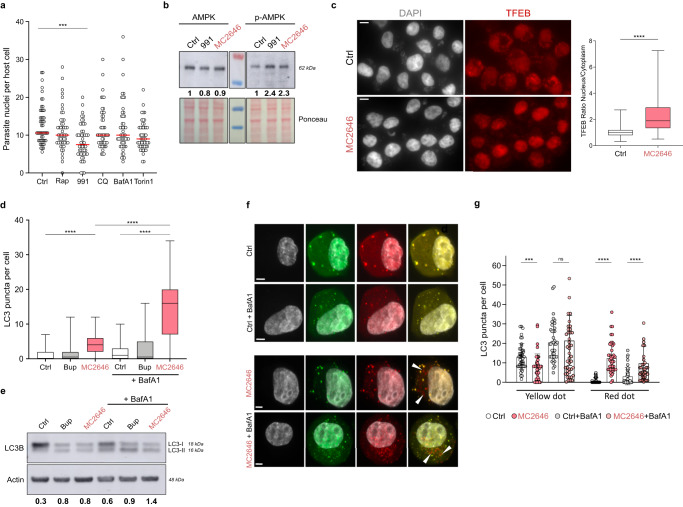
Intracellular pathogens develop elaborate mechanisms to survive within the hostile environments of host cells. Theileria parasites infect bovine leukocytes and cause devastating diseases in cattle in developing countries. Theileria spp. have evolved sophisticated strategies to hijack host leukocytes, inducing proliferative and invasive phenotypes characteristic of cell transformation. Intracellular Theileria parasites secrete proteins into the host cell and recruit host proteins to induce oncogenic signaling for parasite survival. It is unknown how Theileria parasites evade host cell defense mechanisms, such as autophagy, to survive within host cells. Here, we show that Theileria annulata parasites sequester the host eIF5A protein to their surface to escape elimination by autophagic processes. We identified a small-molecule compound that reduces parasite load by inducing autophagic flux in host leukocytes, thereby uncoupling Theileria parasite survival from host cell survival. We took a chemical genetics approach to show that this compound induced host autophagy mechanisms and the formation of autophagic structures via AMPK activation and the release of the host protein eIF5A which is sequestered at the parasite surface. The sequestration of host eIF5A to the parasite surface offers a strategy to escape elimination by autophagic mechanisms. These results show how intracellular pathogens can avoid host defense mechanisms and identify a new anti-Theileria drug that induces autophagy to target parasite removal.
细胞内病原体进化出复杂机制以在宿主细胞的恶劣环境中存活。泰勒虫属寄生虫感染牛白细胞,并在发展中国家的牛群中引发毁灭性疾病。泰勒虫属已经进化出复杂的策略来劫持宿主白细胞,诱导出细胞转化所特有的增殖和侵袭表型。细胞内的泰勒虫属寄生虫向宿主细胞分泌蛋白质,并招募宿主蛋白质以诱导致癌信号来实现寄生虫的存活。目前尚不清楚泰勒虫属寄生虫如何逃避宿主细胞的防御机制(如自噬)从而在宿主细胞内存活。在此,我们发现环形泰勒虫寄生虫将宿主真核翻译起始因子5A(eIF5A)蛋白隔离在其表面,以逃避自噬过程的清除。我们鉴定出一种小分子化合物,它通过诱导宿主白细胞中的自噬流来降低寄生虫载量,从而使泰勒虫属寄生虫的存活与宿主细胞的存活脱钩。我们采用化学遗传学方法表明,该化合物通过激活AMPK并释放被隔离在寄生虫表面的宿主蛋白eIF5A,诱导宿主自噬机制和自噬结构的形成。宿主eIF5A被隔离在寄生虫表面为逃避自噬机制的清除提供了一种策略。这些结果揭示了细胞内病原体如何避免宿主防御机制,并鉴定出一种新的抗泰勒虫药物,该药物通过诱导自噬来靶向清除寄生虫。