Anes João, Hurley Daniel, Martins Marta, Fanning Séamus
UCD-Centre for Food Safety, School of Public Health, Physiotherapy and Sports Science, University College Dublin, Dublin, Ireland.
Institute for Global Food Security, Queen's University Belfast, Belfast, United Kingdom.
Front Microbiol. 2017 Oct 23;8:1913. doi: 10.3389/fmicb.2017.01913. eCollection 2017.
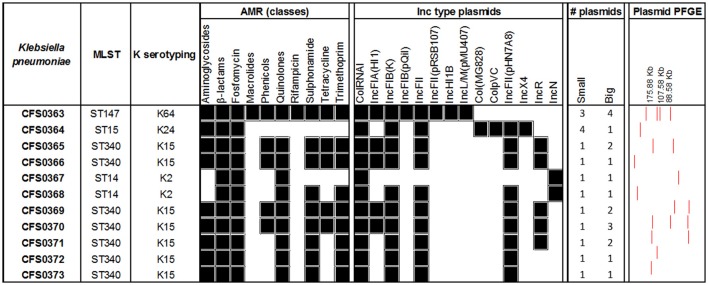
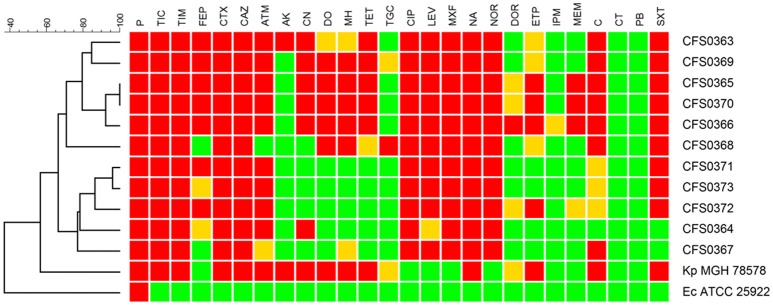
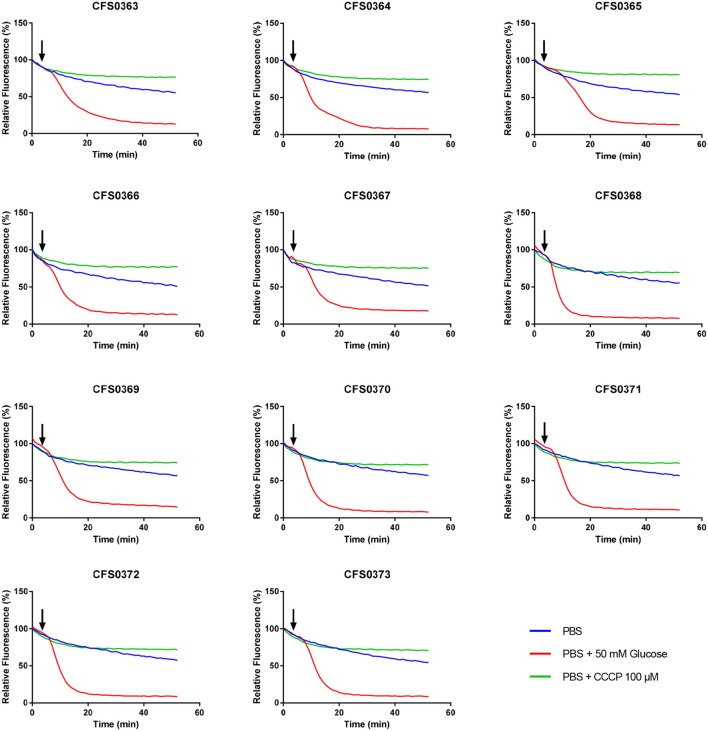
is an important nosocomial pathogen with an extraordinary resistant phenotype due to a combination of acquired resistant-elements and efflux mechanisms. In this study a detailed molecular characterization of 11 isolates of clinical origin was carried out. Eleven clinical isolates were tested for their susceptibilities, by disk diffusion and broth microdilution and interpreted according to CLSI guidelines. Efflux activity was determined by measuring the extrusion of ethidium bromide and biofilm formation was assessed following static growth in Müeller-Hinton and minimal media M9 broths at two temperatures and time points. Template DNA from all 11 isolates was extracted and sequenced. The study collection was found to be resistant to several (extended-spectrum beta-lactam) ESBL-type compounds along with several (fluoro)quinolones (FQ). Resistance to tetracycline accounted for 55% of the study collection ( = 6) and three of the 11 isolates were resistance to carbapenems. Genotyping identified (82%), (55%), and (45%) ESBL encoding genes and FQ resistance was associated the presence of the operon, identified in 10 of the 11 isolates and gene in one isolate. The polymorphisms detected in the quinolone resistance-determining regions (QRDRs) were associated with isolates of the clonal group CG15. Sequence types (ST) identified were representative of previously described clonal groups including CG258 ( = 7), CG15 ( = 3), and CG147 ( = 1). Plasmid replicon type databases were queried indicating the presence of IncFII and IncFIB replicon types in the majority of the isolates (91%), followed by IncFIA (45%), and IncR (45%). Two of the 11 isolates were found positive for yersiniabactin siderophore-encoding genes. No differences in the ability to efflux ethidium bromide were identified. Biofilm formation was stronger when the isolates were grown under stressed conditions at 37°C for a period up to 96 h. These data confirm the fact that well-recognized clonal groups of of importance to human health carries a diverse repertoire of antimicrobial resistance determinants, particularly related to critically important drugs in the ESBL and FQ classes. The capacity of most isolates to form strong biofilms, when stressed under laboratory-simulated conditions, supports the risk to human health associated with nosocomial infections deriving from indwelling medical devices.
是一种重要的医院病原体,由于获得性耐药元件和外排机制的组合而具有异常耐药表型。在本研究中,对11株临床来源的菌株进行了详细的分子特征分析。通过纸片扩散法和肉汤微量稀释法对11株临床分离株进行药敏试验,并根据CLSI指南进行解释。通过测量溴化乙锭的外排来确定外排活性,并在两种温度和时间点下,在Müeller-Hinton培养基和基本培养基M9肉汤中静态培养后评估生物膜形成。提取并测序了所有11株分离株的模板DNA。研究发现该菌株对几种(超广谱β-内酰胺)ESBL类化合物以及几种(氟)喹诺酮(FQ)耐药。对四环素的耐药率占研究菌株的55%(n = 6),11株分离株中有3株对碳青霉烯类耐药。基因分型鉴定出82%的ESBL编码基因、55%的blaCTX-M基因和45%的blaTEM基因,FQ耐药与11株分离株中的10株中鉴定出的qnr操纵子和1株中的aac(6’)-Ib-cr基因的存在有关。在喹诺酮耐药决定区(QRDRs)检测到的多态性与克隆群CG15的分离株有关。鉴定出的序列类型(ST)代表了先前描述的克隆群,包括CG258(n = 7)、CG15(n = 3)和CG147(n = 1)。查询质粒复制子类型数据库表明,大多数分离株(91%)中存在IncFII和IncFIB复制子类型,其次是IncFIA(45%)和IncR(45%)。11株分离株中有2株耶尔森菌素铁载体编码基因呈阳性。未发现溴化乙锭外排能力的差异。当分离株在37°C压力条件下培养长达96小时时,生物膜形成更强。这些数据证实了对人类健康具有重要意义的公认的克隆群携带多种抗菌耐药决定因素,特别是与ESBL和FQ类中至关重要的药物相关的决定因素这一事实。在实验室模拟条件下受到压力时,大多数分离株形成强生物膜的能力支持了与留置医疗器械引起的医院感染相关的对人类健康的风险。