Adeosun Idowu J, Baloyi Itumeleng T, Cosa Sekelwa
Department of Biochemistry, Genetics and Microbiology, Division of Microbiology, University of Pretoria, Private Bag X20, Hatfield, Pretoria 0028, South Africa.
Plants (Basel). 2022 May 27;11(11):1429. doi: 10.3390/plants11111429.
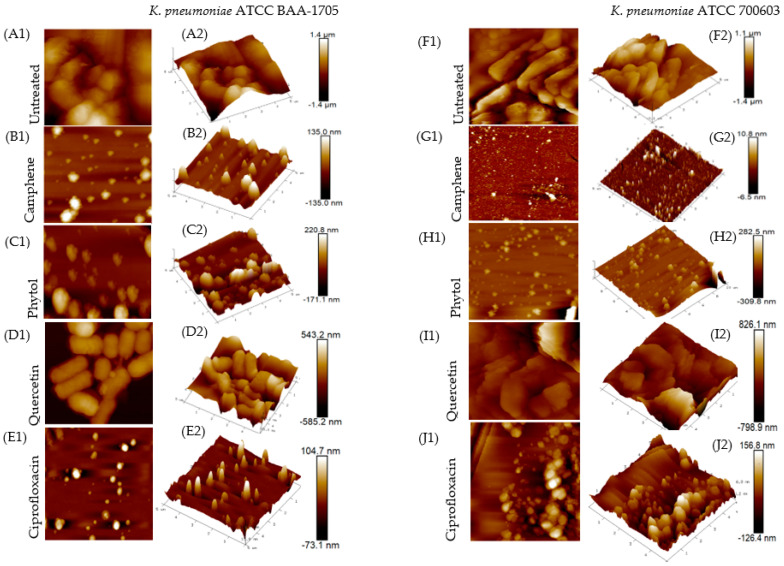
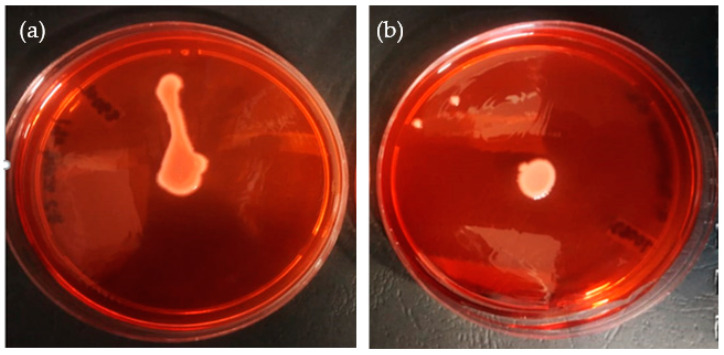
The ability of to form biofilm renders the pathogen recalcitrant to various antibiotics. The difficulty in managing related chronic infections is due to its biofilm-forming ability and associated virulence factors, necessitating the development of efficient strategies to control virulence factors. This study aimed at evaluating the inhibitory potential of selected phytochemical compounds on biofilm-associated virulence factors in , as well as authenticating their antibiofilm activity. Five phytochemical compounds (alpha-terpinene, camphene, fisetin, glycitein and phytol) were evaluated for their antibacterial and anti-biofilm-associated virulence factors such as exopolysaccharides, curli fibers, and hypermucoviscosity against carbapenem-resistant and extended-spectrum beta-lactamase-positive strains. The antibiofilm potential of these compounds was evaluated at initial cell attachment, microcolony formation and mature biofilm formation, then validated by in situ visualization using scanning electron microscopy (SEM). Exopolysaccharide surface topography was characterized using atomic force microscopy (AFM). The antibacterial activity of the compounds confirmed fisetin as the best anti-carbapenem-resistant , demonstrating a minimum inhibitory concentration (MIC) value of 0.0625 mg/mL. Phytol, glycitein and α-terpinene showed MIC values of 0.125 mg/mL for both strains. The assessment of the compounds for anti-virulence activity (exopolysaccharide reduction) revealed an up to 65.91% reduction in phytol and camphene. Atomic force microscopy detected marked differences between the topographies of untreated and treated (camphene and phytol) exopolysaccharides. Curli expression was inhibited at both 0.5 and 1.0 mg/mL by phytol, glycitein, fisetin and quercetin. The hypermucoviscosity was reduced by phytol, glycitein, and fisetin to the shortest mucoid string (1 mm) at 1 mg/mL. Phytol showed the highest antiadhesion activity against carbapenem-resistant and extended-spectrum beta-lactamase-positive (54.71% and 50.05%), respectively. Scanning electron microscopy correlated the in vitro findings, with phytol significantly altering the biofilm architecture. Phytol has antibiofilm and antivirulence potential against the highly virulent strains, revealing it as a potential lead compound for the management of -associated infections.
形成生物膜的能力使病原体对各种抗生素具有抗性。管理与[病原体名称]相关的慢性感染存在困难,这是由于其生物膜形成能力及相关毒力因子,因此需要开发有效的策略来控制毒力因子。本研究旨在评估所选植物化学化合物对[病原体名称]中生物膜相关毒力因子的抑制潜力,并验证其抗生物膜活性。评估了五种植物化学化合物(α-萜品烯、莰烯、非瑟酮、大豆黄素和叶绿醇)对耐碳青霉烯类和超广谱β-内酰胺酶阳性[病原体名称]菌株的抗菌活性以及对生物膜相关毒力因子如胞外多糖、卷曲纤维和高黏液性的抑制作用。在初始细胞附着、微菌落形成和成熟生物膜形成阶段评估了这些化合物的抗生物膜潜力,然后通过扫描电子显微镜(SEM)原位可视化进行验证。使用原子力显微镜(AFM)对胞外多糖表面形貌进行了表征。化合物的抗菌活性证实非瑟酮是最佳的抗耐碳青霉烯类[病原体名称]药物,其最低抑菌浓度(MIC)值为0.0625 mg/mL。叶绿醇、大豆黄素和α-萜品烯对两种菌株的MIC值均为0.125 mg/mL。对化合物抗毒力活性(胞外多糖减少)的评估显示,叶绿醇和莰烯的减少率高达65.91%。原子力显微镜检测到未处理和经处理(莰烯和叶绿醇)的胞外多糖形貌存在显著差异。叶绿醇、大豆黄素、非瑟酮和槲皮素在0.5和1.0 mg/mL浓度下均抑制了卷曲纤维的表达。叶绿醇、大豆黄素和非瑟酮在1 mg/mL浓度下将高黏液性降低至最短黏液丝(1 mm)。叶绿醇对耐碳青霉烯类和超广谱β-内酰胺酶阳性[病原体名称]分别表现出最高的抗黏附活性(54.71%和50.05%)。扫描电子显微镜证实了体外研究结果,叶绿醇显著改变了生物膜结构。叶绿醇对高毒力[病原体名称]菌株具有抗生物膜和抗毒力潜力,表明它是管理与[病原体名称]相关感染的潜在先导化合物。