Timpe Kelsie, Kaplan David
Engineering School of Sustainable Infrastructure & Environment, University of Florida, Gainesville, FL 32611, USA.
Sci Adv. 2017 Nov 1;3(11):e1700611. doi: 10.1126/sciadv.1700611. eCollection 2017 Nov.
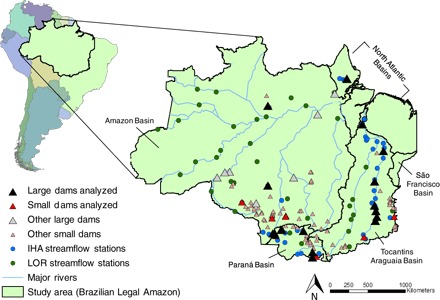
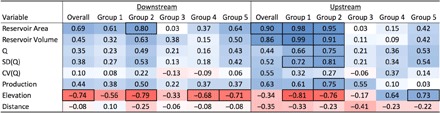
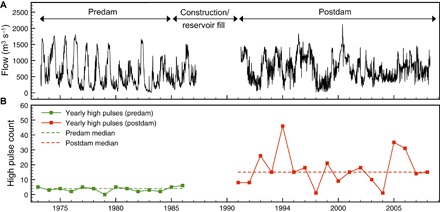
Developing countries around the world are expanding hydropower to meet growing energy demand. In the Brazilian Amazon, >200 dams are planned over the next 30 years, and questions about the impacts of current and future hydropower in this globally important watershed remain unanswered. In this context, we applied a hydrologic indicator method to quantify how existing Amazon dams have altered the natural flow regime and to identify predictors of alteration. The type and magnitude of hydrologic alteration varied widely by dam, but the largest changes were to critical characteristics of the flood pulse. Impacts were largest for low-elevation, large-reservoir dams; however, small dams had enormous impacts relative to electricity production. Finally, the "cumulative" effect of multiple dams was significant but only for some aspects of the flow regime. This analysis is a first step toward the development of environmental flows plans and policies relevant to the Amazon and other megadiverse river basins.
世界上的发展中国家正在扩大水电规模以满足不断增长的能源需求。在巴西亚马逊地区,未来30年内计划修建200多座大坝,而关于当前及未来水电对这个全球重要流域的影响问题仍未得到解答。在此背景下,我们应用一种水文指标方法来量化亚马逊地区现有大坝如何改变了自然水流状态,并确定变化的预测因素。水文变化的类型和程度因大坝而异,但最大的变化是对洪水脉冲的关键特征。低海拔、大型水库大坝的影响最大;然而,小型大坝相对于发电量而言也产生了巨大影响。最后,多座大坝的“累积”效应显著,但仅针对水流状态的某些方面。该分析是朝着制定与亚马逊及其他生物多样性丰富的流域相关的环境流量计划和政策迈出的第一步。