Mayo Clinic, Scottsdale, AZ, USA.
University of Washington, Seattle, WA, USA.
Adv Ther. 2017 Dec;34(12):2661-2673. doi: 10.1007/s12325-017-0633-5. Epub 2017 Nov 6.
There is limited literature comparing the experiences and attitudes of patients with chronic idiopathic constipation (CIC) to those of healthcare professionals (HCPs) treating CIC patients. The BURDEN-CIC study was conducted to better understand the experiences and ongoing needs of CIC patients and to assess their alignment versus disconnection with the perceptions and needs of HCPs who treat CIC patients.
The BURDEN-CIC study was an author-developed, online questionnaire that used KnowledgePanel to survey individuals with CIC (n = 1223). HCPs who treat CIC patients were recruited separately and participated in a complementary online questionnaire (n = 331).
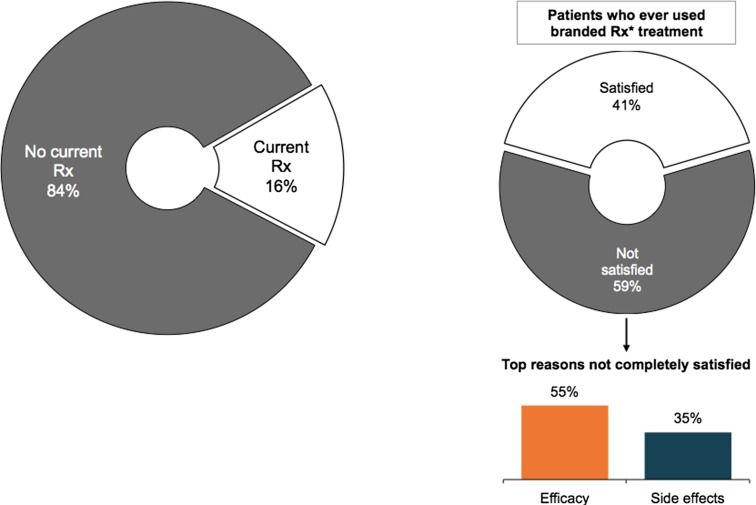
Most patients had used (58%) or were using (51%) over-the-counter treatments for their CIC, with only 16% currently on prescription therapy. More than half (59%) of current CIC prescription users were not satisfied/completely satisfied with their current chronic treatment. Many patients (42%) felt frustrated regarding their CIC, and a similar percentage (40%) expressed acceptance that CIC was part of their daily life. The majority of HCPs agreed that CIC patients were frustrated (72%), stressed (50%), or fed up (43%) with current treatment options but were relatively unaware (21%) that patients were accepting of their CIC. HCPs reported the greatest challenges in treating CIC patients as response rates to current therapies (55%), treatment adherence (55%), management of treatment-related diarrhea (34%), and lack of treatment options (34%).
BURDEN-CIC identified that many patients and HCPs are frustrated and not satisfied with current CIC treatments due to lack of efficacy and side effects, such as diarrhea. The survey identified that many patients are "accepting" of their disease, potentially compromising treatment outcomes. More dialogue is needed between HCPs and CIC patients, especially regarding management of treatment expectations and side effects. Further, additional treatment options would be useful for both patients and HCPs.
Synergy Pharmaceuticals Inc.
目前,比较慢性特发性便秘(CIC)患者和治疗 CIC 患者的医疗保健专业人员(HCP)的经验和态度的文献有限。进行 BURDEN-CIC 研究是为了更好地了解 CIC 患者的经验和持续需求,并评估他们与治疗 CIC 患者的 HCP 的看法和需求的一致性和脱节程度。
BURDEN-CIC 研究是一项由作者开发的在线问卷,使用 KnowledgePanel 对 1223 名 CIC 患者进行调查。另外还招募了治疗 CIC 的 HCP,并对他们进行了补充在线问卷调查(n=331)。
大多数患者(58%)曾使用或正在使用(51%)CIC 的非处方药,只有 16%目前正在接受处方药治疗。超过一半(59%)目前使用 CIC 处方药的患者对他们的慢性治疗不满意/完全不满意。许多患者(42%)对他们的 CIC 感到沮丧,类似比例(40%)表示接受 CIC 是他们日常生活的一部分。大多数 HCP 同意 CIC 患者对当前治疗方案感到沮丧(72%)、压力大(50%)或厌烦(43%),但相对而言,他们没有意识到(21%)患者对他们的 CIC 感到满意。HCP 报告治疗 CIC 患者最具挑战性的问题是当前治疗方案的反应率(55%)、治疗依从性(55%)、治疗相关腹泻的管理(34%)和缺乏治疗选择(34%)。
BURDEN-CIC 发现,由于缺乏疗效和副作用(如腹泻),许多患者和 HCP 对当前的 CIC 治疗感到沮丧和不满意。调查发现,许多患者对他们的疾病“接受”,这可能会影响治疗效果。HCP 和 CIC 患者之间需要进行更多的对话,特别是在治疗期望和副作用的管理方面。此外,患者和 HCP 都需要更多的治疗选择。
Synergy 制药公司。