Waasdorp Maaike, Duitman JanWillem, Spek C Arnold
Center for Experimental and Molecular Medicine, Academic Medical Center, Amsterdam 1105 AZ, The Netherlands.
INSERM, UMR1152, Medical School Xavier Bichat, Paris, France.
Biochem Biophys Rep. 2017 Mar 29;10:152-156. doi: 10.1016/j.bbrep.2017.03.009. eCollection 2017 Jul.
Protease-activated receptor-1 (PAR-1) potentiates diabetic nephropathy (DN) as evident from reduced kidney injury in diabetic PAR-1 deficient mice. Although thrombin is the prototypical PAR-1 agonist, anticoagulant treatment does not limit DN in experimental animal models suggesting that thrombin is not the endogenous PAR-1 agonist driving DN.
To identify the endogenous PAR-1 agonist potentiating diabetes-induced nephropathy.
Unbiased protease expression profiling in glomeruli from human kidneys with DN was performed using publically available microarray data. The identified prime candidate PAR-1 agonist was subsequently analysed for PAR-1-dependent induction of fibrosis .
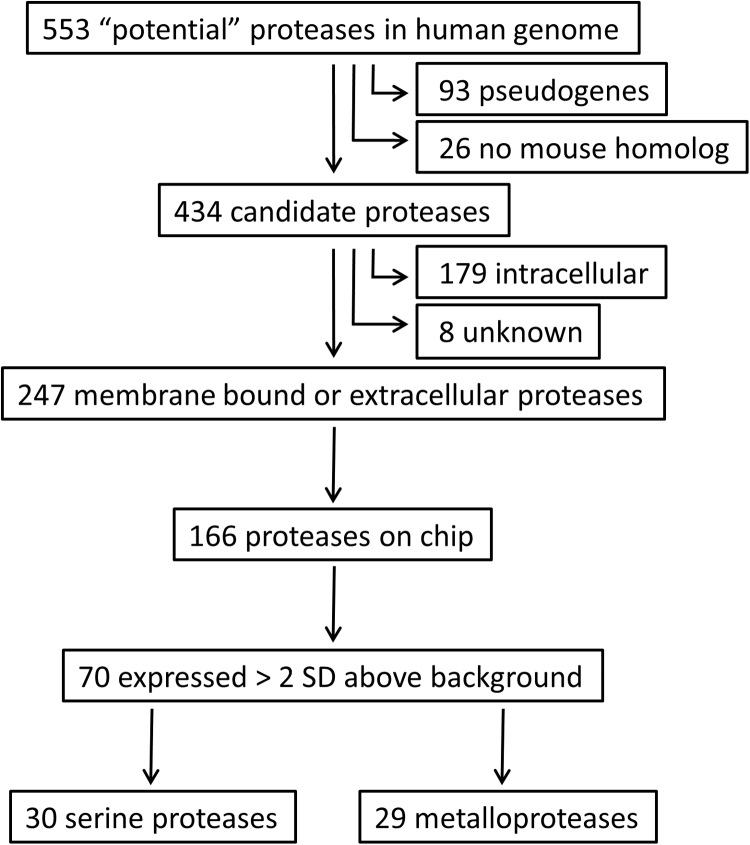
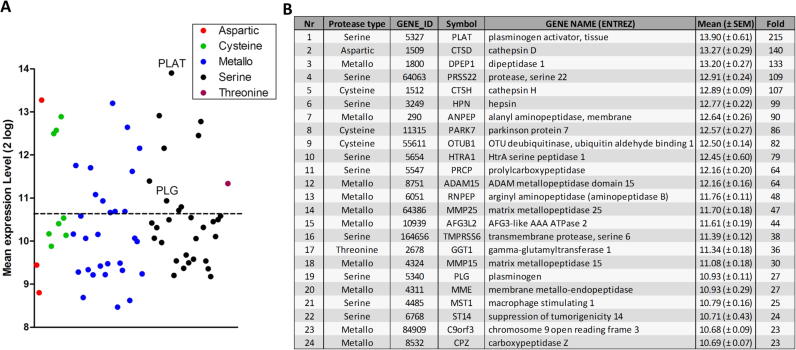
Of the 553 proteases expressed in the human genome, 247 qualified as potential PAR-1 agonists of which 71 were significantly expressed above background in diabetic glomeruli. The recently identified PAR-1 agonist plasmin(ogen), together with its physiological activator tissue plasminogen activator, were among the highest expressed proteases. Plasmin did however not induce mesangial proliferation and/or fibronectin deposition . In a PAR-1 independent manner, plasmin even reduced fibronectin deposition.
Expression profiling identified plasmin as potential endogenous PAR-1 agonist driving DN. Instead of inducing fibronectin expression, plasmin however reduced mesangial fibronectin deposition . Therefore we conclude that plasmin may not be the endogenous PAR-1 agonist potentiating DN.
蛋白酶激活受体-1(PAR-1)会加重糖尿病肾病(DN),这在糖尿病PAR-1缺陷小鼠肾脏损伤减轻中得到了证实。尽管凝血酶是典型的PAR-1激动剂,但抗凝治疗在实验动物模型中并不能限制DN,这表明凝血酶不是驱动DN的内源性PAR-1激动剂。
确定加重糖尿病诱导肾病的内源性PAR-1激动剂。
利用公开的微阵列数据,对患有DN的人肾肾小球中的蛋白酶表达进行无偏分析。随后分析所确定的主要候选PAR-1激动剂对PAR-1依赖性纤维化诱导作用。
在人类基因组中表达的553种蛋白酶中,有247种可作为潜在的PAR-1激动剂,其中71种在糖尿病肾小球中的表达显著高于背景水平。最近确定的PAR-1激动剂纤溶酶(原)及其生理性激活剂组织纤溶酶原激活剂是表达量最高的蛋白酶之一。然而,纤溶酶并未诱导系膜细胞增殖和/或纤连蛋白沉积。以PAR-1非依赖性方式,纤溶酶甚至减少了纤连蛋白沉积。
表达谱分析确定纤溶酶是驱动DN的潜在内源性PAR-1激动剂。然而,纤溶酶并未诱导纤连蛋白表达,而是减少了系膜纤连蛋白沉积。因此,我们得出结论,纤溶酶可能不是加重DN的内源性PAR-1激动剂。