The Key Laboratory of Pathobiology, Ministry of Education, College of Basic Medical Sciences, Jilin University, 126 Xinmin Avenue, Changchun, Jilin, 310021, People's Republic of China.
J Exp Clin Cancer Res. 2017 Nov 7;36(1):157. doi: 10.1186/s13046-017-0627-9.
Claudin-6 (CLDN6), a member of CLDN family and a key component of tight junction, has been reported to function as a tumor suppressor in breast cancer. However, whether CLDN6 plays any role in breast cancer chemoresistance remains unclear. In this study, we investigated the role of CLDN6 in the acquisition of chemoresistance in breast cancer cells.
We manipulated the expression of CLDN6 in MCF-7 and MCF-7/MDR cells with lv-CLDN6 and CLDN6-shRNA and investigated whether CLDN6 manipulation lead to different susceptibilities to several chemotherapeutic agents in these cells. The cytotoxicity of adriamycin (ADM), 5-fluorouracil (5-FU), and cisplatin (DDP) was tested by cck-8 assay. Cell death was determined by DAPI nuclear staining. The enzyme activity of glutanthione S-transferase-p1 (GSTP1) was detected by a GST activity kit. Then lv-GSTP1 and GSTP1-shRNA plasmids were constructed to investigate the potential of GSTP1 in regulating chemoresistance of breast cancer. The TP53-shRNA was adopted to explore the regulation mechanism of GSTP1. Finally, immunohistochemistry was used to explore the relationship between CLDN6 and GSTP1 expression in breast cancer tissues.
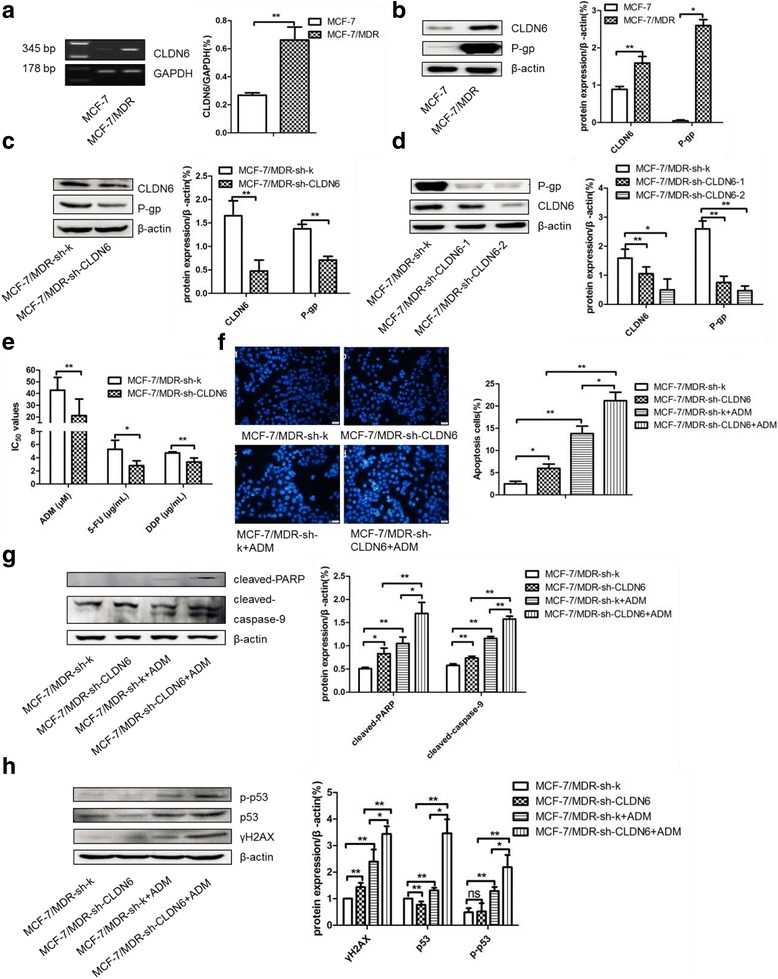
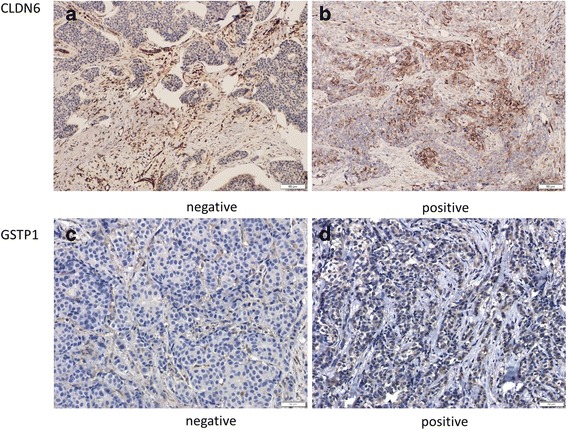
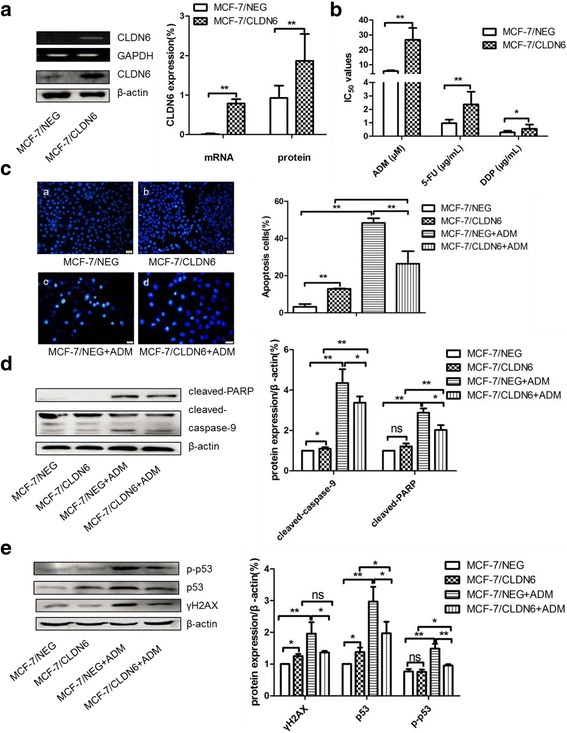
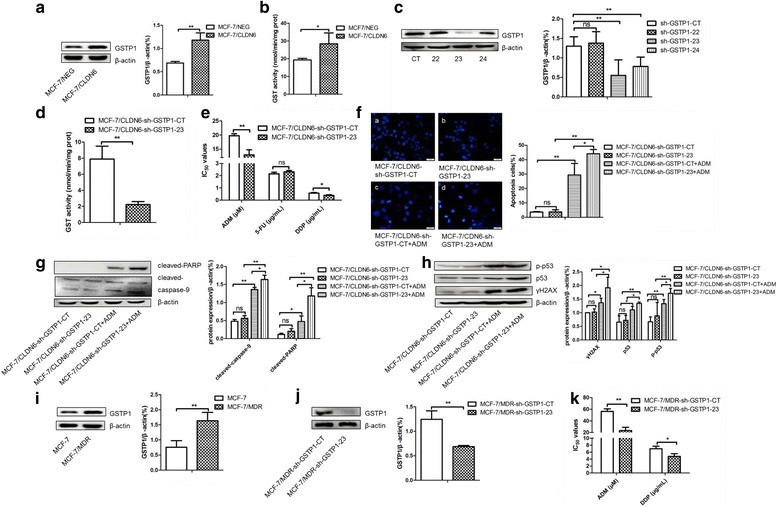
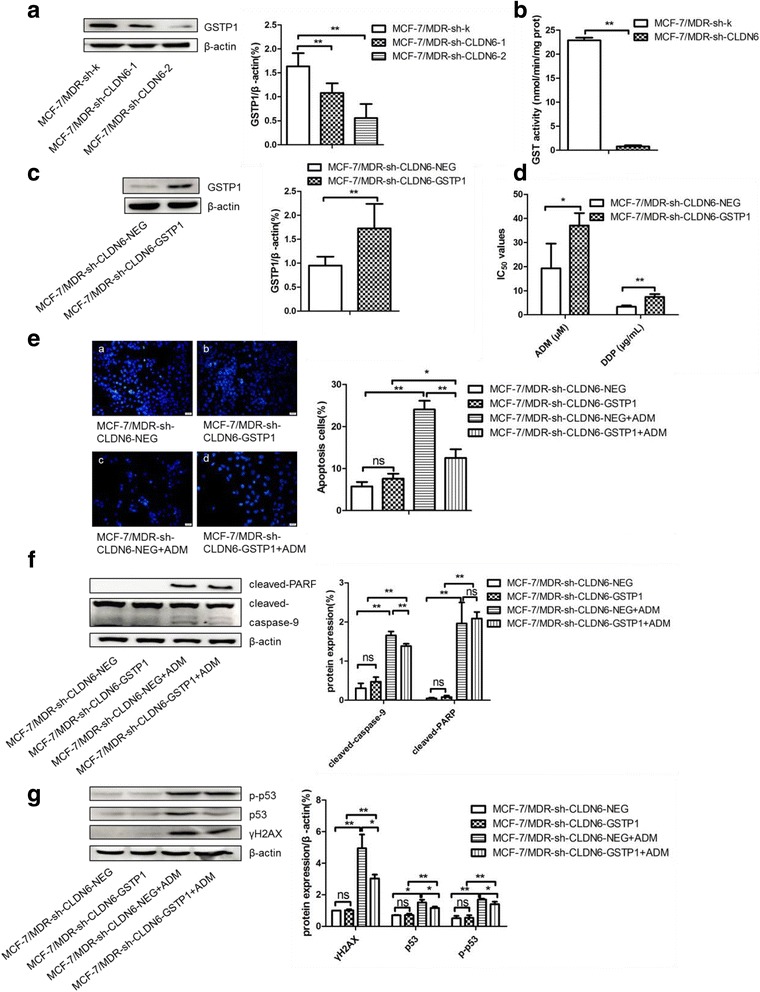
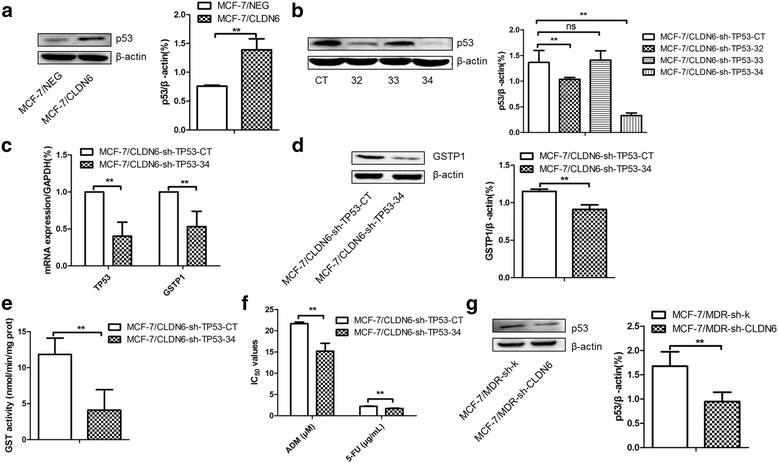
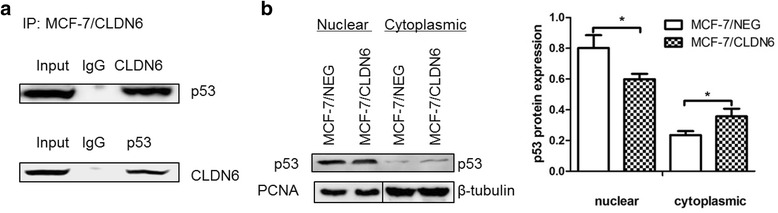
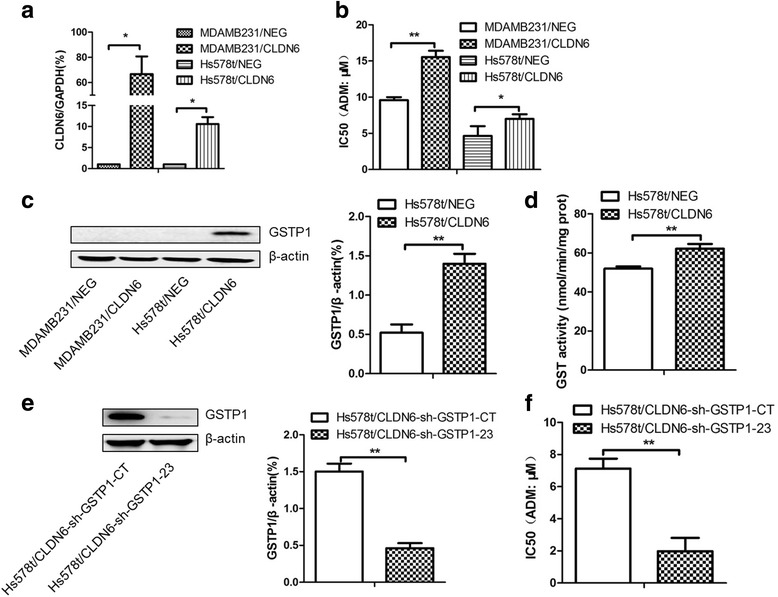
Silencing CLDN6 increased the cytotoxicity of ADM, 5-FU, and DDP in MCF-7/MDR cells. Whereas overexpression of CLDN6 in MCF-7, the parental cell line of MCF-7/MDR expressing low level of CLDN6, increased the resistance to the above drugs. GSTP1 was upregulated in CLDN6-overexpressed MCF-7 cells. RNAi -mediated silencing of CLDN6 downregulated both GSTP1 expression and GST enzyme activity in MCF-7/MDR cells. Overexpresssion of GSTP1 in CLDN6 silenced MCF-7/MDR cells restored chemoresistance, whereas silencing GSTP1 reduced the chemoresistance due to ectopic overexpressed of CLDN6 in MCF-7 cells. These observations were also repeated in TNBC cells Hs578t. We further confirmed that CLDN6 interacted with p53 and promoted translocation of p53 from nucleus to cytoplasm, and both the expression and enzyme activity of GSTP1 were regulated by p53. Clinicopathologic analysis revealed that GSTP1 expression was positively associated with CLDN6 in human breast cancer samples.
High expression of CLDN6 confers chemoresistance on breast cancer which is mediated by GSTP1, the activity of which is regulated by p53. Our findings provide a new insight into mechanisms and strategies to overcome chemoresistance in breast cancer.
Claudin-6(CLDN6)是紧密连接的关键组成部分 CLDN 家族的成员,已被报道在乳腺癌中作为肿瘤抑制因子发挥作用。然而,CLDN6 是否在乳腺癌化疗耐药中发挥作用尚不清楚。在这项研究中,我们研究了 CLDN6 在乳腺癌细胞获得化疗耐药中的作用。
我们通过 lv-CLDN6 和 CLDN6-shRNA 操纵 MCF-7 和 MCF-7/MDR 细胞中的 CLDN6 表达,并研究 CLDN6 操作是否导致这些细胞对几种化疗药物的敏感性不同。用 cck-8 测定法检测阿霉素(ADM)、5-氟尿嘧啶(5-FU)和顺铂(DDP)的细胞毒性。通过 DAPI 核染色测定细胞死亡。用 GST 活性试剂盒检测谷胱甘肽 S-转移酶-p1(GSTP1)的酶活性。然后构建 lv-GSTP1 和 GSTP1-shRNA 质粒,以研究 GSTP1 在调节乳腺癌化疗耐药中的潜力。采用 TP53-shRNA 探讨 GSTP1 的调节机制。最后,免疫组织化学法探讨乳腺癌组织中 CLDN6 和 GSTP1 表达的关系。
沉默 CLDN6 增加了 MCF-7/MDR 细胞中 ADM、5-FU 和 DDP 的细胞毒性。而在 MCF-7 中过表达 CLDN6,即 MCF-7/MDR 的亲本细胞系,表达低水平的 CLDN6,增加了对上述药物的耐药性。在过表达 CLDN6 的 MCF-7 细胞中 GSTP1 上调。在 MCF-7/MDR 细胞中,RNAi 介导的 CLDN6 沉默下调 GSTP1 的表达和 GST 酶活性。在 CLDN6 沉默的 MCF-7/MDR 细胞中过表达 GSTP1 恢复了化疗耐药性,而在 MCF-7 细胞中过表达 CLDN6 导致 GSTP1 异位表达降低了化疗耐药性。在三阴性乳腺癌细胞 Hs578t 中也重复了这些观察结果。我们进一步证实 CLDN6 与 p53 相互作用并促进 p53 从核到细胞质的易位,GSTP1 的表达和酶活性均受 p53 调节。临床病理分析显示 GSTP1 在人乳腺癌样本中与 CLDN6 呈正相关。
CLDN6 的高表达赋予乳腺癌化疗耐药性,这是由 GSTP1 介导的,其活性受 p53 调节。我们的研究结果为克服乳腺癌化疗耐药的机制和策略提供了新的见解。