Schoonen Lise, van Esterik Kayleigh S, Zhang Chunqiu, Ulijn Rein V, Nolte Roeland J M, Hest Jan C M van
Department of Bio-Organic Chemistry, Institute for Molecules and Materials, Radboud University, Heyendaalseweg 135, 6525 AJ, Nijmegen, The Netherlands.
Advanced Science Research Center, City University of New York, 85 St Nicholas Terrace, New York, 10031, USA.
Sci Rep. 2017 Nov 7;7(1):14772. doi: 10.1038/s41598-017-15310-y.
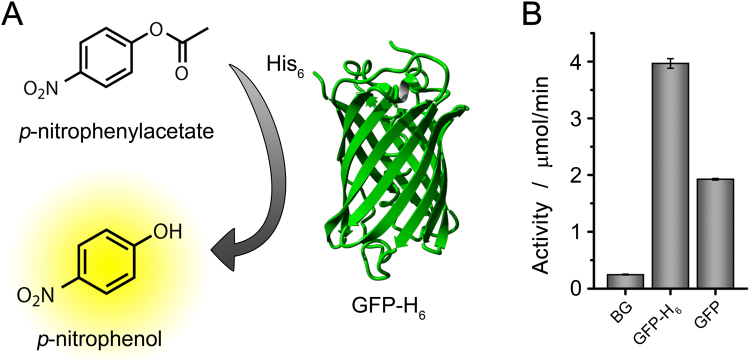
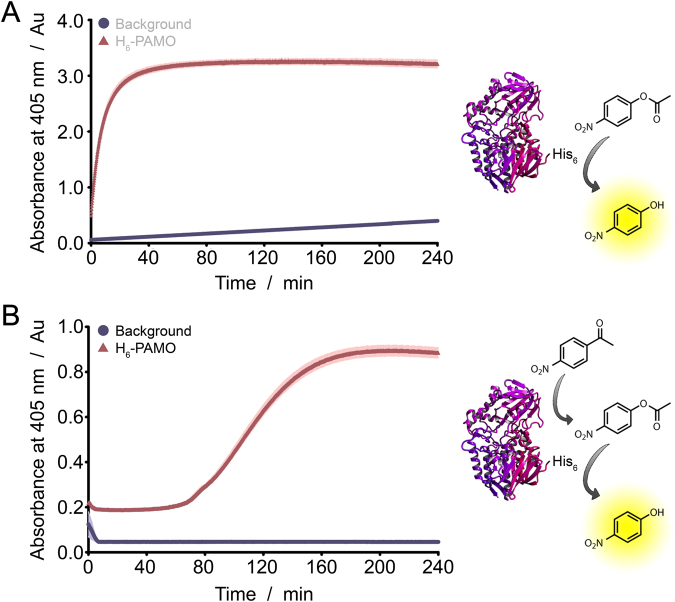
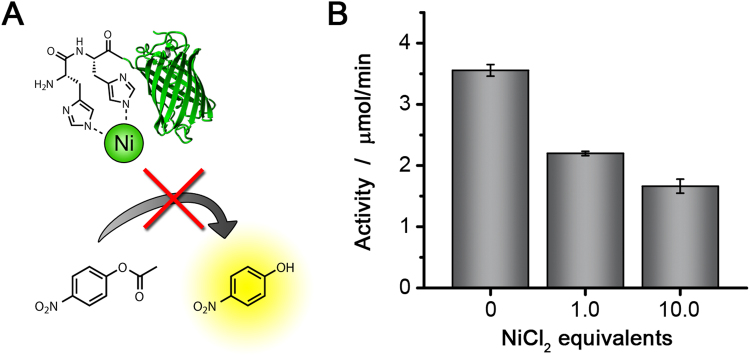
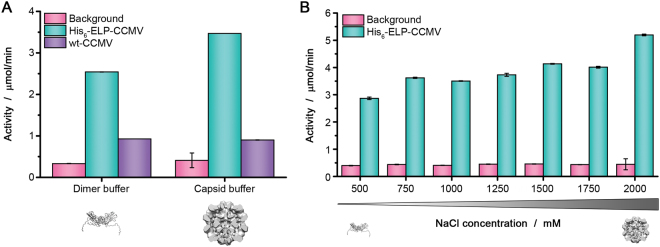
Hexahistidines are very common tags used in the affinity chromatography purification of recombinant proteins. Although these tags are solely applied for their metal-binding properties, we found that they are also able to perform ester hydrolysis when attached to a protein. For instance, green fluorescent protein (GFP) and the cowpea chlorotic mottle virus (CCMV) are able to perform catalysis after introduction of the His-tag. By attaching a His-tag to an enzyme, a dual-functional catalyst was created, that can perform a two-step cascade reaction. These findings show that the catalytic properties of the hexahistidine tag should be taken into consideration when choosing a suitable protein purification tag.
六组氨酸是重组蛋白亲和层析纯化中非常常用的标签。尽管这些标签仅因其金属结合特性而被应用,但我们发现,当它们连接到蛋白质上时,也能够进行酯水解。例如,绿色荧光蛋白(GFP)和豇豆花叶病毒(CCMV)在引入His标签后能够进行催化。通过将His标签连接到一种酶上,创建了一种双功能催化剂,它可以进行两步级联反应。这些发现表明,在选择合适的蛋白质纯化标签时,应考虑六组氨酸标签的催化特性。